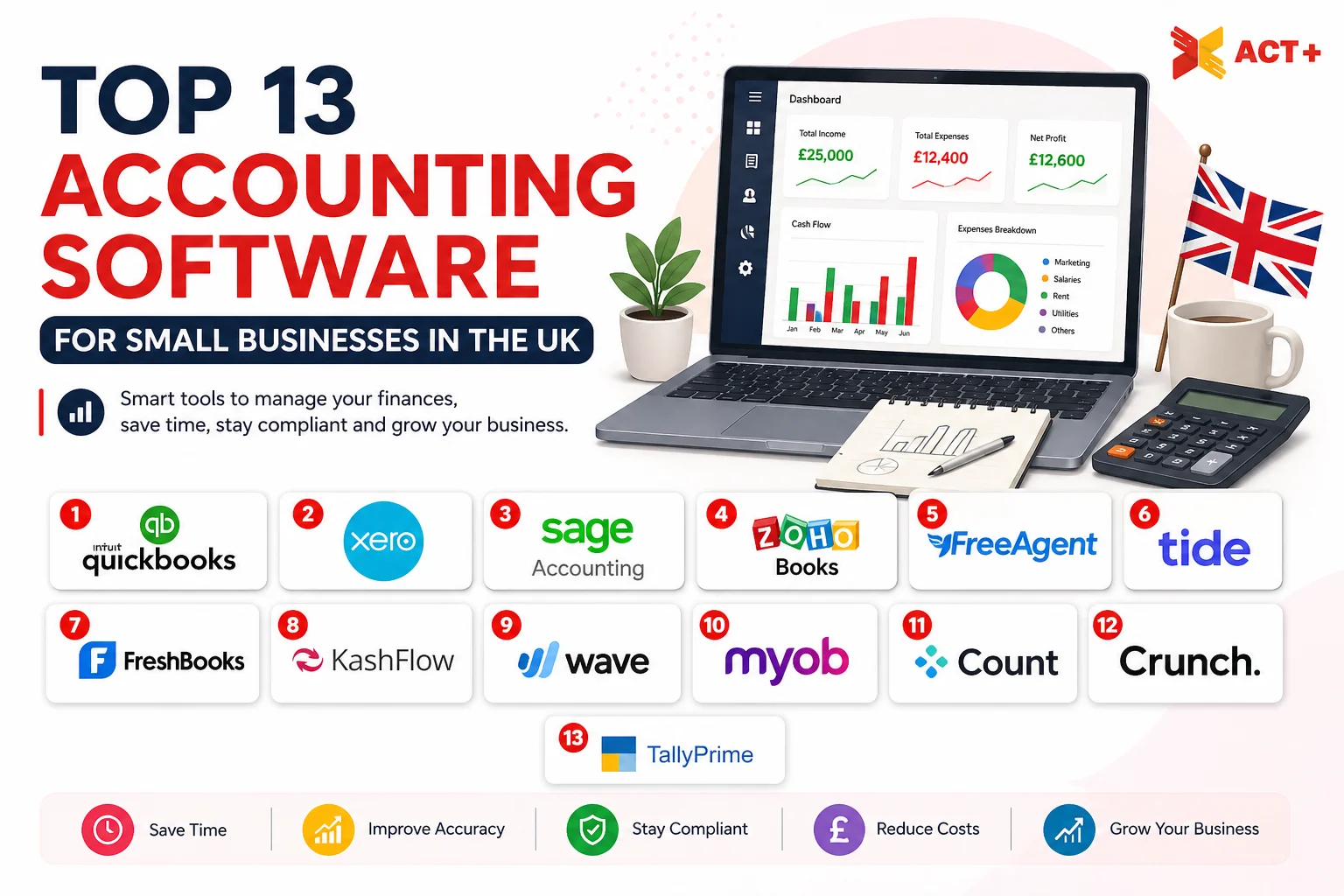
Accounting software is a digital financial management tool that automates, organises, and simplifies a business’s financial transactions, records, and reporting. Top accounting software includes Xero, FreeAgent, Wave, QuickBooks Online, Crunch, Sage Accounting, and KashFlow.
Managing business finances effectively starts with choosing the right accounting and bookkeeping software for small business needs. This guide covers everything UK business owners need to know about selecting the best small business accounting software the UK has to offer, from free tools to premium platforms. There are also benefits to using accounting software, as it saves time, reduces errors, ensures tax compliance, and automates VAT returns.
✓ No obligation • Expert UK advice
1. Xero
Xero is a market-leading cloud-based accounting platform designed to simplify financial activities for small business owners, sole traders, and accountants across the UK.
Best For
Xero is best for UK small businesses requiring automated MTD compliance, easy collaboration with accountants, and payroll scalability. It helps monitor cash flows in real time and manage paperless documents with 1,000+ integrations.
Features
- Smart Document Capture
- MTD (Making Tax Digital) Compliance
- Online Invoicing
- Xero Payroll
- CIS (Construction Industry Scheme) Automation
- Enterprise Analytics
- Expense Management
Price
- Simple: This plan costs £7 and is best for non-VAT registered sole traders.
- Ignite: The pricing of the Ignite plan is £16. It is suitable for small VAT-registered businesses.
- Grow: It costs £37 and is best for scaling businesses.
- Comprehensive: This plan costs £50 and is ideal for established companies.
- Ultimate: The cost of this plan is £65 and is suited for larger teams.
Pros
- Access your accounts from anywhere, on any device, with real-time data syncing.
- Automatic bank feed imports make reconciliation fast and simple.
- Built-in payroll handles auto-enrolment, RTI (Real Time Information) submissions to HMRC (His Majesty’s Revenue and Customs), and pension contributions.
- Handles foreign currencies with live exchange rates, useful for businesses trading internationally.
Cons
- Some advanced reporting features are locked behind higher-tier plans.
- Complete payroll features are an add-on charge to the base subscription.
- Expense claims require a paid add-on (Xero Expenses) on most plans.
- No phone support, as it relies on email/chat, which is slow when issues are urgent.
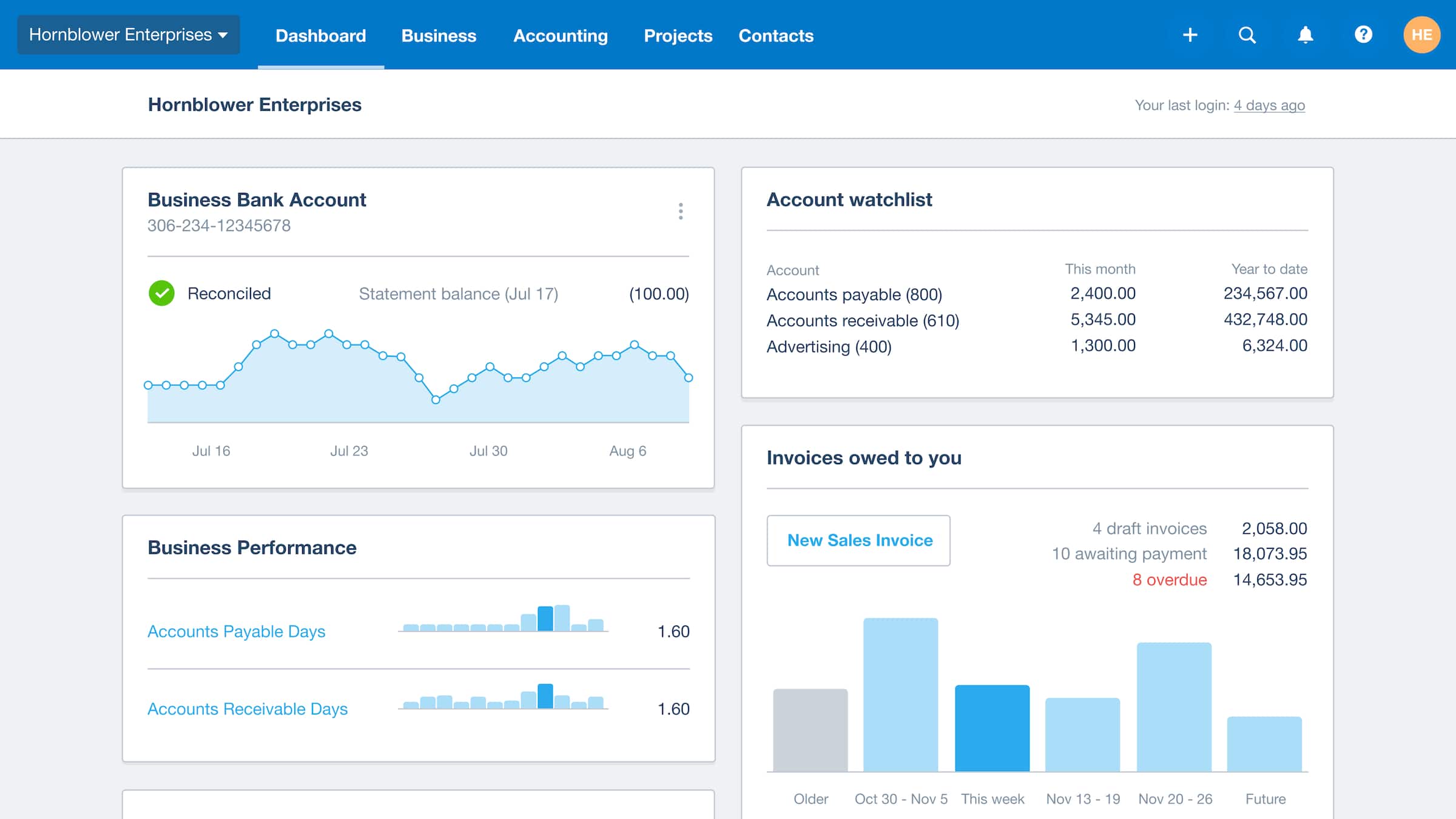
Source: Xero
✓ Trusted by UK businesses
2. FreeAgent
FreeAgent is a cloud accounting platform designed specifically for the UK’s micro-business sector, which includes freelancers, contractors, and small business owners with fewer than 10 employees.
Best For
FreeAgent is best for UK freelancers and small businesses that need free banking integrations. It offers easy tax filing with HMRC and includes time tracking on a mobile platform that is easy to use and does not use jargon.
Features
- Tax Timeline
- Smart Capture (Receipt Scanning)
- Bank Feeds and Reconciliation
- Invoicing and Automated Reminders
- Open Banking Integration
- Corporation Tax Estimates
- RADAR (AI Business Assistant)
Price
- Limited Company: A comprehensive plan for directors costs £33 per month and £330 per year.
- Partnership or LLP: This plan costs £27 monthly and £270 annually.
- Sole Trader: This plan is priced at £19 a month and £190 a year.
- Landlord: The cost of this plan is £10 per month and £100 per year.
Pros
- Fully supports HMRC’s MTD for VAT and Income Tax, keeping UK users legally up to date.
- Helps freelancers prepare and file Self Assessment tax returns directly.
- Connects to UK banks for automatic transaction imports and easy reconciliation.
- Available free of charge to NatWest, Royal Bank of Scotland, and Ulster Bank business account holders.
Cons
- Minimal or no stock management functionality.
- Financial reports are basic and lack depth for more analytical needs.
- Each subscription covers just one business, which is restrictive for those managing multiple companies.
- Not ideal for businesses dealing frequently in foreign currencies.
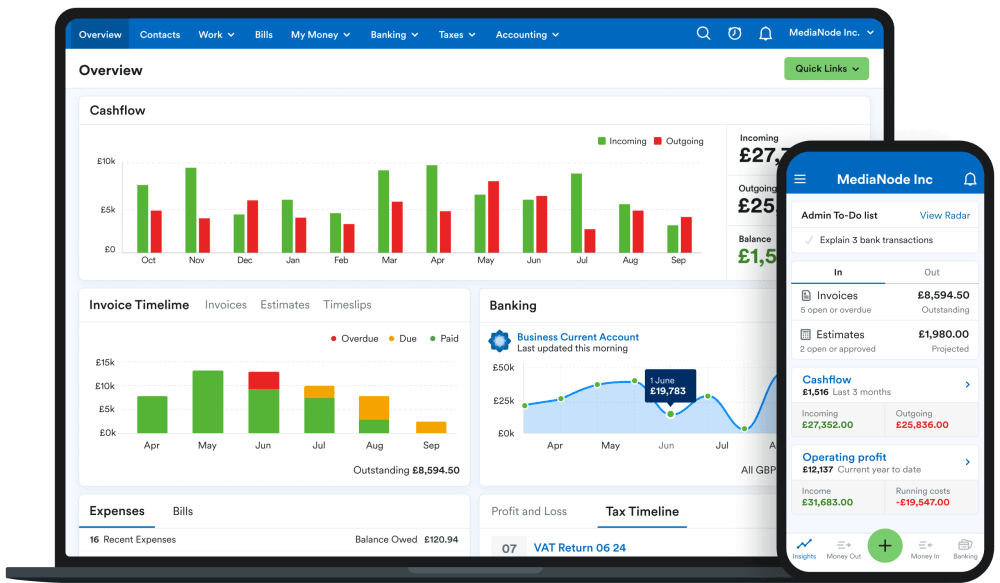
Source: FreeAgent
✓ Built for small UK businesses
3. Wave
Wave is a free, cloud-based accounting software that works as a basic bookkeeping tool for UK sole traders who need simple invoicing and expense management. Businesses with serious UK tax obligations find it unsuitable compared to other locally focused systems, such as Xero or Free Agent.
Best for
Wave is best for non-VAT registered UK sole traders, freelancers, and micro-businesses. These entities look for a free, simple tool for basic invoicing and expense tracking, without needing HMRC-specific tax compliance features.
Features
- Expense Tracking
- Automated Bank Connections
- Double-Entry Accounting
- Smart Receipt Capture
- Estimates and Quotes
- Guest Collaborators
- Recurring Billing
Price
- Starter Plan: This plan costs £0.
- Pro Plan: The Pro Plan is priced at £14.00 to £14.70 per month and £141.54 per year.
Pros
- Core accounting, invoicing, and expense tracking are completely free.
- Clean, simple interface ideal for non-accountants.
- Provides important financial reports.
- Accessible from anywhere on any device.
Cons
- No support for HMRC’s Making Tax Digital.
- The payroll feature is designed for North American markets, not the UK.
- Cannot file or assist with HMRC Self Assessment returns.
- Cannot submit VAT returns directly to HMRC.

Source: Empower
✓ Free accounting for small businesses
4. QuickBooks Online
QuickBooks Online is a cloud-based accounting software developed by Intuit. It is one of the most widely used accounting platforms for small and medium-sized businesses in the UK.
Best For
QuickBooks Online is best for VAT-registered small to medium UK businesses and self-employed individuals requiring a comprehensive, MTD-compliant accounting solution. It suits growing companies that require strong invoicing, payroll, expense tracking, and reporting in one platform.
Features
- AI agents
- Making Tax Digital
- Invoicing
- Accept payments
- Expense tracking
- Bank connections
- Time tracking
Price
- Sole Trader Plus: This plan costs £10 per month.
- Simple Start: The cost of this plan is £16 per month.
- Essentials: This plan is priced at £38 a month.
- Plus: The Plus plan costs £56 monthly.
- Advanced: This plan costs £123 per month.
Pros
- Fully supports HMRC’s Making Tax Digital for VAT and Income Tax.
- Covers invoicing, expenses, VAT, payroll (add-on), inventory, and reporting all in one place.
- Connects reliably with major UK banks for automatic transaction imports and reconciliation.
- Connects with hundreds of third-party apps, including Stripe, Shopify, Dext, and Wise.
Cons
- Support is inconsistent, with some users reporting slow resolution times.
- VAT-registered businesses must upgrade to at least Simple Start (£16 per month).
- Additional features such as payroll, payments, and advanced reporting are all charged on top of the base subscription.
- Plans have experienced a high price increase over the past few years.
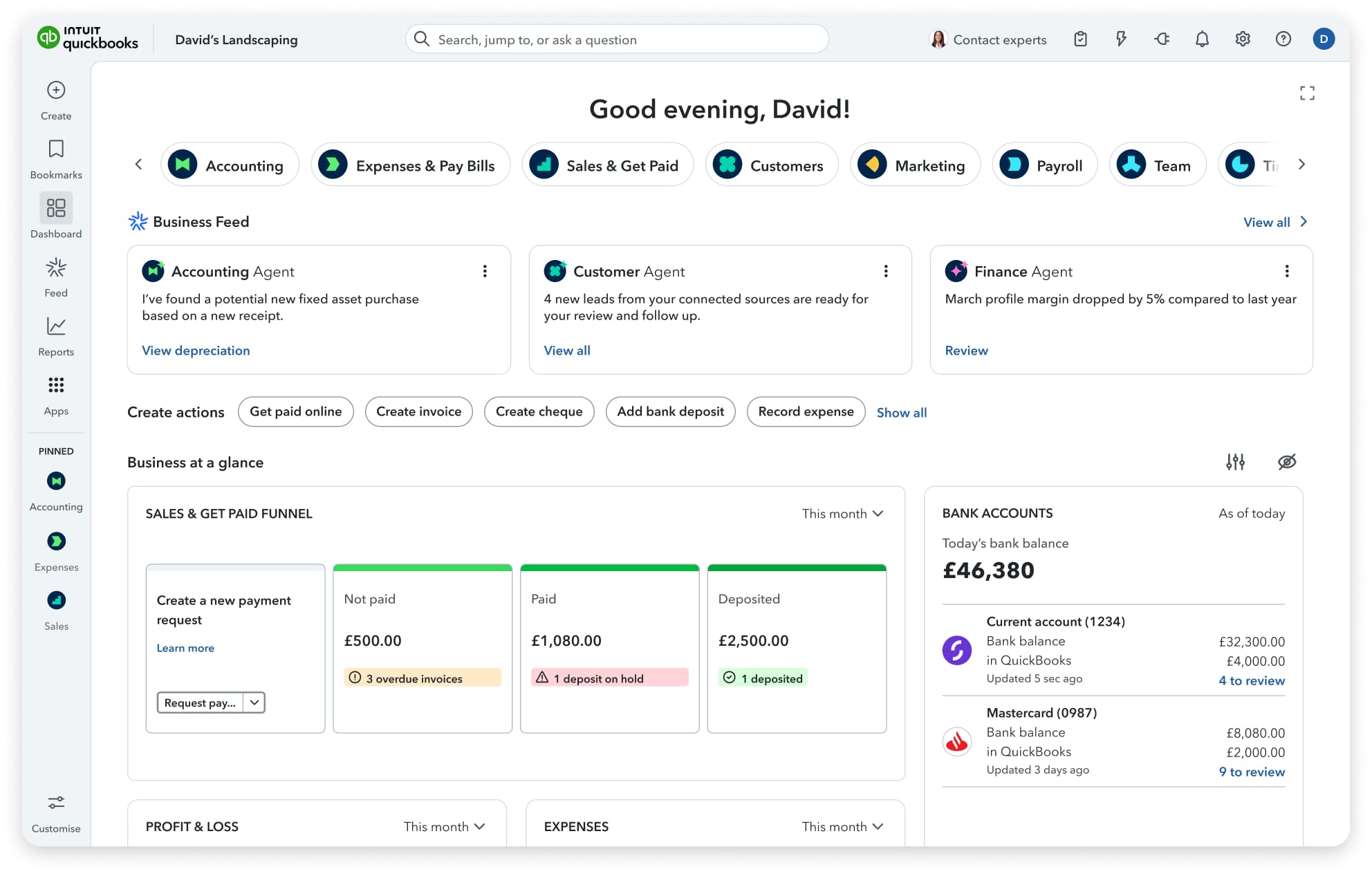
Source: QuickBooks UK
✓ Popular with UK small businesses
5. Crunch
Crunch is a UK-based online accounting software and service designed specifically for freelancers, contractors, and small limited companies.
Best For
Crunch is best for UK freelancers, contractors, and limited company directors looking for a combined accounting software and professional accountancy service in one platform. It particularly suits those who want expert human support for Self Assessment, Corporation Tax, and HMRC compliance, without the cost of hiring a separate accountant.
Features
- VAT Submission
- Self Assessment
- Bookkeeping
- Tax Optimiser
- Real Accountants
- End of Year Submission
- CrunchPay
Price
- Crunch Free: This plan is free forever and also offers a +30-day free trial of Crunch Lite.
- Crunch Lite: The cost of this plan is £4 per month.
- Crunch Plus: This plan is priced at £10 per month.
Pros
- Handles Corporation Tax preparation and submission for limited company directors.
- Combines invoicing, expenses, payroll, VAT, and accountancy in a single platform.
- Payroll with RTI submissions to HMRC is included in higher-tier plans at no extra cost.
- Particularly well-suited for IR35 considerations and contractor-specific tax needs.
Cons
- Not well-suited for growing SMEs, larger teams, or businesses with complex financial needs.
- Smaller app ecosystem compared to QuickBooks or Xero.
- Access to accountants is not always quick.
- Not suitable for businesses operating internationally or needing multi-currency support.

Source: Crunch
✓ UK accounting + expert support
6. Sage Accounting
Sage Accounting is a cloud-based accounting software developed by Sage Group, a British company founded in Newcastle in 1981 and one of the most established names in UK business software. Sage Accounting is widely trusted by small businesses, accountants, and bookkeepers across the country.
Best For
Sage Accounting is best for established UK small to medium-sized businesses and VAT-registered companies requiring a trusted, MTD-compliant accounting platform. It is especially suited to those already familiar with Sage products, looking for strong HMRC compliance, payroll, and reliable support from a well-known British brand.
Features
- Stock management
- Accounts payable
- AutoEntry
- Bank reconciliation
- Billing
- Connect my bank
- Invoicing
Price
- Start: This plan is free for 3 months, then costs £18 per month.
- Standard: The Standard plan is also free for 3 months, then costs £39 monthly.
- Plus: This plan is 3 months free, then it is priced at £59 per month.
Pros
- Excellent VAT tracking, error checking, and direct submission to HMRC.
- Payroll with RTI submissions is included in higher-tier plans at no extra cost.
- Reliable automatic bank feeds from major UK banks for fast and accurate reconciliation.
- Offers phone, live chat, and online support, with a large UK-based support team.
Cons
- Less beginner-friendly than FreeAgent or Wave, particularly for non-accountants.
- No free tier available for very small or micro-businesses.
- Lacks native tools to track hours and pull them directly into invoices, forcing consultants to use third-party apps.
- The cloud platform is slow when processing large batches of transactions or generating complex reports.

Source: Sage UK
✓ Trusted by UK accountants & businesses
7. KashFlow
KashFlow is UK-based cloud accounting software and was one of the earliest cloud accounting platforms in the UK market. It is built simply to help non-accountants manage their finances with ease.
Best For
KashFlow is best for small UK businesses, sole traders, and non-accountants needing a simple, affordable, MTD-compliant accounting solution.
Features
- Purchases and Expenses
- Your Mileage
- Submit VAT Returns
- KashFlow Go
- Your Invoicing
- Your Quotes and Estimates
- Your Payroll Software
Price
- Starter: This plan costs £12.50 per month and £150 per year.
- Business: This plan is priced at £25.50 a month and £270 a year.
Pros
- Developed to suit non-accountants.
- Clean, simple invoicing with automatic payment reminders and online payment options.
- Integrates well with other IRIS Software Group products, useful for businesses already using IRIS tools.
- MTD-compliant for both VAT and Income Tax, it also features specialised support for the CIS (Construction Industry Scheme).
Cons
- The user interface is less modern compared to Xero, QuickBooks, or FreeAgent.
- Limited integrations
- The “KashFlow Go” app lacks the full functionality of its competitors.
- No built-in stopwatch feature for consultants or agencies.
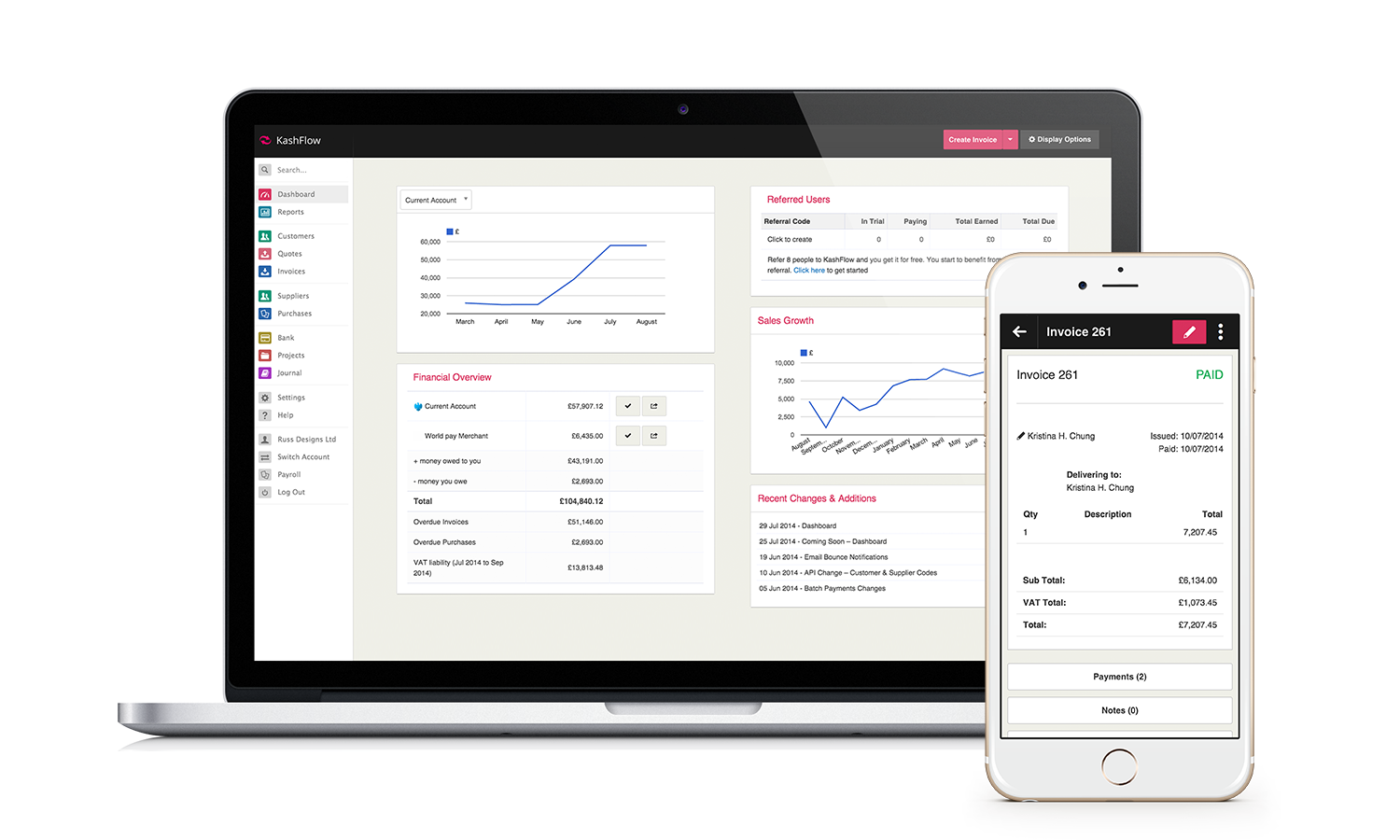
Source: KashFlow
✓ Simple cloud accounting for UK businesses
8. Zoho Books
Zoho Books is a customisable cloud accounting platform that is particularly recognised for its “Free Forever” tier. It is also known for its smooth integration with the broader Zoho ecosystem (CRM, Inventory, and Expense).
Best For
Zoho Books is best for small UK businesses and freelancers already using other Zoho products. These small businesses and freelancers need an affordable, MTD-compliant accounting platform with strong invoicing and VAT management.
Features
- Sales order
- Purchase orders
- Online payments
- Inventory
- Expenses
- Reporting
- Collaboration and Portal Management
Price
- Free: The Free plan costs £0.
- Standard: This plan is priced at £12 a month. The annual pricing of the Standard plan is £10 per month.
- Professional: The cost of this plan is £24 per month. The yearly billing of the Professional plan is £20 per month.
- Premium: This plan costs £30 per month. The Premium plan’s annual cost is £25 per month.
Pros
- Connects smoothly with 50+ other Zoho apps, including CRM, HR, and project management.
- Customisable invoices with automatic payment reminders, recurring billing, and online payment options.
- Built-in time tracking and project management tools are useful for service-based businesses.
- Handles foreign currencies with live exchange rates, ideal for businesses trading internationally.
Cons
- Cannot assist with HMRC Self Assessment filing.
- Steeper learning curve
- Inconsistent support, with some UK users reporting slow response times.
- Limited UK-specific features
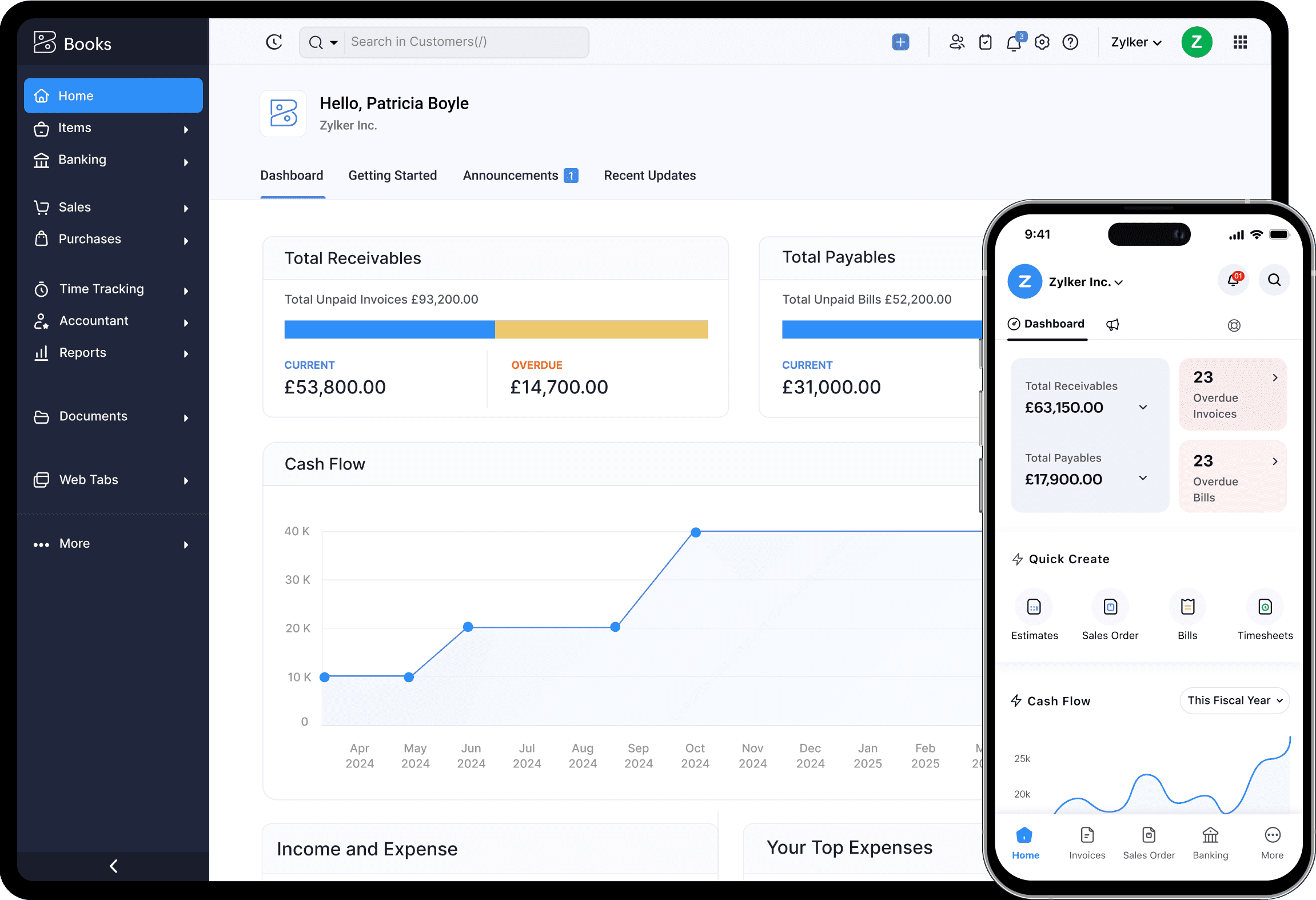
Source: Zoho Books
✓ Smart cloud accounting for growing businesses
9. FreshBooks
FreshBooks is a cloud-based accounting software developed by FreshBooks Cloud Accounting. FreshBooks has grown in popularity among freelancers and small service-based businesses, offering MTD (Making Tax Digital) compliant VAT management and direct submission to HMRC.
Best For
FreshBooks is best for UK freelancers, consultants, and small service-based businesses that prioritise invoicing, time tracking, and client management over deep UK tax compliance and payroll features.
Features
- Expenses and Receipts
- Business Financing
- Time Tracking
- Proposals and Estimates
- Direct VAT Filing
- Project Profitability
- Client Self-Service Portal
Price
- Lite: This plan costs £8 per month and £150.34 per year.
- Plus: The Plus plan is priced at £15 per month and £281.88 per year.
- Premium: The cost of this plan is £21 a month and £394.63 a year.
- Select: This plan offers quote-based pricing.
Pros
- Highly customisable, professional-looking invoices.
- Built-in time tracking makes it easy to bill clients accurately for hours worked.
- Supports Making Tax Digital for VAT submissions directly to HMRC.
- Well-rated iOS and Android app for managing invoices and expenses from anywhere.
Cons
- No built-in Self Assessment support or Corporation Tax filing for UK users.
- Does not offer a built-in payroll solution for the UK market.
- Base plans limit the number of billable clients, requiring upgrades as the client base grows.
- No free tier available, and pricing is expensive given the limited UK-specific functionality.
10. Pandle
Pandle is a UK-based cloud accounting software designed specifically for small businesses, sole traders, and freelancers. It was founded in 2014 and is headquartered in the UK. Pandle is built with simplicity and affordability at its core, offering a simple alternative to more complex platforms like Xero or QuickBooks.
Best For
Pandle is best for very small UK businesses, sole traders, and freelancers looking for a simple, affordable, and MTD-compliant accounting tool. It suits those who need basic invoicing, expense tracking, and VAT management without the complexity or cost of larger platforms.
Features
- VAT software
- Mileage Tracker
- MTD Income Tax
- Receipt Uploads
- Recurring Invoices
- Projects
- Reporting
Price
- Pandle: This plan is free forever.
- Pandle Pro: The cost of this plan is £5 per month and is required to automate daily bookkeeping.
Pros
- Offers a useful free plan for very small businesses and sole traders on a limited budget.
- Automated bank feeds are available on the Pro plan for easy transaction imports and reconciliation.
- Full VAT monitoring and direct submission to HMRC are included in all plans.
- Direct invoicing with payment reminders and online payment options.
Cons
- Does not offer built-in payroll functionality, unlike FreeAgent or Sage.
- Financial reports are limited and lack the detail needed for more analytical business decisions.
- Limited Integrations
- Not suitable for growing businesses with increasingly complex accounting needs.
✓ No obligation • Expert UK advice
11. Clear Books
Clear Books is a UK-based cloud accounting software designed specifically for small businesses, sole traders, and freelancers. It was founded in London in 2008. Clear Books is built with a focus on simplicity and transparency, offering a clean and user-friendly platform that makes accounting accessible to non-accountants.
Best For
Clear Books is best for small UK businesses, sole traders, and freelancers wanting a simple, transparent, and MTD-compliant accounting platform.
Features
- Create invoices and payment reminders
- Cash flow financing
- Instant bank payments
- Manage CIS requirements
- Budget and forecasting
- Domestic reverse charge
Price
- Sole Trader Free: This plan is free.
- Sole Trader: This plan costs £5 plus VAT per month.
- Sole Trader + VAT: This plan is priced at £15 per month.
- Property Free: It is a free plan.
- Property: This plan costs £5 a month.
Clear Books also has pricing plans for all organisation types.
- Small: This plan costs £8 for three months and then £16 monthly.
- Medium: The Medium plan for the first three months costs £17 and then is priced at £34 monthly.
- Large: The cost of this plan is £22 for the first three months and then £44 monthly.
Pros
- The single paid plan has all the basic functions without locking other advanced features in upgrades.
- Built-in payroll with RTI submissions to HMRC included at no extra cost.
- Reliable bank feeds and reconciliation tools for keeping finances up to date.
- Solid VAT tracking and direct submission to HMRC are built into the platform.
Cons
- Financial reports are limited.
- Small third-party app ecosystem, restricting connectivity with other business tools.
- Mobile functionality is less polished.
- Innovation pace is slower compared to larger, better-funded competitors in the market.
12. GnuCash
GnuCash is a free, open-source accounting software developed and maintained by a global community of volunteer developers. It was originally released in 1998 and is one of the oldest and most established free accounting tools available. It is designed for both personal finance management and small business accounting.
Best For
GnuCash is best for technically minded sole traders, freelancers, and micro-businesses requiring a completely free, desktop-based bookkeeping tool.
Features
- Double entry
- Chequebook style register
- Scheduled transactions
- Statement reconciliation
- Multiple currencies
- QIF and OFX import
- HBCI (Home Banking Computer Information) support
Price
GnuCash does not have pricing plans because it is free, open-source software.
Pros
- Highly customisable charts.
- Available on Windows, Mac, and Linux, making it accessible across different operating systems.
- Basic invoicing functionality is included at no cost.
- Generates essential reports, including profit and loss, balance sheets, and cash flow statements.
Cons
- Outdated UI
- No Cloud Access
- Manual Entry
- Requires third-party tools for RTI
13. Adminsoft Accounts
Adminsoft Ltd, a small software company based in the UK, made Adminsoft Accounts, a free accounting programme for Windows. It is one of the few truly free accounting tools made just for the UK market, which makes it stand out among free accounting software for small businesses.
Best For
Adminsoft Accounts is best for very small UK businesses and sole traders needing a free, desktop-based accounting tool with a broad feature set.
Features
- Invoicing
- Purchase ledger
- Sales ledger
- Stock control
- VAT management
- Financial reporting
Price
- Freeware version: It is primarily free.
- Paid Professional Licenses (One-Time Fee)
| Licence Type | Price (approximately excluding VAT) |
| Single User | £179 |
| Three User | £399 |
| Six User | £699 |
| Ten User | £999 |
Pros
- Free to download and use.
- Manage an unlimited number of companies within one installation.
- Data privacy and ownership.
- Offers a wider range of features than most free alternatives.
Cons
- Outdated user interface.
- Steep learning curve.
- The free version displays small advertisements in the background.
- No Native Cloud Access.
✓ No obligation • Expert UK advice
What is accounting software?
Accounting software is a digital tool that helps businesses and individuals manage their financial transactions, records, and reporting. This tool replaces the need for manual bookkeeping with spreadsheets or paper-based records. It automates the daily financial tasks that keep a business running, saves time, reduces errors, and maintains compliance with tax regulations.
Modern accounting software covers a wide range of financial functions, which include invoicing, billing, expense tracking, bank reconciliation, VAT management, payroll, and financial reporting. Such software also helps sole traders and limited company directors with Self-Assessment and corporation tax, inventory management, multi-currency support, and time tracking or project management.
What are the common types of accounting software?
The common types of accounting software are cloud-based accounting software, ERP (Enterprise Resource Planning) software, desktop (on-premise) accounting software, invoicing software, and industry-specific accounting software.
Which Accounting Software Is Right for Your Business?
The right accounting software depends on your business type, size, and financial needs.
The practical guide to choosing the right accounting software for your business is given below.
- Freelancers: FreeAgent, Zoho Books
Freelancers need simple, affordable tools that handle invoicing, expense tracking, and self-assessment without unnecessary complexity. FreeAgent is purpose-built for UK freelancers, automatically calculating tax liabilities, tracking billable expenses, and filing Self Assessment returns directly with HMRC.
Zoho Books is an excellent free alternative, offering strong invoicing, time tracking, and project management tools. It is ideal for freelancers working with multiple clients across different projects.
- Small Businesses: QuickBooks Online, Xero
Small businesses need a reliable, MTD-compliant platform that handles VAT, payroll, and bank reconciliation with routine invoicing. QuickBooks Online is widely used by UK small businesses for its comprehensive VAT management, payroll add-on, and strong HMRC compliance tools.
Xero specialises in bank reconciliation, offers an extensive app ecosystem, and is particularly popular among small businesses working closely with accountants and bookkeepers.
- Startups: Pandle, Wave, Zoho Books
Startups need low-cost, easy-to-use tools that cover the basics without unnecessary complexity. Pandle is a UK-built, beginner-friendly platform with MTD-compliant VAT submissions, ideal for startups establishing their finances from day one.
Wave suits non-VAT registered startups requiring free, basic invoicing and expense tracking. Zoho Books offers a free plan for businesses with a turnover under £35,000, covering invoicing, bank feeds, and project tracking at no cost.
- Growing Companies: Sage, Xero
Growing companies need scalable, comprehensive platforms that can handle increasing transaction volumes, larger teams, multi-currency trading, and more complex reporting. Sage Accounting is a trusted UK brand offering reliable payroll, VAT management, and a clear upgrade path to Sage 50 for businesses outgrowing cloud-only solutions.
Xero scales exceptionally well, with advanced reporting and unlimited users on the higher plan. It has an extensive app ecosystem that integrates with CRM, inventory, and e-commerce tools as the business expands.
Is Xero better than QuickBooks?
It depends on your business needs and workflow. Xero is better if you work closely with a UK accountant or bookkeeper, or if you need unlimited users across your team without paying extra. QuickBooks is better if you are a sole trader needing Self Assessment support at a low monthly cost.
How Much Does Accounting Software Cost?
Accounting software in the UK ranges from completely free to over £100 per month, depending on the platform, plan, and features required.
What are the Benefits of Using Accounting Software?
The benefits of using accounting software include saving time, reducing errors, ensuring tax compliance, and automating VAT returns.
The benefits of using accounting software are listed below.
- Saves time: Accounting software automates repetitive financial tasks such as invoicing, bank reconciliation, and expense categorisation. Such software saves time to focus on running and growing the business rather than on administrative paperwork.
- Reduces errors: Accounting software reduces the risk of manual calculation mistakes and data entry errors. These errors lead to inaccurate financial records, incorrect tax filings, and costly penalties from HMRC.
- Ensures tax compliance: This digital tool keeps businesses fully compliant with HMRC requirements, including MTD (Making Tax Digital), Self Assessment, Corporation Tax, and payroll obligations. It reduces the risk of fines and late filing penalties.
- Automates VAT returns: Accounting software automatically calculates VAT on income and expenses, prepares VAT returns, and submits them directly to HMRC. It follows Making Tax Digital requirements and removes the burden of quarterly VAT deadlines.
How to choose the right accounting software for your business?
To choose the right accounting software for your business, understand your business size, budget, and specific financial needs. Consider if you need MTD compliance, payroll, invoicing, or Self Assessment support. Compare pricing tiers carefully and check for hidden add-on costs. Make sure the software integrates with your existing tools and is familiar to your accountant. Always take advantage of free trials before committing to a subscription.
Do I need accounting services for my small business in the UK?
Yes, accounting services are important for small businesses in the UK. These services keep your finances organised and ensure MTD (Making Tax Digital) compliance. Accounting services help you meet HMRC deadlines for VAT, Self Assessment, and Corporation Tax.
Do I need to register for VAT in the UK?
Yes, VAT registration is mandatory in the UK once your business turnover exceeds the £90,000 VAT threshold within 12 months. Registration is optional below this threshold, but it is beneficial for reclaiming VAT on business expenses. You must charge VAT on sales and submit regular VAT returns to HMRC once registered.
Is Xero approved by HMRC?
Yes, Xero is fully recognised and approved by HMRC. It is MTD (Making Tax Digital) compliant, supporting direct VAT return submissions to HMRC.
Is Xero a good alternative to QuickBooks?
Yes, Xero is a good alternative to QuickBooks, especially in the UK. It provides a strong accounting integration, unlimited users, and a broad app platform. QuickBooks is leading in cost and Self Assessment with sole traders and freelancers.
Can I use Wave Accounting in the UK?
Yes, you can use Wave Accounting in the UK, but it lacks MTD compliance, UK payroll, and HMRC VAT submission support. It is unsuitable for VAT-registered businesses. It works best for non-VAT registered sole traders needing free, basic invoicing and expense tracking.
What is the difference between bookkeeping and accounting services?
The difference between bookkeeping and accounting services is based on the focus, function, HMRC interaction, and skill level.
The difference between bookkeeping and accounting services is mentioned below.
- Focus: Bookkeeping is the routine recording and organising of financial transactions. It focuses on maintaining accurate, up-to-date financial records. Accounting takes the financial data recorded by bookkeepers and uses it to analyse, interpret, and report on the financial state of a business.
- Function: Bookkeeping is largely an administrative function. Accounting is a strategic function, as it uses financial data to provide business owners with meaningful insights.
- HMRC interaction: Bookkeeping handles routine HMRC obligations such as maintaining digital records, recording VAT transactions, and processing RTI payroll submissions. Accounting manages higher-level HMRC compliance, including filing VAT returns, Self Assessment, and Corporation Tax returns.
- Skill level: Bookkeeping is a practical skill that is performed by a trained bookkeeper or even a business owner using accounting software. Accounting requires a higher level of professional expertise. It is performed by a qualified accountant with formal training in financial reporting, tax legislation, and compliance.
Do I need help with my self-assessment tax return?
Self-Assessment is for simple finances, but professional help is recommended if you have multiple income streams, rental income, foreign income, or complex expenses. Accounting software like FreeAgent or QuickBooks can simplify the process, and a qualified accountant ensures full HMRC compliance and accuracy.
Can you handle PAYE and employee tax calculations?
Yes, most UK accounting services handle PAYE and employee tax calculations automatically. These services include Income Tax deductions, National Insurance contributions, pension auto-enrolment, and RTI submissions directly to HMRC through built-in payroll tools.
What is the best software to use for bookkeeping?
The best software for bookkeeping in the UK includes Xero, QuickBooks Online, Sage Accounting, FreeAgent, KashFlow, Zoho Books, FreshBooks, and Pandle.
Are ERP and accounting software the same?
No, ERP and accounting software are not the same. Accounting software manages financial transactions and tax compliance. ERP (Enterprise Resource Planning) is a broader system which includes finance, HR, inventory, supply chain, and entire business operations in one platform.
✓ No obligation • Expert UK advice

About the Author: Ahmad Raza