
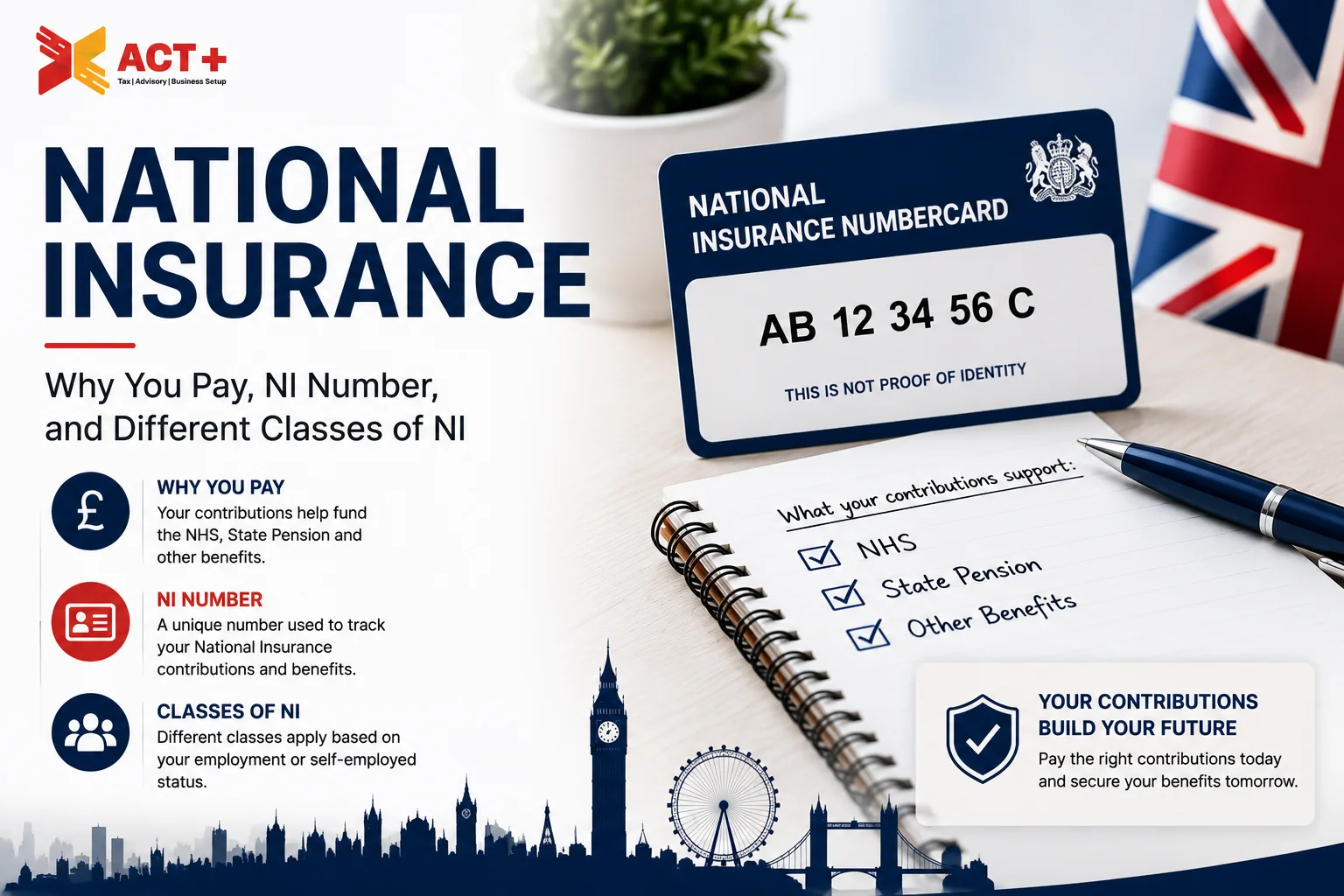
National Insurance is one of the most important tax systems in the UK for employees, employers, company directors, and self-employed individuals. Incorrect National Insurance deductions, payroll errors, or missing contribution years can lead to HMRC penalties, pension gaps, and compliance problems. Understanding how National Insurance works helps businesses manage PAYE correctly, protect state pension entitlement, and avoid costly tax mistakes. If you are employed under PAYE, work through a limited company, or are a sole trader, understanding National Insurance can help you avoid costly mistakes and remain compliant with UK tax rules.
What is National Insurance (NI)?
National Insurance, often called NI or NIC, is a tax contribution system in the UK. Workers and employers make payments to the government through National Insurance contributions. Your National Insurance contribution record helps determine qualifying years for the UK State Pension and may affect access to certain benefits and workplace pension entitlements.
Your National Insurance contributions can affect:
- State Pension eligibility
- Maternity Allowance
- Employment and Support Allowance
- Contribution-based benefits
- NHS funding support
National Insurance applies to employees, business owners, individuals, and employers. The amount you pay usually depends on your earnings or profits.
Why Do You Pay National Insurance?
People pay National Insurance to support the UK’s social security system. These contributions help fund public services and government benefits.
National Insurance mainly supports:
- State Pension
- NHS services
- Statutory sick pay
- Maternity benefits
- Unemployment-related benefits
Paying National Insurance also helps build your National Insurance record. A strong NI record can improve your future entitlement to a state pension and other benefits. Most working adults in the UK automatically pay National Insurance once their earnings pass certain thresholds.
How Does National Insurance Work?
National Insurance works differently depending on your employment status. Employees usually pay NI automatically through the PAYE system. Employers deduct National Insurance directly from wages before the salary reaches the employee’s bank account. Most businesses use payroll software to calculate NI deductions, apply the correct tax code, and manage payroll reporting to HM Revenue and Customs accurately throughout the tax year. Independent workers usually report contributions through a self-assessment tax return based on annual business profits. Depending on their profit levels, sole traders may need to pay Class 4 NI contributions, while some individuals choose to make voluntary Class 2 contributions to protect their qualifying years for the UK State Pension. HMRC calculates the amount based on annual profits. Employers also pay employer contributions on employee wages above certain thresholds.
The PAYE system handles:
- Income Tax deductions
- Employee NI
- Student loan deductions
- Pension contributions
Employers submit payroll information and PAYE deductions to HMRC regularly during the tax year through payroll reporting systems.
✓ Free consultation • Expert National Insurance guidance
What Does National Insurance Pay For?
National Insurance contributions help fund several government services and welfare programs.
These include:
- State Pension payments
- NHS healthcare funding
- Statutory maternity pay
- Bereavement support
- Jobseeker-related benefits
- Disability and sickness support
Although NIC contributes towards public services, it does not work like a personal savings account. Your payments support the wider system rather than building a private fund in your name.

What Is a National Insurance Number?
A National Insurance number is a personal reference number used by HMRC and the UK government. It tracks your tax records and NIC contributions.
An NI number usually looks similar to this format:
AB123456C
Your National Insurance number helps HMRC:
- Record your NI contributions
- Track tax payments
- Manage pension records
- Identify employment history
You normally receive a National Insurance number before turning 16 if you live in the UK. People moving to the UK for work may need to apply for an NI number separately.
You usually need your NI number when:
- Starting a job
- Registering for Self-Assessment
- Applying for benefits
- Opening a pension account
Who Needs to Pay National Insurance?
Several groups may need to pay National Insurance in the UK.
These include:
- Employees
- Self-employed workers
- Company directors
- Employers
Employees usually start paying NI once earnings pass the primary threshold. Sole traders may pay National Insurance if annual profits exceed HMRC limits.
Employers must also pay secondary Class 1 National Insurance contributions for employees earning above HMRC thresholds. UK businesses need to manage employer contributions correctly to meet payroll obligations, PAYE reporting requirements, and company compliance responsibilities under the Companies Act. Not everyone pays National Insurance. Low earners and some exempt individuals may not need to contribute.
What Are the Different Classes of National Insurance?
The UK uses different National Insurance classes depending on employment status and income type.
Class 1 National Insurance
Class 1 NI applies to employees. Employers deduct these contributions through payroll under PAYE. Both employees and employers usually contribute. Employee NI depends on salary levels and thresholds.
Class 2 National Insurance
Class 2 NI applies to business owners. Many self-employed workers no longer pay mandatory weekly Class 2 contributions if profits remain below certain levels. However, some people choose voluntary payments to protect their state pension record.
Class 3 National Insurance
Class 3 contributions are voluntary. People usually pay Class 3 NI to fill gaps in their National Insurance record. This can help improve future state pension entitlement.
Class 4 National Insurance
Class 4 NI applies to self-employed profits above specific thresholds. HMRC calculates these contributions through self-assessment tax returns. Unlike Class 2, Class 4 contributions depend directly on annual business profits.
What is the Difference Between National Insurance and Income Tax?
Many people confuse National Insurance with Income Tax, but they work differently. Income tax helps fund general government spending. National Insurance mainly supports state benefits and pensions.
Here is a simple comparison:
| Feature | National Insurance | Income Tax |
|---|---|---|
| Purpose | Funds benefits and pensions | General government funding |
| Paid By | Employees, self-employed, employers | Most taxpayers |
| Based On | Earnings or profits | Taxable income |
| Linked to Benefits | Yes | No |
| Collected Through PAYE | Yes | Yes |
Employees often see both deductions separately on payslips.
What is a National Insurance Record?
Your National Insurance contribution record helps determine qualifying years for the UK State Pension. Missing years or contribution gaps may reduce future pension entitlement and access to certain contribution-based benefits.
HMRC keeps track of these:
- Years of contributions
- Credits received
- Gaps in payments
- Qualifying years for pension
Your NI record affects your entitlement to the UK State Pension. Most individuals usually need around 35 qualifying years on their National Insurance record to receive the full new State Pension. You can check your National Insurance record online through your HMRC account.
How Much Is National Insurance in the UK?
National insurance rates depend on the following:
- Employment status
- Income level
- National Insurance class
- Current HMRC thresholds
Employees usually pay a percentage of earnings above the primary threshold. Self-employed people may pay Class 4 contributions based on profits. Rates and thresholds can change each tax year.
For example, an employee earning £3,000 monthly may pay employee NI through PAYE deductions once earnings exceed the threshold.
What Are the UK National Insurance Rates?
Current UK National Insurance rates vary between employees, employers, and self-employed workers.
Employees usually pay:
- 8% on qualifying earnings within the main band
- 2% on earnings above the upper threshold
Employers normally pay employer NI at a separate rate on qualifying wages.
Sole traders may pay:
- Class 4 NI on annual profits above thresholds
- Voluntary Class 2 or Class 3 contributions, where applicable
HMRC updates National Insurance rates regularly during budget changes.
How Much Is National Insurance Per Month?
Monthly National Insurance depends on your income.
Someone earning below the NI threshold may pay nothing.
Higher earners usually pay more because NI calculations work on earnings bands.
For example:
| Monthly Salary | Estimated Employee NI |
|---|---|
| £1,000 | Usually £0 |
| £2,000 | Moderate NI deduction |
| £4,000 | Higher NI deduction |
Exact deductions depend on tax codes, payroll settings, and thresholds.
Do Company Directors Pay NI Differently?
Yes. Company directors can have different National Insurance calculations.
In many cases, HM Revenue and Customs applies the annual earnings method when calculating directors’ National Insurance contributions instead of weekly or monthly payroll periods. Many directors use a combination of director salary and dividend strategy to improve tax efficiency while staying within UK tax rules. Keeping salaries near certain National Insurance thresholds may help reduce income tax and National Insurance liabilities legally.
Directors still need proper payroll reporting through the PAYE system, even when taking dividends from a limited company. Incorrect payroll setup or salary calculations can create HMRC compliance issues and affect contribution records for State Pension qualifying years. Professional accounting advice can help company directors structure salary, dividends, and payroll more efficiently.
What Are National Insurance Contributions (NIC)?
National Insurance contributions, often called NICs, are the actual payments made into the National Insurance system.
NICs include:
- Employee contributions
- Employer contributions
- Self-employed contributions
- Voluntary contributions
HMRC records these payments against your National Insurance number.
NICs help determine eligibility for several UK benefits and pension entitlements.
What Happens if I Don’t Pay National Insurance?
Failure to pay National Insurance can create several problems.
Possible consequences include the following:
- Gaps in your NI record
- Reduced State Pension entitlement
- HMRC penalties and interest
- Problems with benefit eligibility
Independent workers who fail to file self-assessment returns may also face penalties from HMRC. Employees usually avoid this issue because employers deduct NI automatically through PAYE.
Do I Pay NI if I Earn Less Than £12,570?
Not always. If earnings remain below certain thresholds, you may not pay National Insurance contributions. However, some low earners still receive National Insurance credits. These credits can help protect pension entitlement without making actual payments. Thresholds change over time, so checking current HMRC rates remains important.
✓ Free consultation • Expert National Insurance guidance
How to Calculate National Insurance?
National Insurance calculations depend on:
- Employment type
- Earnings level
- NI category
- Payroll frequency
Employees usually see automatic calculations on payslips.
Self-employed individuals calculate contributions through self-assessment tax returns.
Basic employee NI calculation involves:
- Checking earnings above the threshold
- Applying the correct NI percentage
- Deducting contributions through payroll
Payroll software normally handles these calculations automatically.
Do I pay Class 2 and Class 4 if I am self-employed?
Some self-employed people may deal with both Class 2 and Class 4 National Insurance. HMRC calculates Class 4 National Insurance based on annual business profits reported through a self-assessment tax return. Some business owners also choose voluntary Class 2 contributions to avoid gaps in their National Insurance record. Many self-employed individuals review both classes carefully during self-assessment filing.
Can I Be PAYE and Self-Employed at the Same Time?
Yes. Many people work under PAYE employment while also running self-employed businesses.
For example, someone may:
- Work full-time as an employee
- Operate freelance work on evenings or weekends
In this situation:
- PAYE handles employee NI deductions
- Self Assessment handles self-employed taxes and NI
HMRC combines both income sources during tax reporting.
What Are the NI Thresholds?
National Insurance thresholds decide when employees, employers, and independent workers start paying National Insurance contributions. HM Revenue and Customs uses several earnings limits and thresholds to calculate different National Insurance rates during the tax year.
Important National Insurance thresholds include the following:
| Threshold Type | Purpose |
|---|---|
| Lower Earnings Limit | Helps determine qualifying years for State Pension entitlement |
| Primary Threshold | Employee National Insurance usually starts |
| Secondary Threshold | Employer National Insurance contributions begin |
| Upper Earnings Limit | Reduced employee NI rates may apply above this level |
| Lower Profits Limit | Used for self-employed National Insurance calculations |
These thresholds can change during budget announcements and new tax years, so checking current HMRC rates remains important.
Frequently Asked Questions
Is National Insurance the same as Income Tax?
Can I check my National Insurance record online?
Do employers pay National Insurance contributions?
Can I pay voluntary National Insurance contributions?
What happens if there are gaps in my National Insurance record?

About the Author: Ahmad Raza