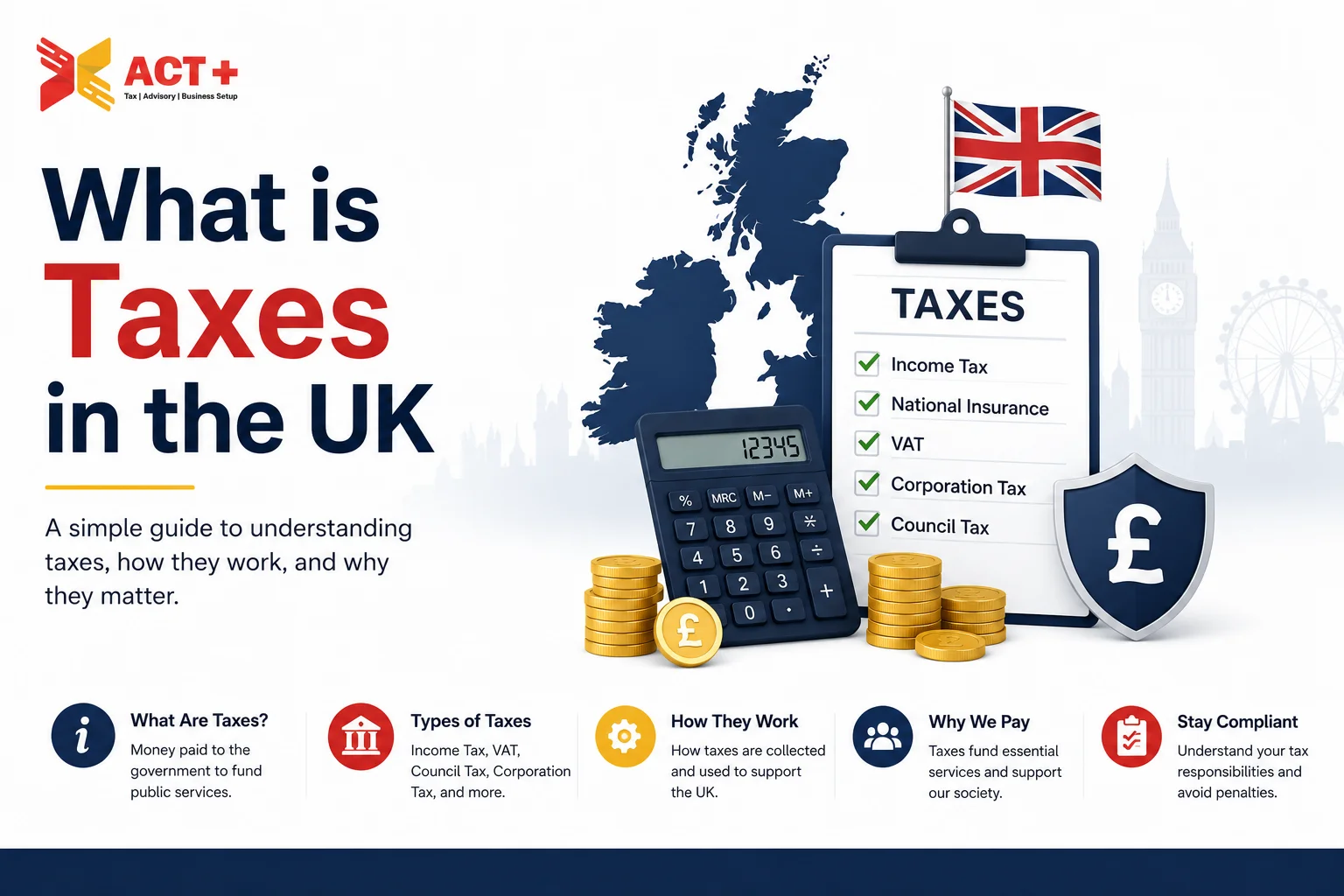
Taxes are compulsory payments that individuals and businesses make to the government. In the UK, HM Revenue and Customs (HMRC) collects most taxes to fund public services such as the NHS, schools, roads, policing, defence, and welfare. Understanding what taxes are, how the UK tax system works, and which types of taxes apply to you can help you stay compliant, reduce mistakes, and plan your finances more effectively.
Whether you are an employee, sole trader, landlord, investor, or limited company owner, you will likely pay one or more UK taxes during the tax year. Some taxes apply to your income, while others apply when you buy goods, sell assets, or inherit wealth.
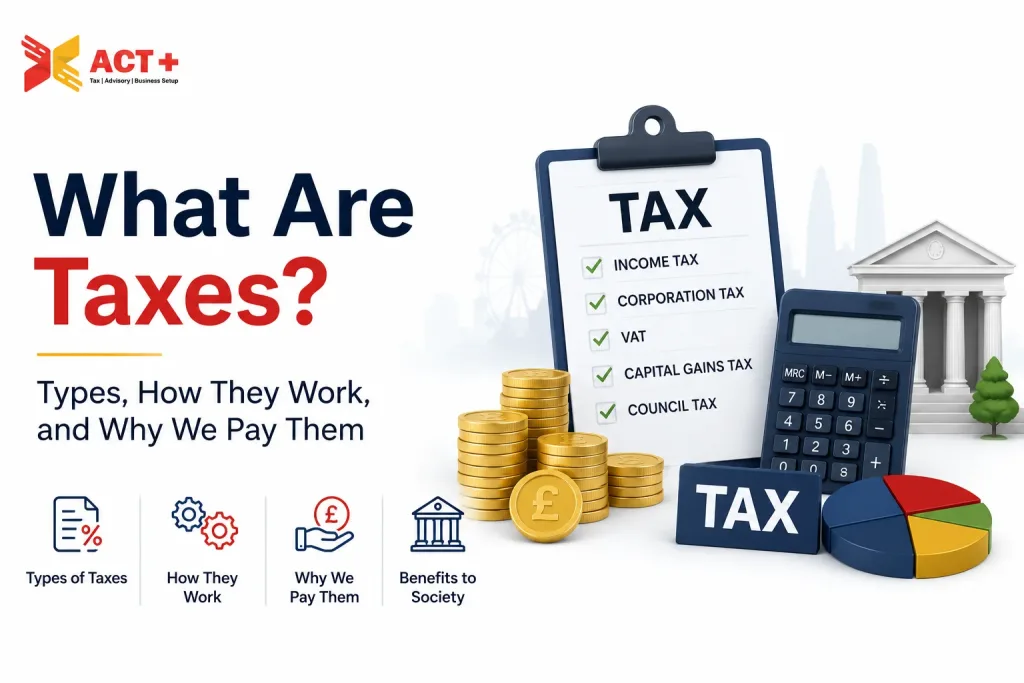
What Are Taxes?
Taxes are compulsory financial contributions that individuals and businesses pay to the government to fund public services and national infrastructure. In the UK, HM Revenue & Customs (HMRC) administers most taxes. Local authorities also collect certain local taxes, such as council tax.
Taxes support services that benefit everyone. These include:
- The National Health Service (NHS)
- State education
- Roads and transport
- Police and emergency services
- National defence
- State pensions
- Welfare benefits
- Courts and the justice system
Every tax has its own rules, tax rates, tax bands, deadlines, and reporting requirements. Some taxes are deducted automatically, while others require you to submit a tax return. Understanding tax explained in simple terms helps you avoid unnecessary penalties and make better financial decisions.
✓ Free consultation • Expert UK tax advice
Who Has to Pay Taxes?
Most people and businesses pay some form of tax in the UK. The type and amount of tax depend on how you earn money, what you own, and how your business operates. Some taxes are deducted automatically, while others must be reported to HMRC. Understanding your tax responsibilities helps you avoid mistakes, penalties, and unexpected bills and plan confidently.
Your tax obligations depend on several factors, including:
- Your income
- Your employment status
- Your residency status
- Your business structure
- The type of income you receive
Common taxpayers include:
- Employees
- Self-employed individuals
- Sole traders
- Company directors
- Limited companies
- Landlords
- Investors
- Employers
For example, an employee usually pays Income Tax and National Insurance through PAYE. A sole trader normally reports income through Self Assessment. A limited company pays Corporation Tax on its profits.
What Are the Main Types of Taxes?
The UK uses several different taxes to collect money for public services, healthcare, education, transport, and other government spending. The tax you pay depends on your income, business activities, purchases, investments, or property. Some taxes are deducted automatically, while others must be calculated and reported. Understanding the main tax types makes it easier to manage your responsibilities correctly.
The most common types of taxes include:
| Tax | Usually Paid By | Based On |
|---|---|---|
| Income Tax | Individuals | Taxable income |
| Corporation Tax | Limited companies | Company profits |
| VAT | Consumers and VAT-registered businesses | Goods and services |
| Capital Gains Tax | Individuals and businesses | Profit from selling assets |
| Inheritance Tax | Estates | Value of an estate |
| National Insurance | Employees and employers | Employment earnings |
Each tax serves a different purpose within the UK tax system.
What Is Direct Tax?
A direct tax is charged directly on a person’s income, profits, or assets. The taxpayer pays the tax straight to the government without using an intermediary. The amount due usually depends on the taxpayer’s financial circumstances, including their income level, business profits, asset value, tax residency, and available tax allowances.
Unlike indirect taxes, direct taxes cannot usually be passed on to another person. The individual, company, or estate responsible for the tax must pay it directly to HM Revenue & Customs.
The main examples of direct taxes in the UK include income tax, corporation tax, capital gains tax, and Inheritance Tax. Each tax applies in different circumstances. Employees pay Income Tax on their earnings, while limited companies pay Corporation Tax on taxable profits.
What Is Income Tax?
Income Tax is a direct tax charged on the taxable income earned by individuals during a tax year. It can apply to income from employment, self-employment, rental property, pensions, savings interest, dividends, and overseas sources.
Not all income is subject to tax. Most individuals receive a Personal Allowance, which allows them to earn a certain amount before income tax becomes payable. Eligibility for the full allowance may depend on the person’s total income and individual circumstances.
Any taxable income above the personal allowance is charged according to the relevant Income Tax bands and rates. The amount payable therefore depends on how much taxable income a person earns during the tax year.
Who Pays Income Tax?
Most individuals pay Income Tax when their taxable income exceeds the available Personal Allowance. This may include employees, sole traders, freelancers, company directors, landlords, and pensioners whose total taxable income is above the tax-free threshold.
Employees and company directors usually pay Income Tax through the PAYE system. Their employer deducts the tax from their salary before making payment and sends it directly to HM Revenue & Customs. Self-employed individuals, including sole traders and freelancers, normally report their income and expenses through Self Assessment. They calculate and pay the tax due after submitting an online tax return to HMRC.
How Do Taxes Work?
Taxes work by collecting money from individuals and businesses based on taxable income, profits, purchases, or assets. The government then uses this money to fund public services.
Different taxes operate in different ways.
For example:
- Employers deduct Income Tax through PAYE.
- Limited companies calculate Corporation Tax after preparing annual accounts.
- VAT-registered businesses collect VAT from customers and pay it to HMRC.
- Investors calculate Capital Gains Tax when selling qualifying assets.
Each tax has its own reporting rules and payment deadlines. Understanding how taxes work makes it easier to stay compliant and avoid unnecessary penalties.
How Are Taxes Collected?
Taxes in the UK are collected in different ways, depending on how the money is earned and which tax applies. Some taxes are deducted automatically before a person receives payment, while others must be calculated and reported directly to HMRC. Businesses and individuals should understand the correct method, deadlines, and records required to avoid errors, interest, or late filing penalties.
The most common collection methods include:
PAYE
Employers deduct:
- Income Tax
- National Insurance
before paying employees.
Self-Assessment
Self-employed individuals and others with additional income submit an annual online tax return.
Corporation Tax Return
Limited companies calculate taxable profits and submit a corporation tax return to HMRC.
VAT Returns
VAT-registered businesses submit regular VAT returns and pay any VAT due. Each collection method has different deadlines and record-keeping requirements.
When Do You Need to Pay Taxes?
UK tax deadlines vary depending on the tax you pay and how your income or business is managed. Some payments are due every month or quarter, while others are made once a year. Knowing the correct dates helps you plan your finances, avoid penalties, and submit returns on time. Good record-keeping also makes the process much easier for everyone.
Some important UK tax deadlines include:
| Tax | Typical Deadline |
|---|---|
| Self Assessment Online Return | 31 January |
| Self Assessment Payment | 31 January |
| Corporation Tax | Usually 9 months and 1 day after the accounting period ends |
| VAT | Usually quarterly |
| PAYE | Monthly or quarterly |
Missing a deadline may result in:
- Late filing penalties
- Interest charges
- Additional HMRC enforcement action
Keeping accurate financial records throughout the tax year helps you meet these deadlines.
Why Do We Pay Taxes?
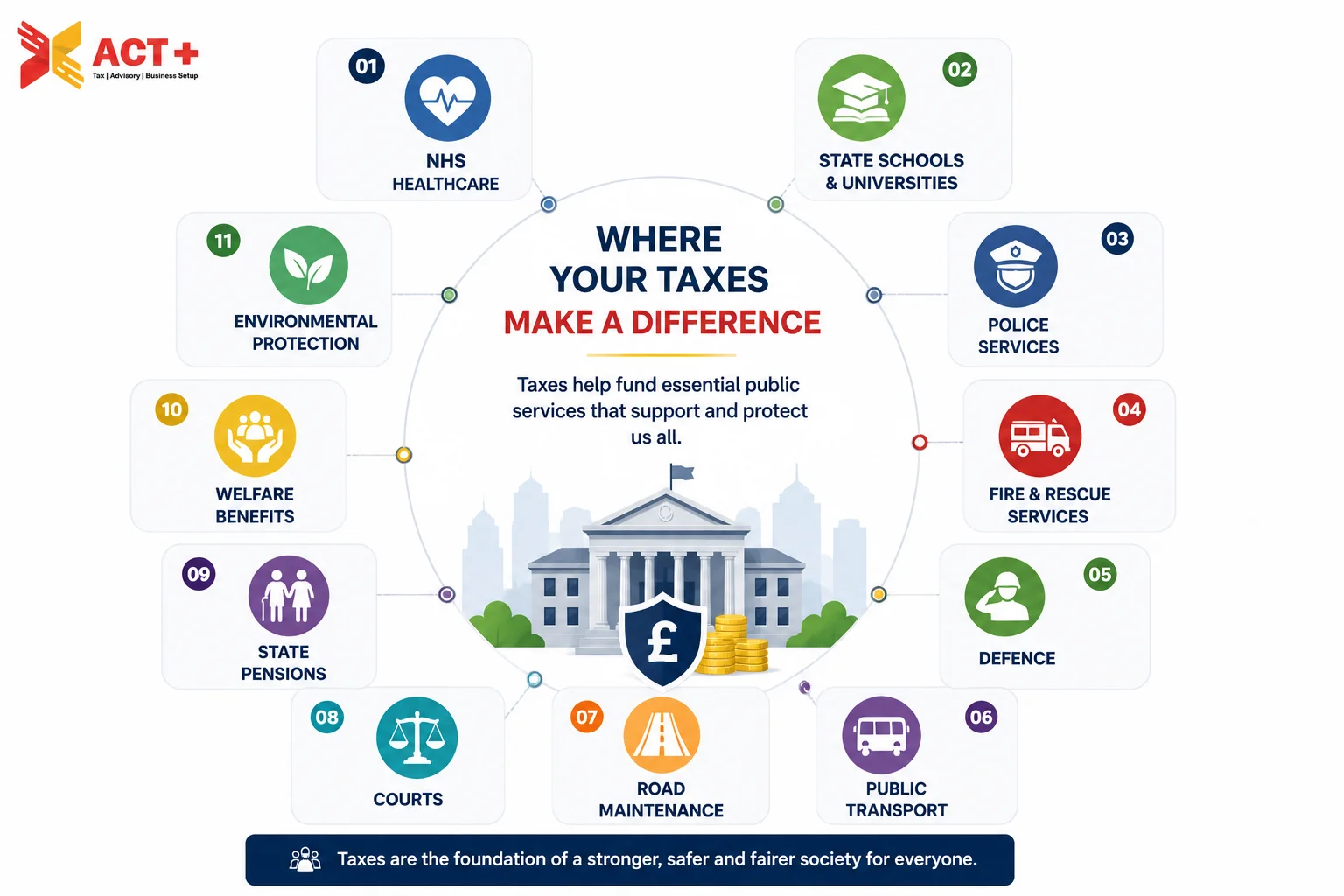
We pay taxes because governments need money to provide essential public services and support the economy. Tax revenue helps fund healthcare, education, public transport, emergency services, and other services that millions of people use every day.
Taxes also allow governments to build and maintain important infrastructure. This includes roads, bridges, schools, hospitals, and public buildings. Tax funds also support national security, welfare programmes, courts, policing, and public administration.
A fair tax system helps distribute resources across society and supports people who need financial assistance. It can reduce economic inequality, encourage investment, and promote long-term economic growth. Without taxation, governments could not maintain public services or provide the systems needed for a safe and stable society.
Taxes help the UK government provide services that people use every day. They support healthcare, education, safety, transport, and financial assistance for those in need. Tax revenue also helps maintain roads, protect the country, run courts, and care for the environment. By funding these essential services, taxes contribute to stronger communities and a more stable economy for everyone across Britain.
How Do Tax Allowances Help Reduce Your Taxes?
Tax allowances reduce the amount of income or gains that you pay tax on. They help eligible taxpayers lower their tax bill legally. The UK tax system provides several tax allowances and tax reliefs for individuals and businesses. These allowances support fairness and prevent people from paying tax on every pound they earn.
Common UK tax allowances include:
| Tax Allowance | Purpose |
|---|---|
| Personal Allowance | Lets most individuals earn a tax-free amount before paying income tax |
| Dividend Allowance | Allows part of your dividend income to be taxed at a lower rate or be tax-free, depending on current HMRC rules |
| Capital Gains Tax Annual Exempt Amount | Reduces taxable gains when you sell qualifying assets |
| Trading Allowance | Covers small amounts of trading or casual income |
| Property Allowance | Covers small amounts of rental or property income |
Some taxpayers can also claim tax relief on pension contributions, charitable donations, and qualifying business expenses. Understanding available allowances helps you reduce taxes legally while remaining fully compliant with HMRC rules.
How Much Money Can You Make Before Paying Taxes?
Most individuals can earn up to their available personal allowance before paying income tax, provided no special rules reduce that allowance. The exact amount can change from one tax year to another. It also depends on your income level and personal circumstances.
You may start paying tax sooner if:
- Your personal allowance has been reduced.
- You receive taxable benefits.
- You have multiple income sources.
- Certain income falls outside the allowance.
Always check the latest HMRC guidance for current tax bands, tax rates, and allowance limits.
✓ Free consultation • Expert UK tax advice
What Is Taxation?
Taxation is the legal process through which governments collect money from individuals and businesses. This revenue is used to fund public spending, government operations, and essential services.
Every country has its own taxation system. In the UK, the tax system explains which taxes apply, who must pay them, how much tax is due, and when payments must be made. It also sets out how taxpayers should report their income and financial information.
Taxation provides the government with a stable source of revenue. It helps fund healthcare, education, infrastructure, national security, and other public services. A well-managed tax system can also support economic growth and financial stability.
What Is a Taxation System?
A taxation system is the complete set of laws, rules, tax rates, and administrative procedures used to collect taxes. The UK tax system is managed mainly by HM Revenue & Customs (HMRC).
The UK taxation system includes:
- Income Tax
- Corporation Tax
- VAT
- Capital Gains Tax
- Inheritance Tax
- National Insurance
- Self-Assessment
- PAYE
Each tax has different filing requirements, payment dates, and calculation methods.HMRC regularly updates tax legislation, so taxpayers should stay informed throughout each tax year.
What Are the Benefits of Taxation?
Taxation provides the funding governments need to operate essential public services, improve infrastructure, and support long-term economic development. Tax revenue helps maintain services that individuals, families, and businesses rely on every day.
In the UK, taxes help fund healthcare through the NHS, schools, universities, roads, public transport, emergency services, pensions, and welfare programmes. Taxation also supports defence, national security, and environmental protection.
What Is the History of Taxation?
Taxation has existed for thousands of years. Governments have collected taxes throughout history to fund public projects, armies, and administration. Ancient civilisations, including Egypt, Greece, Rome, and China, all operated taxation systems.
Early taxes often included the following:
- Grain
- Livestock
- Land
- Labour
- Precious metals
As economies developed, governments introduced taxes on income, businesses, trade, and property. Today, modern tax systems use digital reporting, electronic payments, and online filing to improve efficiency.
Who Invented Taxes?
No single person invented taxes. Taxation developed gradually as organised governments began needing reliable income to manage public services, administration, and national responsibilities.
Historical evidence suggests that taxation existed more than 5,000 years ago. Ancient rulers collected money, crops, livestock, and other goods to fund public buildings, irrigation systems, military campaigns, and government administration.
Modern taxation has changed significantly since ancient times. Today, the UK tax system is governed by detailed legislation, with most taxes collected and administered by HM Revenue & Customs.
What Are Taxes Payable?
Taxes payable are amounts that individuals or businesses owe to the HMRC but have not yet paid. These amounts may arise from income, company profits, sales, investments, or employment. Recording them correctly helps businesses understand what they owe and plan payments. Paying on time also prevents extra costs and reduces the risk of action from HMRC or serious cash flow problems.
Taxes payable may include the following:
- Income Tax
- Corporation Tax
- VAT
- Capital Gains Tax
- National Insurance
For businesses, unpaid taxes usually appear as current liabilities within the financial statements until payment is made.
Paying taxes on time helps avoid:
- Interest charges
- Late payment penalties
- Compliance issues
- HMRC enforcement action
What Records Should You Keep for Taxes?
Good financial records help individuals and businesses calculate tax correctly and report the right information to HMRC. They provide clear evidence of income, expenses, purchases, payments, and business transactions. Organised records also reduce mistakes, save time, support tax claims, and make compliance checks easier. Digital bookkeeping systems can simplify record-keeping and help taxpayers meet filing deadlines with confidence.
Useful records include:
- Sales invoices
- Purchase invoices
- Bank statements
- Payroll records
- Expense receipts
- Dividend records
- Rental income records
- Investment statements
- VAT records
Businesses should also keep:
- Accounting software records
- Bookkeeping reports
- Annual accounts
- Corporation Tax calculations
HMRC may request supporting documents during a compliance review. Digital record keeping also makes filing an online tax return much easier.
What Are Common Tax Mistakes?
Tax mistakes are common, but many can be avoided with careful planning and accurate records. Errors may cause taxpayers to pay too much, owe unexpected amounts, or face penalties from HMRC. Checking tax codes, reporting all taxable income, claiming valid expenses, and meeting filing deadlines can help individuals and businesses manage their tax responsibilities correctly and avoid unnecessary financial problems.
Some of the most common errors include:
Using the Wrong Tax Code
An incorrect tax code may result in paying too much or too little income tax.
Missing Tax Return Deadlines
Late self-assessment or corporation tax submissions often trigger automatic penalties.
Forgetting Taxable Income
Some taxpayers forget to report the following:
- Rental income
- Side business income
- Overseas income
- Investment income
Missing Allowable Expenses
Many self-employed individuals fail to claim legitimate business expenses. This increases their tax bill unnecessarily.
Poor Record Keeping
Missing invoices and receipts make it difficult to prepare an accurate tax return.
What Happens If You Do Not Pay Taxes?
Failing to pay tax on time can create serious financial and legal problems for individuals and businesses. HMRC may add interest, issue penalties, request immediate payment, or begin recovery action. These costs can increase quickly if the debt is ignored. Speaking to HMRC early may help you explain your situation and agree on a suitable payment plan before problems worsen further.
Possible consequences include the following:
- Late payment interest
- Late filing penalties
- Debt collection action
- Payment demands
- County Court action in serious cases
- Insolvency action for businesses with significant unpaid tax
Do Government Agencies Pay Taxes?
Some government organisations pay certain taxes, while others receive exemptions under specific legislation. Government departments generally do not pay taxes in the same way as private businesses. Government-owned organisations may still be required to pay certain taxes.
✓ Free consultation • Expert UK tax advice

About the Author: Ahmad Raza