
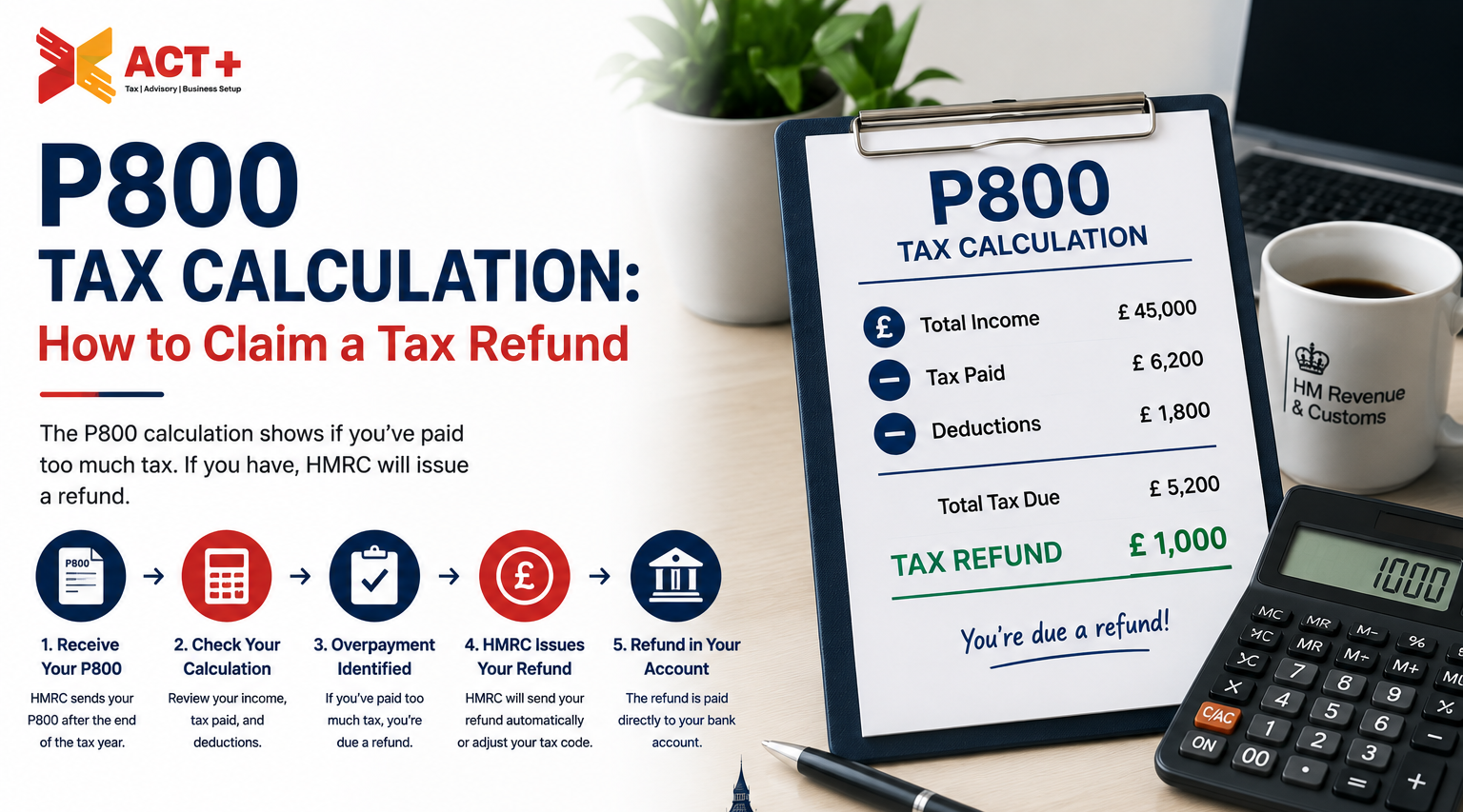
Many UK employees pay their income tax through the PAYE system (Pay As You Earn). Under this system, employers deduct tax through payroll deductions before wages are paid. However, HMRC sometimes finds that a taxpayer has paid too much or too little tax during the tax year. When this happens, HMRC issues a P800 tax calculation.
A tax calculation notice compares the tax you paid with the tax you actually owed. If you have overpaid tax, you may receive a P800 refund or a P800 tax repayment. If you have underpaid tax, HMRC will explain how to pay the outstanding amount.
Many UK taxpayers receive a P800 notice each year after HMRC reviews their PAYE records. Understanding your P800 HMRC letter can help you claim money owed to you or deal with an underpayment quickly. This guide explains everything you need to know about the P800 tax, including how to claim a P800 tax refund, how long it takes, and what to do if you think the calculation is wrong.
What Is a P800 Tax Calculation?
A P800 tax calculation is a notice issued by HMRC showing whether you have a tax overpayment or tax underpayment during a tax year. It compares the tax you paid with your actual tax liability.
The calculation may show the following:
- You paid too much tax and are due a P800 tax refund
- You paid too little tax and need to repay HMRC
- Your tax position is correct, and no action is required
What Is the P800 Form?
Many people refer to the notice as the P800 form. It is not a tax return. Instead, it is a tax calculation prepared by HMRC. The form summarises your income, tax paid, tax allowances, and any difference between the tax collected and the tax due. It helps taxpayers understand their tax position without completing a self-assessment return.
What Does a P800 Tell You?
A P800 notice normally includes details of your employment income, pension income, personal allowance, tax deducted during the year, and the final tax position calculated by HMRC. The notice clearly states whether you are entitled to a P800 refund or whether you need to pay additional tax.
✓ Free consultation • Expert P800 tax refund support
How Do I Claim My P800 Tax Refund?
If your P800 notice shows that you have overpaid tax, HMRC will explain how to receive your money. Many taxpayers can now submit a tax refund claim online through HMRC’s secure service using their Government Gateway account. The process is usually straightforward and only takes a few minutes.
You will normally need:
- Your Government Gateway account
- Information from your P800 letter
- Bank account details
After verification, HMRC transfers the refund directly to your bank account. In some cases, HMRC may send a cheque instead of requesting an online claim.
How Long Does a P800 Take?
HMRC usually issues a P800 letter after the end of the tax year. The UK tax year ends on 5 April each year. HMRC often starts reviewing PAYE records shortly afterwards. Most P800 HMRC notices are issued between June and November, although timings can vary. Once you submit your refund request online, refunds are often processed within five working days. Cheque payments generally take longer.
How to Pay Underpaid Tax from a P800?
Not every HMRC tax calculation results in a refund. If HMRC determines that you have paid too little tax, the notice will explain how to settle the amount owed.
Depending on the amount involved, HMRC may
- Collect the tax through your tax code
- Request direct payment
- Offer a payment arrangement
The method used often depends on the size of the underpayment and your personal circumstances.
How Does a P800 Tax Calculation Work?
During an HMRC review, the department checks PAYE records, tax records, pension information, and other income sources provided by employers and pension providers.
The department compares:
- Income received during the tax year
- Tax deducted through PAYE
- Personal Allowance entitlement
- Tax reliefs and adjustments
If HMRC finds a difference between the tax paid and the tax owed, it issues a P800 letter explaining the outcome.
Why Did You Receive a P800 Letter?
There are several reasons why HMRC may issue a UK tax calculation notice.
Common reasons include:
- Changing jobs during the year
- Receiving more than one source of income
- Starting or stopping a pension
- An incorrect tax code being used during the tax year
- Employment benefits not included in PAYE calculations
- Delayed information from employers
Receiving a P800 HMRC letter does not automatically mean you have made a mistake. It often results from PAYE adjustments made after the tax year ends.

What Should You Do If Your P800 Is Wrong?
If you receive a P800 notice, take time to review all the information carefully. Check that your employment income, pension income, personal allowance, tax records, tax paid, and any benefits or expenses shown on the notice are accurate.
If you notice any mistakes or missing information, contact HMRC as soon as possible. You may be asked to provide supporting documents such as your P60, payslips, pension statements, or details from your employer. Correcting any errors early can help avoid future tax problems and prevent delays in receiving your P800 tax repayment.
Why Did I Receive an HMRC P800 Letter Tax Bill?
An HMRC P800 letter tax bill usually means HMRC believes you have underpaid taxes.
This can happen when:
- Your tax code was incorrect
- You had multiple jobs
- You received taxable state benefits
- Your pension income changed
- Income information was reported late
The notice explains how HMRC calculated the amount due and how payment can be made.
What Is the Difference Between P800 and Self-Assessment?
A P800 notice and a self-assessment tax return serve different purposes. A P800 is prepared by HMRC using information already available to them. Self-assessment requires taxpayers to report their own income and calculate their tax liability. Many employees only receive a P800 and never need to complete a self-assessment return. However, people with self-employment income, rental income, or more complex tax affairs may still need to file a tax return.
What is the Difference Between a Tax Return and a Self-Assessment?
The terms are often used interchangeably. A self-assessment is HMRC’s system for reporting taxable income. The tax return is the form submitted through that system. An HMRC P800 notice is completely different because HMRC prepares it for you based on PAYE records.
What Is a P800 Refund?
A P800 refund is money returned by HMRC when an HMRC review identifies a tax overpayment during the tax year. The refund amount appears on your HMRC refund notice and can usually be claimed online.
Is a P800 a refund?
No. A P800 is not the refund itself. The P800 is a tax calculation that explains whether you are due a refund or owe tax. If a refund is due, the notice explains how to claim your P800 tax refund.
Do I Need to Respond to a P800?
Not always. If the information is correct and HMRC automatically issues the refund, no further action may be required. However, if HMRC asks you to claim a P800 refund online, you should follow the instructions provided. You should also contact HMRC if you believe the calculation contains errors.
✓ Free consultation • Expert P800 tax refund support
How Do I Claim My P800 Refund?
To claim your P800 tax repayment, follow the instructions included in your notice. Most claims can be made online through HMRC’s refund service.
You will need:
- Government Gateway credentials
- P800 reference details
- Bank account information
After verification, HMRC processes the refund and transfers the funds directly to your account.
Who Provides P800?
HMRC provides all P800 tax letters. The notice comes directly from HM Revenue & Customs after they review your PAYE records. Be cautious of scams. Genuine HMRC tax refund letters will not ask for personal information by email or text message.
When Do You Get P800?
Most taxpayers receive a P800 HMRC notice after the tax year ends. HMRC generally reviews records during spring and summer. Many notices arrive between June and November, although some may be issued later depending on individual circumstances.
How to Claim a P800 Refund Online?
You can usually claim a tax refund online through HMRC’s secure refund service.
The process involves:
- Logging into your Government Gateway account.
- Entering details from your tax calculation notice.
- Confirming your identity.
- Providing bank details.
- Submitting the refund request.
HMRC then reviews the claim and processes the payment.
Can I Get a Tax Refund Without a P800?
Yes, not all tax refunds come through a P800 refund process. Taxpayers may also receive refunds through:
- Self-assessment tax returns
- Tax code adjustments
- Employment expense claims
- Marriage Allowance claims
- Pension tax corrections
PAYE overpayments are commonly refunded through the P800 tax repayment system.
Does HMRC send tax refund letters?
Yes, HMRC regularly sends tax refund letters when taxpayers are due repayments.
These letters may include:
- A Tax calculation notice
- Instructions for claiming a refund
- Information about repayment methods
- Security guidance
Always verify that any communication comes from HMRC before providing personal information.
c
Need Help With Your HMRC Tax?
At Xact+ Accountants, we regularly assist employees, pensioners, company directors, and self-employed individuals with HMRC tax calculations, PAYE reviews, tax code corrections, tax refund claims, and resolving tax liability issues.
Get in Touch TodayFrequently Asked Questions
Is a P800 tax calculation the same as a Self Assessment tax return?
Can I receive a P800 if I have more than one job?
How can I check if my P800 letter is genuine?
What documents should I check before responding to a P800?
Can I appeal if I think my P800 tax calculation is incorrect?

About the Author: Ahmad Raza