
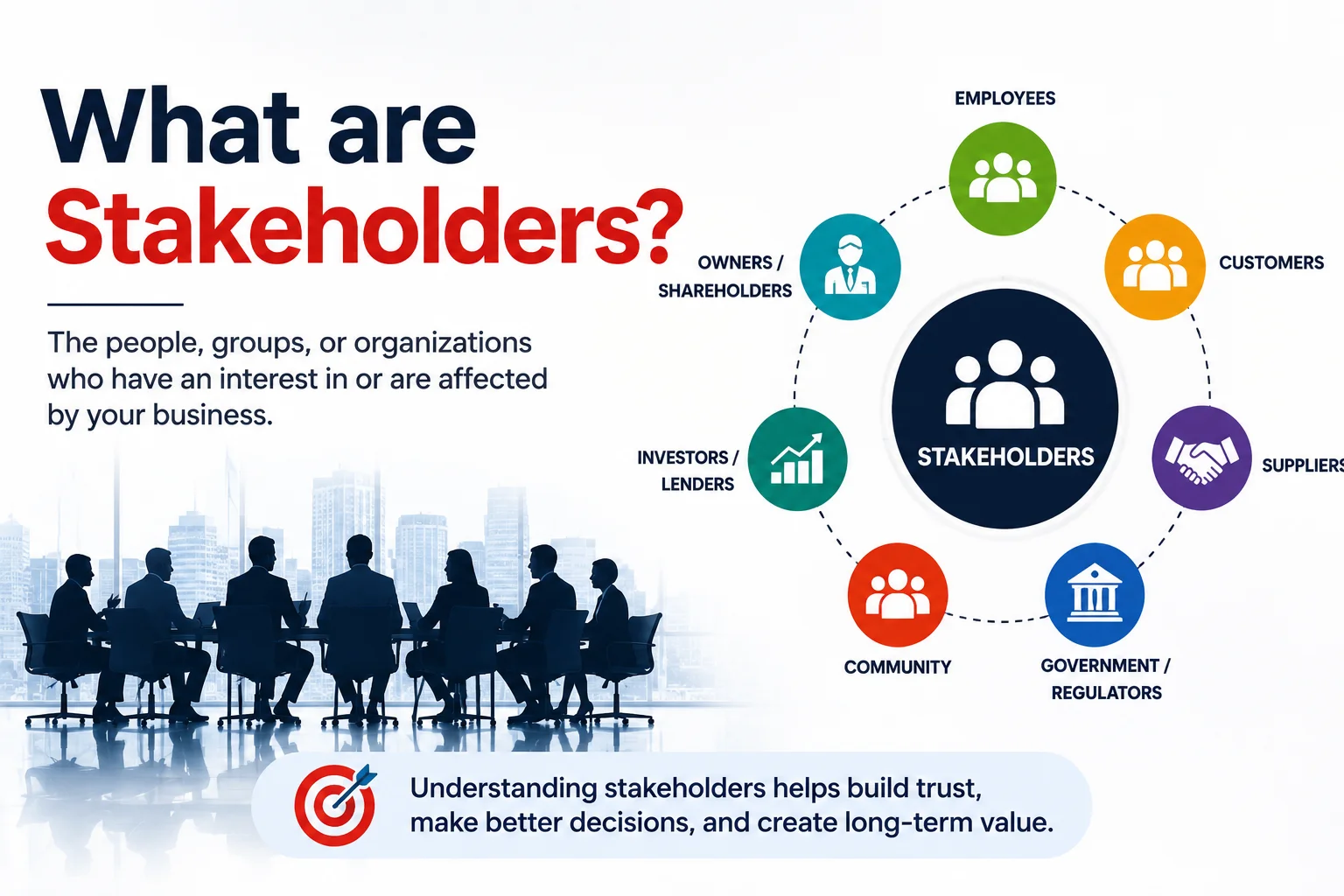
Stakeholders can include employees, customers, investors, suppliers, lenders, government authorities, and local communities. Each group has a distinct interest in the company, which may affect business decisions in various ways.
Every business relies on a diverse range of individuals and organizations to operate successfully. Some support daily operations, while others influence funding, growth, reputation, or legal compliance. In business, these connected parties are known as stakeholders.
Understanding stakeholders helps businesses improve communication, build trust, manage risks, and support long-term growth. It also plays an important role in accounting, financial reporting, compliance, and business planning.
What are Stakeholders?
A stakeholder is any person, group, or organization connected to a business. These parties may influence company decisions or be affected by business activities, financial performance, or operational changes.
Some people work directly within the company, such as employees, managers, and business owners. Others remain outside the organization but still have an interest in how the business performs. These may include customers, suppliers, lenders, investors, regulators, and local communities.
Every group views the business differently. Investors often focus on profitability and future growth, while employees care more about job security, salaries, and working conditions. Customers usually expect reliable products and good service, whereas government authorities monitor compliance with tax and legal responsibilities.
How Do Stakeholders Work?
Different groups contribute to a business in different ways. Employees help manage daily operations and customer service, while suppliers support production and inventory. Customers directly influence sales, reputation, and long-term revenue.
Financial stakeholders also play a major role. Investors and lenders often review company performance before providing funding or approving finance applications. At the same time, directors and managers rely on business data to make operational and financial decisions.
Outside the business, regulators and tax authorities monitor compliance with employment laws, financial reporting standards, and tax obligations. Public opinion can also affect a company’s reputation, especially in competitive industries.
Since every group has different expectations, businesses often balance competing priorities. For example, investors may expect stronger profits, while employees may seek better workplace benefits and stability. Companies that handle these relationships well usually build greater trust and stronger long-term business performance.
✓ Free consultation • Trusted UK business support
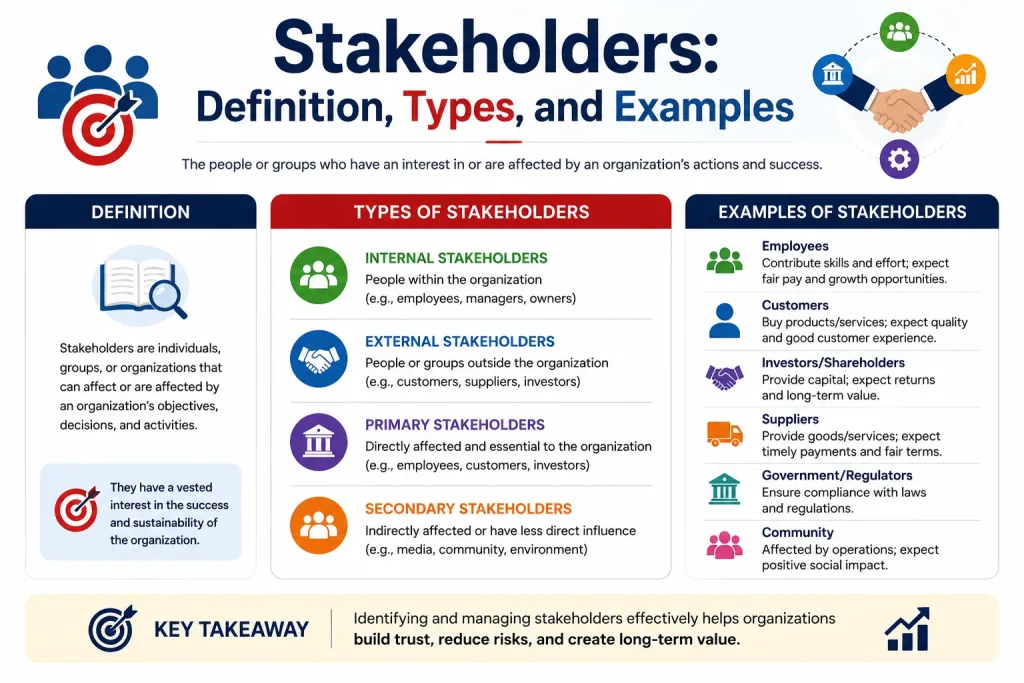
What Are the Types of Stakeholders?
Stakeholders can generally be divided into different categories based on their relationship with the business. Some work directly within the organization, while others influence operations externally through funding, regulation, purchasing decisions, or public opinion.
Businesses usually classify connected groups into the following categories:
| Type of Stakeholder | Description |
|---|---|
| Internal Stakeholders | People working inside the organisation |
| External Stakeholders | Parties outside the business |
| Primary Stakeholders | Groups directly affected by operations |
| Secondary Stakeholders | Groups indirectly connected to business activities |
This classification helps businesses identify which groups require closer communication, stronger engagement, and more detailed management strategies.
What are the Examples of Stakeholders?
Examples of stakeholders vary depending on the type of business and industry.
Common examples of stakeholders include:
| Stakeholder | Role in Business |
|---|---|
| Employees | Perform business operations |
| Customers | Buy products and services |
| Investors | Provide capital and funding |
| Shareholders | Own shares in the company |
| Managers | Make operational decisions |
| Suppliers | Deliver materials and services |
| Government | Regulates legal compliance |
| Communities | Affected by company activities |
| Creditors | Provide loans or financing |
Every stakeholder group has different interests and expectations from the company.
What are Internal and External Stakeholders?
Stakeholders can be divided into two main groups based on their relationship with a business: internal stakeholders and external stakeholders. The difference depends on whether the person or group operates inside the company or outside it.
Internal Stakeholders
Internal stakeholders are people directly connected to the business from within the organization. They take part in daily operations, management, and business decisions. Their income, responsibilities, and success often depend on the company’s performance.
Common internal stakeholders include:
- Business owners
- Shareholders
- Directors
- Managers
- Employees
These individuals help run the business and contribute to its growth, productivity, and long-term goals. For example, employees depend on the company for salaries and job security, while shareholders focus on profitability and business value.
External Stakeholders
External stakeholders are individuals or groups outside the company who are affected by the business or have an interest in its activities. They do not manage daily operations, but business decisions can still impact them.
Common external stakeholders include:
- Customers
- Suppliers
- Investors
- Banks and lenders
- Government authorities
- Local communities
- HMRC and regulatory bodies
External parties often influence a business through purchasing decisions, legal requirements, funding, or public reputation. For example, customers affect sales revenue, while government authorities monitor legal and tax compliance.
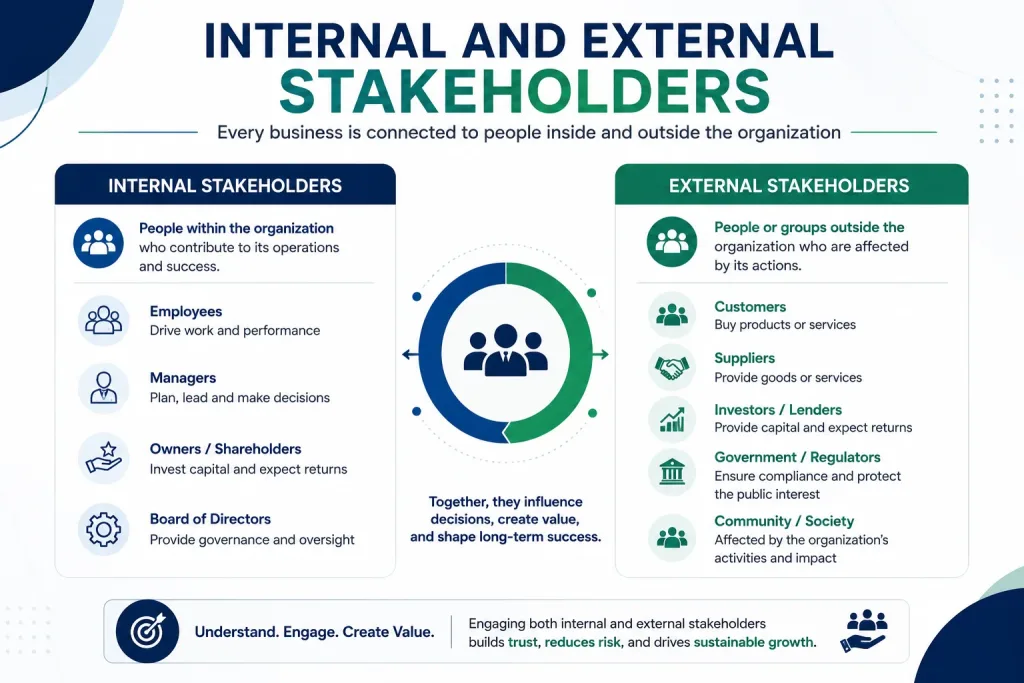
Both internal and external stakeholders are important for business success. A company must maintain strong relationships with both groups to improve performance, protect its reputation, and support long-term growth.
What Are Primary and Secondary Stakeholders?
Primary and secondary stakeholders are classified based on the level of impact they have on a business and how closely they are connected to its operations.
Primary Stakeholders
Primary stakeholders are people or groups directly affected by a company’s activities and success. A business depends on them for daily operations, revenue, and long-term survival. Without primary stakeholders, a company may struggle to operate effectively.
Common primary stakeholders include:
- Customers
- Employees
- Business owners
- Shareholders
- Suppliers
- Investors
These parties have a direct financial or operational relationship with the business. For example, customers generate sales revenue, employees perform business activities, and suppliers provide products or services needed for operations.
Secondary Stakeholders
Secondary stakeholders are individuals or groups that are indirectly connected to the business. They usually do not take part in daily operations or financial activities, but they can still influence the company’s reputation, decisions, or public image.
Common secondary stakeholders include:
- Media organizations
- Local communities
- Trade associations
- Pressure groups
- Competitors
- Government agencies and regulators
Although secondary stakeholders may not directly contribute to business income, their opinions and actions can affect public trust, brand reputation, and legal compliance.
What is the Stakeholder Matrix?
A stakeholder matrix is a business tool used to identify and organize stakeholders based on their influence and interest.
Businesses use stakeholder matrices to improve communication and decision-making.
The matrix usually contains four categories:
| Stakeholder Position | Action |
|---|---|
| High Interest + High Influence | Manage Closely |
| High Influence + Low Interest | Keep Satisfied |
| Low Influence + High Interest | Keep Informed |
| Low Influence + Low Interest | Monitor Occasionally |
This method helps businesses focus on important stakeholder relationships.
What is a stakeholder in Business?
A stakeholder in business refers to anyone connected to a company’s activities, success, or decisions.
Business stakeholders influence many areas, including:
- Financial performance
- Company growth
- Reputation
- Compliance
- Investments
- Customer satisfaction
The business definition of stakeholder includes both people inside and outside the organization. Companies often create stakeholder engagement strategies to improve long-term business relationships.
✓ Free consultation • Trusted UK business support
Who are the stakeholders in business?
Stakeholders in business are individuals, groups, or organisations connected to a company’s activities and performance. They may influence business decisions or be affected by the way the company operates.
Some are directly involved in running the business, including owners, employees, managers, and shareholders. Others support the business externally, such as customers, suppliers, banks, investors, government authorities, and local communities.
Each group plays a different role. Customers generate revenue, suppliers help maintain operations, employees manage daily activities, and investors provide financial support for expansion and growth.
Businesses that understand the needs of these groups often make better decisions, maintain stronger relationships, and improve long-term business stability.
What is a stakeholder in a company?
A stakeholder in a company is a person or organization with an interest in the company’s activities and outcomes. Some stakeholders seek financial returns, while others focus on employment, product quality, sustainability, or legal compliance.
For example:
- Shareholders focus on profits.
- Employees focus on job security.
- Customers focus on quality products.
- Governments focus on compliance.
Companies must balance these interests carefully.
Who are the stakeholders in corporate responsibility?
Stakeholders in corporate responsibility include groups affected by a company’s ethical, environmental, and social actions.
Examples include:
- Customers
- Employees
- Communities
- Environmental groups
- Governments
- Investors
Modern businesses often consider ESG goals and corporate responsibility to improve stakeholder trust.
Why Are Stakeholders Important?
Businesses rely on different people and organisations for growth, operations, funding, and reputation. Strong relationships with these groups can improve stability and support better long-term decision-making.
Satisfied customers often return and recommend the business to others. Employees who feel valued usually contribute more effectively to daily operations. Investors and lenders are also more confident when a company maintains accurate financial records and responsible management practices.
Good stakeholder relationships can also reduce business risks. Poor communication, weak customer service, or compliance failures may damage reputation and affect profitability. In some cases, financial penalties or legal problems can arise if important obligations are ignored.
From an accounting perspective, stakeholders rely heavily on accurate financial information. Directors, investors, lenders, and HMRC often use financial reports to assess company performance, tax compliance, profitability, and future planning.
What is a stakeholder in project management?
A stakeholder in project management is any person, group, or organization that is involved in a project or affected by its outcome. Stakeholders can influence the success, progress, or direction of a project through their decisions, support, feedback, or resources. They may participate directly in project activities or have an indirect interest in the final results.
In project management, stakeholders commonly include project managers, team members, business owners, clients, investors, suppliers, and end users. Some stakeholders help manage and complete the project, while others focus on project quality, costs, deadlines, or business goals.
Stakeholder management is an important part of successful project planning. Project managers must communicate clearly with stakeholders, understand their expectations, and address concerns throughout the project lifecycle. Good stakeholder involvement helps reduce risks, improve collaboration, and increase the chances of project success.
✓ Free consultation • Trusted UK business support
How to manage stakeholders?
Businesses use stakeholder management to maintain healthy relationships with important groups.
Simple stakeholder management steps include:
1. Identify stakeholders
Find everyone connected to the business or project.
2. Understand stakeholder interests
Learn what stakeholders expect from the company.
3. Prioritize stakeholders
Focus more on high-impact stakeholders.
4. Maintain communication
Provide updates, reports, and feedback regularly.
5. Resolve conflicts quickly
Handle stakeholder concerns before they grow.
Strong stakeholder communication improves trust and business stability.
How does ESG affect stakeholders?
Environmental, Social, and Governance (ESG) practices have become increasingly important for modern businesses. Customers, investors, employees, and regulators now expect companies to operate responsibly and transparently.
Strong ESG practices may include:
- Reducing environmental impact
- Improving workplace conditions
- Following ethical governance policies
- Maintaining transparency in operations
Businesses with strong ESG performance often build better trust, stronger reputations, and improved investor confidence. Poor ESG practices can damage relationships with customers, employees, and financial stakeholders.
How to Identify Your Stakeholders?
Businesses can identify stakeholders using a simple, practical process.
Review business operations
Look at everyone connected to the company.
Analyze financial relationships
Identify investors, lenders, suppliers, and shareholders.
Identify affected groups
Consider customers, employees, and communities.
Review legal obligations
Identify regulators and government agencies.
Categorize stakeholders
Separate stakeholders into internal and external groups.
This process helps businesses improve stakeholder communication and planning.
What is the difference between stakeholders and shareholders?
Many people confuse stakeholders with shareholders, but both terms have different meanings in business and accounting. The table below explains the main differences between these two groups.
| Stakeholders | Shareholders |
|---|---|
| Include anyone connected to the business | Own shares in the company |
| Maybe internal or external | Usually, investors or owners |
| Focus on broader business interests | Focus mainly on financial returns |
Although all shareholders are stakeholders, not every stakeholder owns shares in the company. Understanding this difference helps businesses improve communication and financial reporting.
What is the role of stakeholders in accounting?
Stakeholders play an important role in accounting and financial reporting because businesses must provide accurate financial information to interested parties.
Investors review financial statements before making investment decisions. Banks analyse accounting records before approving loans. Government authorities monitor tax compliance and reporting obligations. Managers also rely on accounting reports for budgeting, forecasting, and planning.
✓ Free consultation • Trusted UK business support
Frequently Asked Questions
How are shareholders and owners likely to be affected by the closure and relocation of the factory?
How are employees likely to be affected by the closure and relocation of the factory?
How is the government likely to be affected by the closure and relocation of the factory? (UK)
Are some stakeholders more important than others?
How are local communities affected by a factory closure?
How are suppliers affected by a factory closure and relocation?
How are customers affected by a factory closure and relocation?

About the Author: Ahmad Raza