
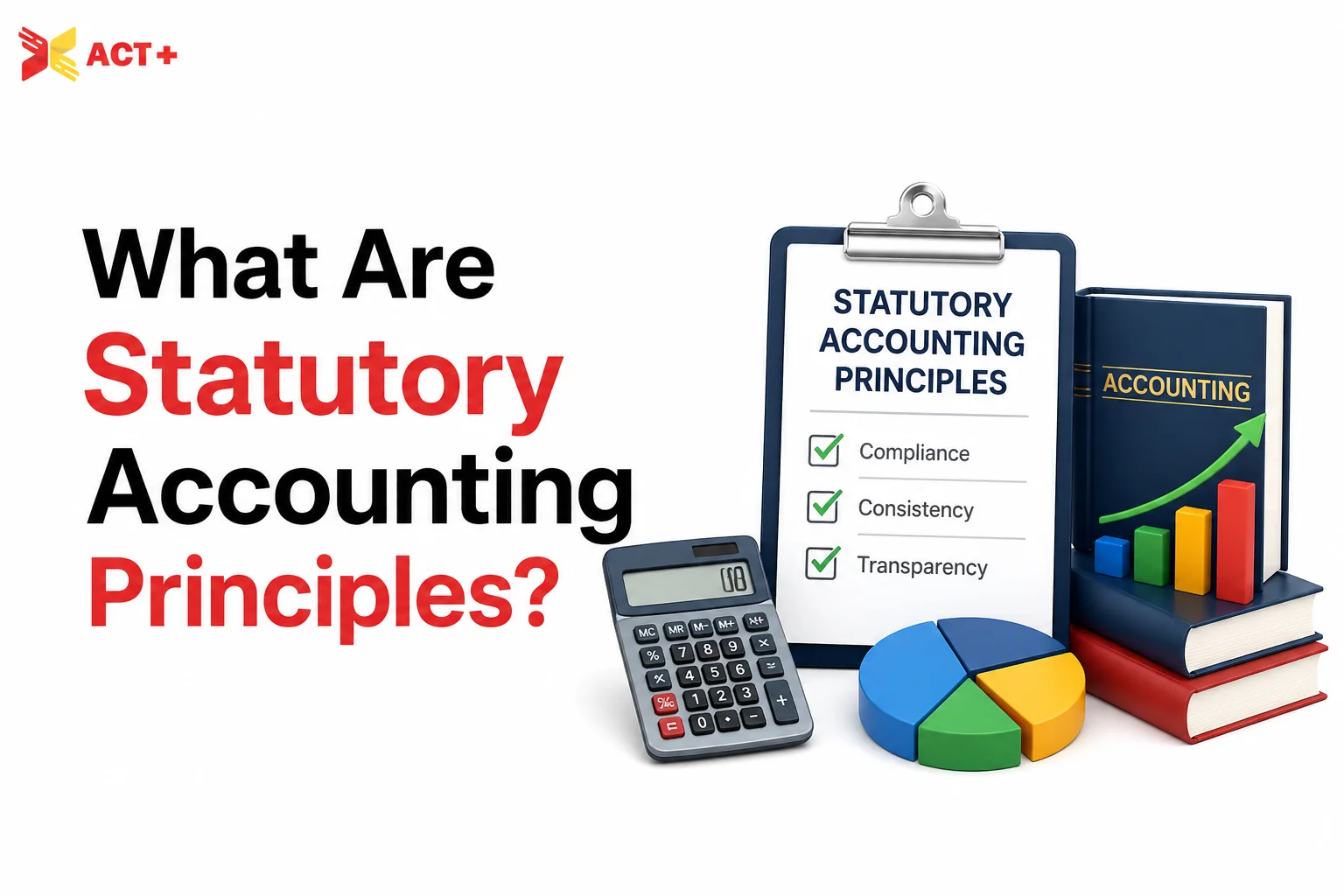
Statutory Accounting Principles are a reporting framework that requires insurance companies to maintain enough funds to pay all policyholder claims at any given time, even in the event of immediate liquidation. The elements of Statutory Accounting Principles are conservatism, recognition, consistency, admissibility, and asset valuation.
An example of SAP involves insurance companies such as Aviva and Legal and General, which apply SAP in their routine financial reporting. These instances also involve how admitted and non-admitted assets, claims reserves, and loss reserves work in practice.
This guide explores how insurance companies apply SAP in their daily financial reporting. It also explains the comparison between SAP and GAAP in terms of objectives, asset valuation, and liability recognition. Statutory Accounting Principles exist specifically to protect policyholders rather than serve investors.
What Are Statutory Accounting Principles?
Statutory Accounting Principles are a set of specialised accounting regulations that govern how insurance companies prepare and present their financial statements to regulators. The purpose is to confirm solvency, policyholder protection, and long-term financial stability.
SAP (Statutory Accounting Principles) carefully values assets, quickly recognises liabilities, and only counts liquid, easily accessible resources when assessing an insurer’s financial situation. Following these rules means that insurance companies must always have enough reserves to meet their obligations.
What are the core elements of Statutory Accounting Principles?
The core elements of Statutory Accounting Principles as a specialised accounting framework are conservatism, recognition, consistency, admissibility, and asset valuation.
| Core element | Focus | Purpose |
|---|---|---|
| Conservatism | Careful financial reporting | Prevents overstatement of assets and income |
| Recognition | Liquid and realisable assets only | Makes sure obligations are met when due |
| Consistency | Uniform accounting methods | Allows reliable period-to-period comparison |
| Admissibility | Qualifying assets only | Excludes illiquid or non-marketable assets from solvency calculations |
| Asset Valuation | Conservative asset measurement | Avoids inflating a company’s financial position |
Conservatism
SAP requires insurance companies to record possible losses and liabilities as soon as they happen, but they can only record revenues when they are sure. This cautious approach makes sure financial statements never overstate a company’s true financial standing.
Recognition
Only assets that are liquid and readily available to meet policyholder obligations are recognised on the balance sheet. Assets that cannot be quickly converted to meet claims are excluded, which keeps solvency assessments stable in financial reality.
Consistency
Insurance companies must apply the same accounting methods across every reporting period. This method allows regulators and stakeholders to make meaningful comparisons over time and accurately track changes in financial stability.
Admissibility
Not every asset qualifies under SAP. Illiquid, non-marketable, or seized assets are considered non-admitted and excluded from solvency calculations. This element makes sure only genuinely accessible resources count toward an insurer’s financial strength.
Asset valuation
Assets are measured conservatively under SAP rather than at their most favourable market value. This element prevents insurance companies from overstating their financial position and allows regulators to receive an accurate assessment of the business.
✓ Free consultation • Trusted support
What are examples of Statutory Accounting Principles?
An example of SAP (Statutory Accounting Principles) is admitted versus non-admitted assets. UK insurers like Aviva and Legal & General must count only admitted assets, which are easily converted to cash, in their solvency calculations for statutory financial statements. UK government gilts and cash deposits are admitted assets due to their quick availability for policyholder claims. Goodwill, intangible assets, and illiquid properties are non-admitted and excluded from solvency assessments. This classification gives regulators a clear measure of the insurer’s reliable resources during financial stress.
Another example is the claims reserve. UK insurers, under SAP, are required to set aside sufficient claims reserves to cover all outstanding policyholder claims that have been reported but not yet settled. For instance, a motor insurer operating in the UK must maintain sufficient claims reserves to pay out pending accident claims, even if the final settlement amount has not yet been agreed. This requirement makes sure policyholders are never left without recourse while their claim is being processed. It also helps them during the claims process.
There is also an example of loss reserves. UK insurers must hold loss reserves to account for losses that have already been incurred but not yet formally reported, known as IBNR (Incurred But Not Reported) claims. A UK property insurer, for example, must estimate and set aside loss reserves for storm or flood damage claims that policyholders may not have filed yet, particularly following a major weather event. This predictive requirement is at the core of SAP’s conservative accounting framework.
What Are the Differences Between Statutory Accounting Principles and GAAP?
The differences between Statutory Accounting Principles and GAAP (Generally Accepted Accounting Principles) are primary objective, revenue recognition, capital requirements, liability recognition, asset valuation, investment income, and regulatory compliance. Another difference is based on admitted versus non-admitted assets.
The differences between Statutory Accounting Principles and GAAP are listed below:
- Primary objective: SAP is designed to confirm insurer solvency and protect policyholders. It guarantees that insurance companies meet their financial obligations at all times. GAAP focuses on providing investors, creditors, and stakeholders with an accurate and comprehensive view of a company’s overall financial performance.
- Revenue recognition: Revenues, under SAP, are only recorded when they are certain and realisable. This recognition follows a conservative approach to financial reporting. GAAP permits a broader and more flexible approach to revenue recognition. This principle allows income to be recorded at an earlier stage based on agreed contractual terms.
- Capital requirements: SAP sets strict capital requirements on insurance companies. It makes sure companies maintain sufficient surplus for financial shocks and continue meeting policyholder obligations. GAAP does not prescribe specific capital thresholds. Its primary purpose is accurate financial reporting rather than solvency regulation.
- Liability recognition: SAP requires liabilities to be recognised quickly and traditionally. This principle makes sure that claims reserves and loss reserves are never understated. GAAP allows flexibility in both the timing and measurement of liabilities. Such flexibility shows a less careful approach suited to broader industry reporting.
- Asset valuation: Assets, under SAP, are valued conservatively to prevent insurance companies from overstating their financial position. GAAP permits more flexible asset valuations, often at fair market value. This flexible valuation results in higher reported figures on the balance sheet.
- Investment income: SAP treats investment income carefully, recognising it only when it is sure and directly available to meet policyholder obligations. GAAP allows for a broader recognition of investment income. This income includes unrealised profits, which present a more favourable view of a company’s financial position.
- Regulatory compliance: SAP operates within a strict regulatory framework managed in the UK by the PRA (Prudential Regulation Authority), with compliance mandatory for all insurance companies. GAAP, specifically IFRS in the UK, is governed by the FRC (Financial Reporting Council) and applies broadly across all industries. It focuses on transparency and consistency for investors rather than solvency regulation.
- Admitted versus non-admitted assets: SAP distinguishes between admitted and non-admitted assets, excluding illiquid or non-realisable assets from solvency calculations entirely. GAAP does not make this distinction and generally recognises a wider range of assets on the balance sheet.
✓ Free consultation • Trusted support
Why Do Insurance Companies Use Statutory Accounting Instead of GAAP?
Insurance companies use statutory accounting instead of GAAP because state regulators require a framework built around solvency and policyholder protection rather than investor reporting. SAP makes sure insurers maintain sufficient reserves as part of insurance regulation to meet their obligations at all times. This principle provides regulators with a reliable and conservative measure of an insurer’s true financial capacity.
How Are Statutory Accounting Principles Applied in Insurance Companies?.
Statutory accounting principles are applied in insurance companies by traditionally recording premium revenue only when earned, and recognising liabilities quickly. This application also involves distinguishing between admitted assets and non-admitted assets, which are excluded from solvency calculations. This distinction confirms that regulators receive an accurate and reliable measure of an insurer’s true financial position.
What Is the Difference Between Statutory Accounting Principles and IFRS?
Statutory accounting principles and IFRS are two separate accounting standards that serve different purposes in financial reporting. SAP is a specialised framework applied only to insurance companies, prioritising solvency and policyholder protection. IFRS (International Financial Reporting Standards) focuses on providing investors with a transparent and comprehensive view of a company’s overall financial performance.
What Is the Difference Between Statutory Accounting Principles and Regulatory Accounting Principles?
Statutory accounting principles are a specialised set of standards used specifically within insurance regulation. Regulatory accounting principles apply more broadly across financial regulation for multiple industries. SAP is exclusively for the insurance sector, and regulatory accounting principles adjust to the specific requirements of each regulated industry.
What Is the Difference Between Statutory Accounting and Management Accounting?
Statutory accounting follows legally mandated statutory accounting principles to produce financial statements for regulators, ensuring compliance and solvency. Management accounting is not mandated by law and focuses on internal financial reporting to support business decision-making and strategy. Financial accounting and management accounting differ based on reporting requirements, but SAP governs external regulatory reporting for insurers.
Are Statutory Accounting Principles the Same in Every Country?
No, Statutory Accounting Principles are not the same in every country. The NAIC, in the US, establishes SAP specifically for insurance regulation, while the UK and many other countries follow IFRS as their broader accounting standards framework. The basic goal of insurer solvency and policyholder protection remains consistent globally, but the specific rules and reporting requirements differ across jurisdictions.
What Are the Benefits of Statutory Accounting Principles?
The benefits of Statutory Accounting Principles include improved policyholder protection, confirming insurers always meet their claims obligations, and transparency through conservative and consistent financial reporting. Other benefits are stronger financial stability across the insurance sector and effective risk management.
What Is Statutory Reporting?
Statutory reporting is the process by which insurance companies submit their financial data to state regulators that meet strict filing requirements. The annual statement is the primary document submitted, providing regulators with a comprehensive overview of an insurer’s financial position and solvency.
What Is the NAIC SAPWG?
The NAIC SAPWG (Statutory Accounting Principles Working Group) is the body under the NAIC (National Association of Insurance Commissioners) that creates, maintains, and updates Statutory Accounting Principles for insurance companies. It works closely with state regulators to review and update rules. It also confirms SAP remains relevant and effective in showing the changing financial state of the insurance industry.
How Can Accounting Services Help With Statutory Accounting Principles?
Accounting services help with Statutory Accounting Principles by offering accurate preparation of statutory financial statements, maintaining accounting compliance, and meeting strict financial reporting deadlines. Accounting services in the UK provide the technical expertise needed to keep insurance companies fully compliant and financially well-positioned with regulators at all times.
How Can Tax Services Make Statutory Accounting Easier for You?
Tax services make Statutory Accounting easier for you by confirming that financial statements are prepared accurately and according to statutory accounting principles. Professional tax services also manage regulatory compliance, maintain accounting compliance across reporting periods, and help insurance companies with complex filing obligations expertly.
✓ Free consultation • Trusted support

About the Author: Ahmad Raza