
An HMRC complaint is a formal report submitted to HM Revenue and Customs when a taxpayer believes HMRC made a mistake, caused delays, provided poor service, or handled a tax matter unfairly.
Thousands of UK taxpayers file HMRC complaints every year because of delayed tax refunds, incorrect tax codes, unfair penalties, and poor customer service. In many cases, these issues affect business cash flow, tax repayments, and financial stability.
HM Revenue and Customs provides an official complaints process that allows taxpayers to challenge mistakes, delays, and unfair treatment. Whether your issue involves self-assessment, PAYE, VAT, corporation tax, or national insurance, you have the legal right to complain and request an independent review.
When Should You Complain to HMRC?
You should complain to HM Revenue and Customs when HMRC’s actions negatively affect you or your business. A complaint usually applies when HMRC makes mistakes, delays responses, or handles your matter unfairly.
Common reasons for HMRC complaints include:
- Incorrect tax bills
- Delayed tax refunds
- Wrong PAYE tax code
- Poor customer service
- Long waiting times
- Lost documents
- Unfair penalties
- Errors in self-assessment records
- Delays in processing repayments
- Problems with National Insurance records
Many taxpayers complain about HMRC after repeated failed attempts to resolve an issue through normal support channels.
For example, you may need to complain about HMRC if:
- HMRC issued the wrong tax demand
- Your repayment has remained delayed for months
- HMRC ignored the submitted evidence
- You received penalties despite reasonable excuses
- HMRC staff gave incorrect guidance
- Your self-assessment account shows inaccurate information
How do I complaint process?
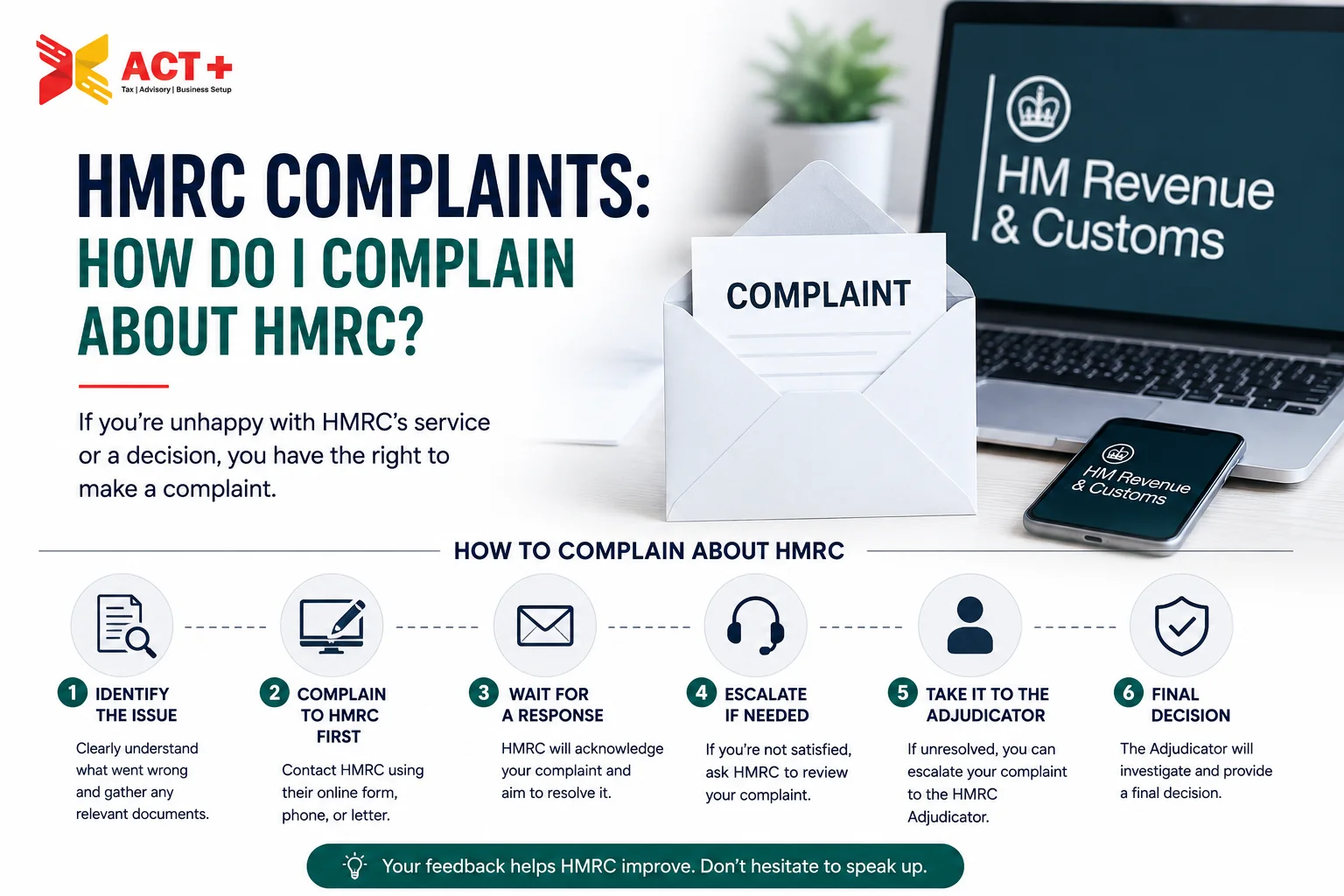
HMRC follows a structured complaints process. You should usually try to resolve the issue directly before escalating the matter further.
1. Contact HMRC First
Before making a formal HMRC complaint, contact the relevant department handling your case. Many issues get resolved at this stage.
You can call the tax office, use your HMRC online account, or contact HMRC by post.
Some useful contact details include:
- HM Revenue tax refund telephone number
- Contact number for the wrong tax code
- HM Revenue and Customs wrong tax code contact
- HMRC dispute telephone number
You should keep records of:
- Dates of phone calls
- Names of HMRC staff
- Reference numbers
- Copies of letters or emails
These details help support your complaint later.
2. Submit a Formal Complaint
If the issue remains unresolved, you can submit a formal HMRC complaint.
You can complain to HMRC:
- Online
- By phone
- By post
- Through your tax agent or accountant
Many taxpayers search for the HMRC complaints email address or email address for HMRC complaints. However, HMRC mainly handles complaints through online forms and written correspondence rather than direct public complaint email addresses.
3. Ask for a Review
If you disagree with HMRC’s first response, you can request an internal review.
Another HMRC officer will review the complaint independently. This stage helps where:
- HMRC overlooked evidence
- The original response seems unfair
- The issue remains unresolved
- You disagree with HMRC’s decision
4. Contact the Adjudicator’s Office
If HMRC still fails to resolve the issue properly, you can escalate the matter to the Adjudicator’s office.
The Adjudicator reviews complaints independently and investigates whether HMRC acted fairly.
The adjudicator usually handles complaints involving the following:
- Delays
- Poor service
- Mistakes
- Compensation claims
- Communication failures
5. Escalate to the Ombudsman
If you remain unhappy after the Adjudicator’s review, you can ask your Member of Parliament to refer the complaint to the Parliamentary and Health Service Ombudsman. The Ombudsman investigates serious complaints against government departments, including HM Revenue and Customs complaints.
You can also add another table to improve readability and featured snippet opportunities.
| Stage | Action |
|---|---|
| Step 1 | Contact HMRC directly and try to resolve the issue |
| Step 2 | Submit a formal HMRC complaint online, by phone, or by post |
| Step 3 | Request an internal HMRC review if you disagree with the response |
| Step 4 | Escalate the matter to the Adjudicator's Office |
| Step 5 | Ask your MP to refer the complaint to the Parliamentary Ombudsman |
✓ Expert HMRC advice • No obligation
What Information Do You Need to Complain About HMRC?
A strong HMRC complaint should include clear and complete information. You should need to provide:
Personal Details
- Full name
- Address
- Date of birth
- Phone number
- Email address
Tax Reference Number
Depending on the issue:
- UTR number
- National Insurance number
- PAYE reference
- VAT number
- Corporation Tax reference
Description of the Issue
Explain clearly:
- What happened
- When the issue started
- Which HMRC department handled the matter
- Why you believe HMRC acted incorrectly
Keep your explanation factual and organised.
Supporting Evidence
Attach copies of:
- HMRC letters
- Emails
- Tax calculations
- Screenshots
- Proof of submissions
- Call records
- Refund requests
Strong evidence improves the chances of resolving your complaint faster.
Where Do I Send an HMRC Complaint Letter?
You can send your HMRC complaint letter by post. Use the following address for many general HMRC disputes:
- HM Revenue and Customs
- BX9 1AB
- United Kingdom
Many taxpayers also search for:
- HMRC complaints address
- HMRC address for self-assessment
- HM Revenue and Customs complaints address
Before posting documents, keep copies for your records. If your complaint relates to a specific department, HMRC may ask you to send the complaint directly to that office.
How Long Does HMRC Take to Respond?
HMRC response times vary depending on the complexity of the complaint.
In many cases, HMRC aims to respond within:
- 15 working days for simpler complaints
- Up to 40 working days for complex matters
If HMRC needs more time, they usually send an update explaining the delay.
Delays often happen when complaints involve:
- Multiple tax years
- Refund reviews
- Compliance checks
- Missing records
- Technical tax disputes
HMRC Complaint Response Times
| Complaint Type | Typical HMRC Response Time |
|---|---|
| Simple Complaints | Around 15 working days |
| Complex Complaints | Up to 40 working days |
| Adjudicator Review | Several weeks to months |
| Ombudsman Cases | Depends on investigation complexity |
What Response Can I Expect from HMRC?
Response that you can expect from the HMRC are listed below:
- Apologise for mistakes
- Correct tax records
- Remove penalties
- Issue tax refunds
- Offer compensation
- Explain their decision
- Reject the complaint if they disagree
The response normally explains the outcome and your next escalation options.
How do I make a complaint to HM Revenue & Customs?
You can complain to HM Revenue and Customs online, by phone, or by post. Start by contacting the department handling your issue. If the matter remains unresolved, submit a formal HMRC complaint with supporting evidence and reference numbers.
How Can I Track the Progress of My HMRC Complaint?
You can track your HMRC complaint using:
- HMRC online account
- Complaint reference number
- Phone support
- Written updates from HMRC
If you submitted the complaint online, HMRC may send updates through your secure tax account. You should also keep copies of all correspondence and note response deadlines.
What can I do if my HMRC complaint is not resolved to my satisfaction?
You can request an internal HMRC review first. If the issue remains unresolved, contact the Adjudicator’s Office. After that, you may escalate the complaint to the Parliamentary Ombudsman through your MP.
Can You Get Compensation from HMRC?
Yes, HMRC may offer compensation in certain situations.
Compensation usually applies when HMRC caused:
- Serious delays
- Financial loss
- Administrative mistakes
- Distress or inconvenience
- Extra professional costs
For example, HMRC may reimburse the following:
- Interest charges
- Accountant fees
- Postage costs
- Travel expenses
HMRC reviews compensation claims individually.
When do I go to the Adjudicator and the Ombudsman?
You should contact the Adjudicator after completing HMRC’s internal complaints process. If the Adjudicator does not resolve the issue fairly, you can ask your MP to refer the complaint to the Ombudsman.
What are my rights and responsibilities in connection with taxes?
You have the right to fair treatment, privacy, accurate information, and professional service from HMRC. You also have responsibilities, including filing accurate tax returns, paying taxes on time, and providing correct information.
How will HMRC resolve my complaint?
HMRC reviews the complaint, checks records, investigates the issue, and issues a written response. They may correct errors, update tax records, remove penalties, or explain why they disagree with the complaint.
Can I claim reimbursement of my costs?
Yes, You may claim reasonable costs if HMRC’s mistakes caused financial loss or unnecessary expenses. Supporting evidence strengthens your claim.
How to Contact HMRC for Complaints
You can contact HMRC for complaints through:
- Online complaint forms
- Phone support
- Postal correspondence
- Tax agents
- Secure online messages
Many people search for:
- HMRC complaints email address
- Email contact HMRC
- How can I contact HMRC by email
- Contacting HM Revenue and Customs by email
HMRC mainly prefers online forms and official correspondence channels.
What are the top 3 reasons for HMRC complaints?
The most common reasons for HMRC complaints include:
- Delayed tax refunds
- Wrong tax codes or incorrect tax bills
- Poor customer service and communication delays
These issues affect both individuals and businesses regularly.
✓ Expert HMRC advice • No obligation
What are common reasons for complaining to HMRC?
Many taxpayers and business owners contact HM Revenue and Customs because of problems that affect their taxes, refunds, or communication. Complaints usually happen when people believe HMRC made a mistake, delayed a service, or treated them unfairly.
| Complaint Type | Common Issue |
|---|---|
| Tax Refund Delays | Repayment taking months |
| Wrong Tax Code | Incorrect PAYE deductions |
| Self-Assessment Errors | Wrong balances or penalties |
| VAT Complaints | Delayed VAT repayments |
| Corporation Tax Issues | Incorrect tax demands |
| CIS Repayment Delays | Long verification checks |
Frequently Asked Questions
How to report a business to HMRC?
Is there a deadline to complain to HMRC?
What mistakes should I avoid when complaining to HMRC?
- Giving incomplete information
- Missing reference numbers
- Sending unclear evidence
- Using emotional language
- Ignoring HMRC deadlines
- Failing to keep copies of documents
- Escalating too early without following the process
Can a tax accountant complain to HMRC on my behalf?
Is there an ombudsman for HMRC?
Who investigates HMRC?
Can I complain about a delayed tax refund?
Need Help With an HMRC Complaint?
Xact+ Accountants helps individuals and businesses handle HMRC disputes, penalty appeals, delayed refunds, and tax investigations. Our team supports clients with self-assessment, PAYE, VAT, and corporation tax matters across the UK.
Get in Touch Today
About the Author: Ahmad Raza