
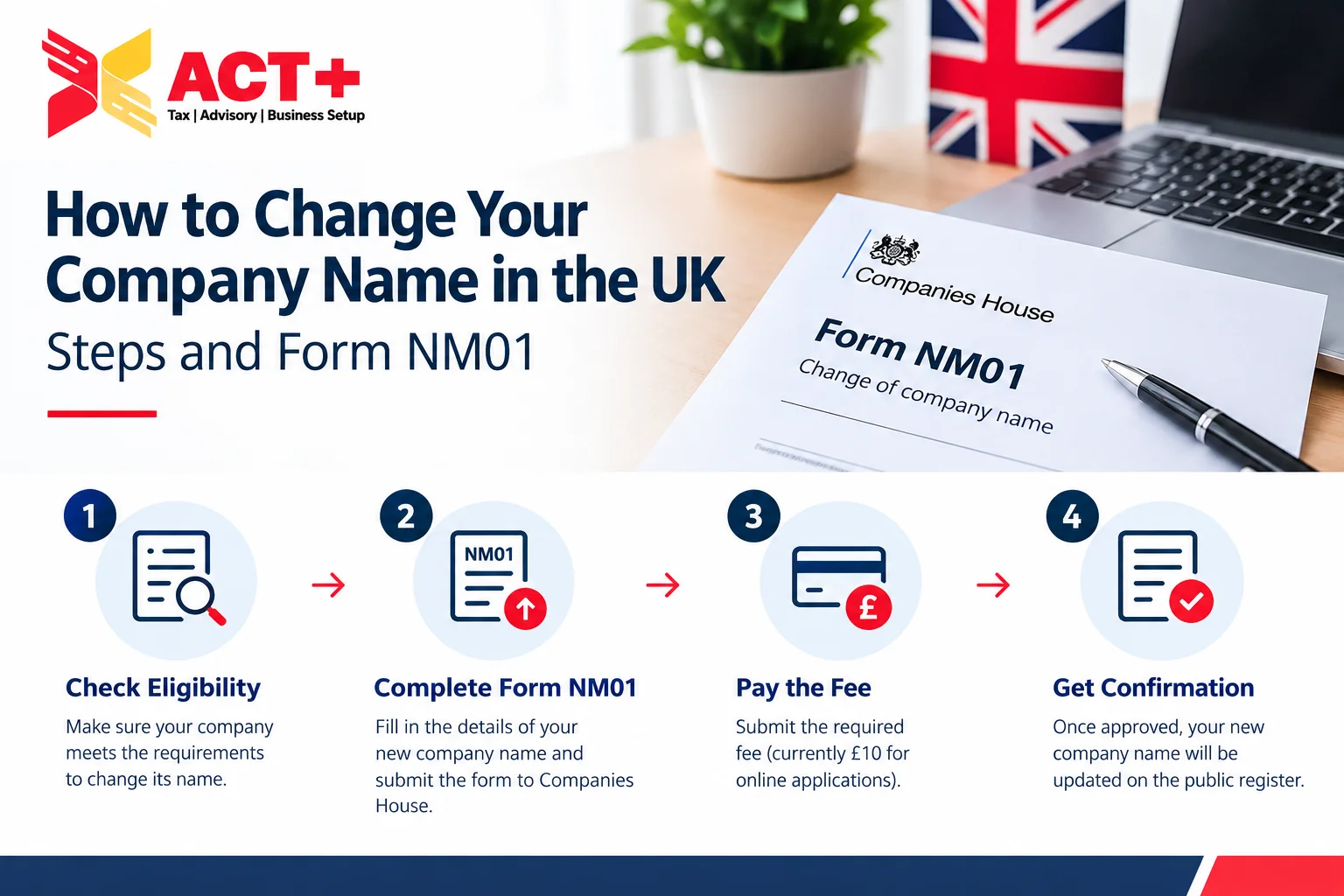
To change your company name in the UK, check the new name, obtain the required approval, and register the change with Companies House. Form NM01 applies when a company changes its name by resolution.
Changing a company name does not create a new company. The existing legal entity continues under its new registered name. Its company number also remains the same. Existing rights, debts, and legal obligations continue after the change.
Companies change names for several reasons. These include rebranding, business growth, expansion into new markets, and changes in commercial direction. However, a company name change involves more than updating a logo. The new legal company name must comply with the Companies Act 2006 and Companies House rules.
Business owners also need to consider tax records, banking, insurance, contracts, websites, and customer communication. A planned approach keeps the company’s legal records and brand identity consistent.
How to Change Company Name?
To change a company name, complete 4 main steps: check availability, authorise the new name, submit the change, and update business records. The approval method depends on the company’s articles of association and how the change is authorised.
1. Check Availability
Check that your proposed name meets Companies House rules before approving the company name change. The new name must not conflict with applicable naming restrictions. Start with a company name availability search on the Companies House register. The proposed name usually cannot match an existing registered company name. Certain names considered too similar to existing names can also face objections. The new name must not contain offensive wording. Some sensitive words and expressions require approval before Companies House accepts them.
For example, certain words can suggest government connections, professional status or regulated activities. In these circumstances, additional evidence or permission may apply. A private company limited by shares normally ends its registered name with “Limited” or “Ltd”. Specific exemptions apply to some organisations. Company name availability does not provide trademark protection. Check the UK Intellectual Property Office trademark register before committing to a new brand.
A trademark search can identify existing rights that could conflict with your proposed business identity. This check can reduce the risk of an expensive rebrand later. Check the domain name and important social media usernames at the same stage. This helps create a consistent brand across your legal and digital presence.
2. Authorise the Name
The company must formally authorise its new name using a method permitted by company law and its articles of association. A special resolution is a common method. A special resolution normally requires at least 75% of the votes cast to support the proposed change. The voting percentage relates to voting rights rather than simply counting individual shareholders.
A physical shareholder meeting is not always necessary. Eligible companies can use a written resolution where the required voting threshold is met. The company’s articles of association may provide another method for changing its name. Directors should therefore review the articles before starting the company renaming process. Keep a proper record of the decision. Companies House requires the relevant documentation when a name change takes place by resolution.
3. Submit to Companies House
Submit the approved company name change to Companies House using the filing method that matches how the change was authorised. Form NM01 is the notice of change of name by resolution. It applies when a company makes an unconditional change of name by resolution.
A company changing its name by special resolution can also use the Companies House online service. This means businesses do not always need to submit a paper NM01. Companies House requires a copy of the resolution with a paper NM01 application.
Form NM04 serves a different purpose. A company uses NM04 when it changes its name through a method provided within its articles of association. NM01 and NM04 should therefore not be treated as interchangeable forms. Companies House checks whether the proposed name complies with applicable company naming rules. Shareholder approval alone does not complete the legal name change. The new name becomes effective after Companies House registers it and issues the relevant certificate.
4. Post-Filing
Update your legal, financial and customer-facing records after Companies House registers the new company name. Start with records that affect day-to-day business operations. These can include your business bank account, insurance, payment providers, contracts and commercial agreements.
Update invoices, quotations, purchase orders, company stationery and email signatures. Review business licences and registrations where they apply to your activities. Your website and digital branding may also need changes. Update the company name on the website, social media profiles and online business listings.
A full rebrand may involve a new logo, domain name and corporate identity. Tell customers and suppliers about the change where appropriate. Clear customer communication reduces confusion about payments, contracts and ongoing services.
Do You Need Form NM01 to Change Your Company Name?
You need Form NM01 for a paper filing when your company makes an unconditional change of name by resolution. Companies House also provides an online route for changes made by special resolution. The paper NM01 is therefore not mandatory for every company name change. The method used to authorise the new name determines the correct filing route. A company changing its name through provisions in its articles uses Form NM04 instead.
Companies House currently charges £20 for an online name change by special resolution. A paper NM01 application costs £30. The dedicated NM01 guidance lists the same-day online service at £85. Using the correct form prevents unnecessary delays in the company renaming process.
How Does a Company Name Change Affect Your Certificate of Incorporation?
Companies House issues an altered certificate of incorporation when it registers your new company name. The certificate records the new legal company name and the effective date of the change. The certificate does not mean Companies House has created another business.
Your company number remains unchanged. The same legal entity continues operating under its new registered company name. The Companies Act 2006 also protects continuity. A company name change does not affect the company’s existing rights or obligations. It does not invalidate legal proceedings involving the company. This means existing liabilities do not disappear because the company has changed its name. Existing rights also remain with the company.
Do You Get a New Certificate of Incorporation?
Yes. Companies House issues an altered certificate of incorporation showing the company’s new registered name. The company name change takes effect from the date that certificate is issued.
Keep the certificate with your company’s important corporate records. Banks, insurers, payment providers and other organisations may request evidence of the legal name change. The certificate provides formal confirmation of the new registered name. The company number remains the same before and after the change. It provides an important link between records showing the old and new names.
Can You Change the Name of a Limited Company?
Yes. A UK limited company can change its registered name by following the required company approval and Companies House procedures. A company can generally change its name by special resolution or through permission contained within its articles of association. The proposed name must still comply with UK company naming rules. Check for duplicate or conflicting names, sensitive words, and restricted expressions before filing. A trademark search adds another layer of protection when selecting the new business name.
How Long Does It Take to Change Your Company Name?
The processing time depends on the Companies House filing service and whether the application requires further review. Companies House currently provides standard online filing and a same-day online service for eligible special-resolution applications. The wider business rebranding process can take longer.
Your bank, insurer, payment provider and other organisations may have their own processing times. Website and branding changes can also require additional work. Plan these updates before announcing a firm rebranding date.
How Much Does It Cost to Change Your Company Name?
Companies House currently charges £20 for a standard online name change by special resolution and £30 for a paper NM01 filing. Its dedicated NM01 guidance lists the same-day online service at £85. The total cost of changing a business name can be higher.
A wider rebrand may include trademark applications, domain registration, website changes, new signage and logo design. Companies may also incur professional fees. Consider these additional costs before approving a complete corporate identity change.
Why Do Companies Change Their Names?
Companies change their names to reflect changes in branding, commercial activities, ownership or long-term business direction. A company may have expanded beyond the services described by its original name. Another business may want a simpler identity for customers to remember. Mergers, acquisitions and group reorganisations can also lead to a new company name.
Some companies rename themselves before entering a new market. Others change names to create a stronger brand identity or support business growth. The reason should support a clear commercial objective. Changing a recognised name without a strong reason can create unnecessary customer confusion.
When Should You Change Your Company Name?
Change your company name when the existing name no longer represents the company’s legal, commercial, or branding needs. A name change can make sense during major business expansion or rebranding. Consider customer recognition before making the decision. An established name can carry valuable business reputation and search visibility.
A legal company name change may not always be necessary. A company can sometimes use an appropriate trading name while retaining its registered company name. Review the legal, marketing and financial effects before deciding which option suits the business.
How Do You Change Your Company Name With Companies House?
Change your company name with Companies House after obtaining the required company approval and confirming that the proposed name meets the naming rules. A special resolution is one route. Permission within the company’s articles of association provides another route. Use the online Companies House service for an eligible change by special resolution. Use NM01 for the corresponding paper filing.
Use NM04 where the name changes through the authority provided by the articles. Companies House will register the approved new name and issue a certificate showing the new company name and registration date.
Do You Need to Register Your Company Name at Companies House?
Yes. A limited company’s new legal name must be registered by Companies House before the change takes effect. Passing a resolution does not, by itself, change the registered company name. Companies House enters the new name on the company register and issues an altered certificate of incorporation. The change takes effect when that certificate is issued.
A trading name works differently. A company can conduct business under another permitted name without changing its registered company name. The legal registered name must still appear on company documents and communications where company disclosure rules require it.
Can You Change Your Company Name Online?
Yes. You can change your company name online when the change takes place by special resolution and meets the Companies House filing requirements. The online filing currently costs £20. Companies House also provides a same-day online option for a higher fee. The online service does not cover every method of changing a company name. For example, Companies House directs companies using permission within their articles towards the NM04 route.
What Happens After You Change Your Company Name?
Once your company name change has been approved, you should update your business records, documents, and accounts that still show the former name. The company itself remains the same legal entity, and its company registration number does not change. Your existing rights, obligations, contracts, debts, and liabilities also continue after the name change.
Companies House will update the company’s registered name, and you will receive a new certificate of incorporation showing the new company name.
You should then review and update your:
- Business bank accounts and banking records
- Insurance policies
- Contracts and agreements
- Invoices and purchase orders
- Business stationery and official documents
- Payment services and merchant accounts
- Licences, permits, and registrations where applicable
- Website, email addresses, and social media profiles
- Company signage and other business materials
If the name change is part of a wider rebrand, you may also need to update your logo, packaging, marketing materials, and other elements of your business identity.
It is also important to inform your customers, suppliers, employees, and other relevant business contacts about the change. Your communication should make clear that although the company name has changed, the underlying legal entity and company registration number remain the same.
When Can You Start Using Your New Company Name?
You should start using the new name as your company’s official legal name once Companies House has registered the change and issued the updated certificate of incorporation. Under the Companies Act 2006, the name change takes effect from the date shown on that certificate.
Where possible, it is sensible to prepare your branding and customer communications in advance. Once the change is official, you can update your website, social media accounts and other business materials and let customers, suppliers and other contacts know about the new name. Keep a record of the company’s previous name where needed, as banks, suppliers and other organisations may ask to see the updated certificate before changing their records.
Do You Need to Tell HMRC About a Company Name Change?
A UK company with a Company Registration Number should report its legal company name change to Companies House, which passes the change to HMRC. HMRC states that the new name should appear in the business tax account within 15 days.
This distinction is important for VAT-registered limited companies. HMRC’s VAT guidance specifically directs companies with a company registration number to Companies House for a company name change. Different procedures apply in other situations. A business registered for self-assessment should notify the self-assessment team.
Overseas businesses may also need to contact HMRC directly. Other changes to VAT registration details can carry a 30-day notification requirement. Do not assume every HMRC record updates automatically when other business information changes. Check your business tax account after the company name change to confirm that the correct details appear.
Is Changing a Business Name the Same as Changing a Company Name?
No. A company name change alters the registered legal name of a limited company, while a business name can simply describe its trading identity. For example, “Example Consulting Limited” could trade using another permitted business name.
The legal entity remains Example Consulting Limited unless Companies House registers a change to its legal company name. This distinction matters when preparing contracts, invoices and official business documents. A trading name must also follow applicable business naming rules. Using a trading name does not automatically create trademark rights.
Can a Sole Trader Change a Business Name?
Yes. A sole trader can change a trading name without completing a Companies House company name change. A sole trader and a limited company have different legal structures. Form NM01 therefore does not apply to a sole trader changing a business name. The new trading name still needs to comply with applicable naming rules. The owner should also check trademark availability before investing in new branding. HMRC, banks, insurers and other relevant organisations may need updated information.
Is It Better to Start a New Company or Change the Name?
Changing the name usually suits an existing company that needs a new identity but wants to keep the same legal entity. Starting a new limited company creates a separate legal entity with a different company number.
That difference has important consequences. A company name change preserves the existing company’s rights and obligations. Contracts and liabilities remain with that company. Legal proceedings also continue despite the change of name. Creating another company may suit a genuinely separate business activity or ownership structure. Consider tax, contracts, employees, assets, banking, and liabilities before choosing between these options.
What Are Common Mistakes When Changing Your Company Name?
Common mistakes when changing a company name include choosing a name without proper checks, using the wrong Companies House process, and forgetting to update business records. These errors can delay the change or create confusion afterwards.
Check the Companies House register before approving the new name. You should also search the UK trademark register. A name may be available at Companies House but still conflict with existing trademark rights.
Use the correct filing process. Form NM01 applies to an unconditional company name change by resolution. Form NM04 applies where the company’s articles provide the relevant authority for the change. Do not start using the new name as the company’s registered legal name too early. The change takes effect when Companies House registers it and issues the altered certificate of incorporation.
Finally, update records that still show the old name. These can include banking, insurance, invoices, contracts, your website and customer communications. A consistent update helps customers, suppliers and other organisations recognise the new company name.

About the Author: Ahmad Raza