
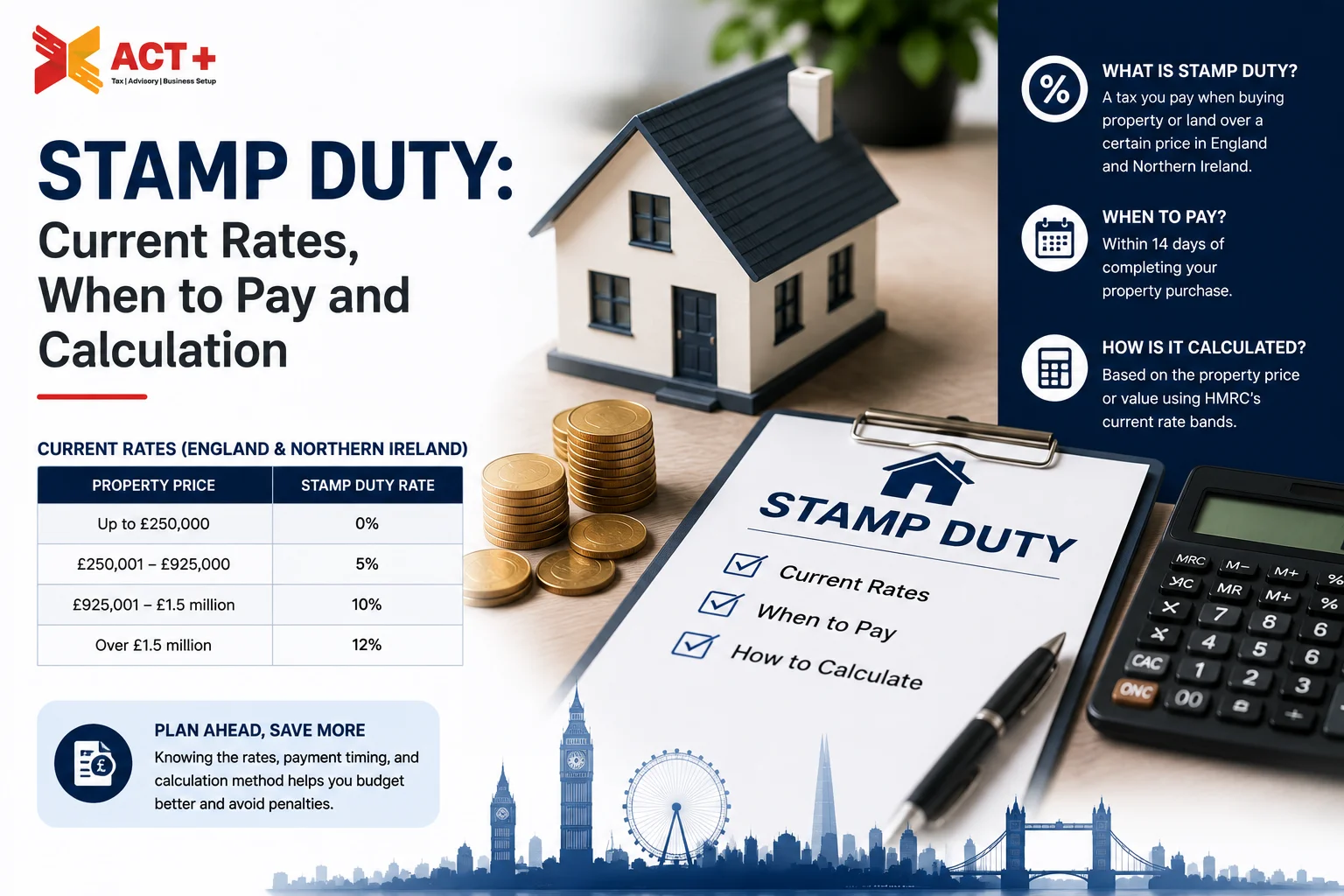
Buying a property in the UK often involves more than just paying the purchase price. One of the biggest additional costs is Stamp Duty Land Tax (SDLT), commonly known as “stamp duty.” Whether you are a first-time buyer, home mover, landlord, or overseas investor, understanding stamp duty can help you budget accurately and avoid unexpected expenses.
Many buyers use a stamp duty calculator, SDLT calculator, or stamp duty calculator UK tool to estimate their tax bill before purchasing a property. The amount you pay depends on factors such as the property’s value, whether it is your main residence, whether you already own another property, and your residency status.
Recent changes to UK stamp duty thresholds have affected buyers across England and Northern Ireland. Understanding the latest stamp duty rates, reliefs, and exemptions can help you make informed property decisions.
What Is Stamp Duty?
Stamp Duty Land Tax (SDLT) is a tax paid when buying property or land in England and Northern Ireland above certain thresholds. The tax applies to residential properties, commercial properties, leasehold purchases, and some land transactions. The buyer is responsible for paying the tax, not the seller.
Stamp duty works on a tiered system. Different portions of the property’s value are taxed at different rates. This means you do not pay one percentage on the entire purchase price. Instead, each portion falls into a specific tax band.
For example, if a property purchase exceeds the SDLT threshold, only the value within each tax band is charged at the relevant rate. Many buyers use a stamp duty calculator England tool or an SDLT calculator to estimate their liability before completing a property purchase.
✓ Free consultation • Expert Stamp Duty advice
What Are the Latest Stamp Duty Rates in the UK?
The following residential SDLT rates apply in England and Northern Ireland and are correct as of June 2026. Stamp Duty is calculated using a progressive tax system, meaning different portions of the property price are taxed at different rates.
| Property Value | SDLT Rate |
|---|---|
| Up to £125,000 | 0% |
| £125,001 to £250,000 | 2% |
| £250,001 to £925,000 | 5% |
| £925,001 to £1.5 million | 10% |
| Above £1.5 million | 12% |
The tax applies progressively across each band. For example, if you purchase a property for £400,000, you only pay SDLT on the amount above the relevant thresholds. Additional rates may apply if you are purchasing a second home, buy-to-let property, holiday home, or investment property.
Non-UK residents may also face an additional SDLT surcharge on residential property purchases. Because tax rates and thresholds can change, many buyers use a stamp duty calculator 2025, stamp duty estimator, or UK stamp duty calculator before completing a purchase.
When Do You Pay Stamp Duty?
You must pay Stamp Duty Land Tax shortly after completing your property purchase. The SDLT return and payment must usually be submitted to HMRC within 14 days of completion.
Most buyers do not handle this process directly. Their solicitor or conveyancer usually prepares the SDLT return, calculates the tax due, and submits the payment on their behalf. Failure to meet the deadline can result in penalties, interest charges, and additional costs. For this reason, stamp duty costs should be included in your property budget before exchanging contracts.
How Much Is Stamp Duty in the UK?
The amount of stamp duty you pay depends on several factors:
- Property purchase price
- First-time buyer status
- Whether the property is your main residence
- Whether you own another property
- UK residency status
- Type of property purchased
The calculation follows a tiered system.
For example, if you buy a property for £350,000 as your main home:
- First £125,000 = 0%
- Next £125,000 = 2%
- Remaining £100,000 = 5%
Your total SDLT liability would be calculated by adding the tax due in each band. Many buyers use a UK stamp duty calculator, a stamp duty calculator for 2025/26, or a stamp duty calculator after April 2025 to estimate their costs accurately.
First-Time Buyer Relief
The government offers stamp duty relief for eligible first-time buyers. If you qualify, you may pay reduced SDLT or no SDLT at all on part of the property value.
To qualify:
- You must never have owned a property before.
- The property must be your main residence.
- You must meet the eligibility rules set by HMRC.
Many buyers use a first-time buyer stamp duty calculator to estimate potential savings before purchasing a home.
Additional Properties and Non-UK Residents
Higher stamp duty rates apply to buyers purchasing:
- Buy-to-let properties
- Holiday homes
- Investment properties
- Additional residential properties
Non-UK residents may also pay an additional SDLT surcharge when purchasing residential property in England or Northern Ireland. These additional charges can significantly increase the overall tax bill.
How Much Is Stamp Duty in Scotland?
Scotland does not use Stamp Duty Land Tax. Instead, buyers pay the Land and Buildings Transaction Tax (LBTT). LBTT uses different rates and thresholds set by the Scottish government. The amount payable depends on the property’s purchase price and whether it is an additional property. Anyone purchasing property in Scotland should use an LBTT calculator rather than a standard stamp duty calculator.
How Much Is Stamp Duty in Wales?
Wales also operates a different property tax system. Instead of SDLT, buyers pay Land Transaction Tax (LTT). The Welsh Government sets separate rates and thresholds. Therefore, a standard stamp duty calculator in England may not provide accurate results for Welsh property purchases.
Who Pays Stamp Duty?
The buyer pays stamp duty. The seller does not pay SDLT on the property sale. If there are multiple buyers, they are jointly responsible for the tax liability. A solicitor or conveyancer handles the submission and payment process as part of the property transaction.
✓ Free consultation • Expert Stamp Duty advice
How Is Stamp Duty Calculated?
Stamp duty is calculated using a progressive tax system. Each portion of the property’s value falls into a different tax band. This means only the amount within each band is taxed at that band’s rate.
For example,
Main Residence Purchase
If you buy a property for £300,000 as your main home:
| Property Value Band | SDLT Rate | Tax Due |
|---|---|---|
| First £125,000 | 0% | £0 |
| Next £125,000 (£125,001–£250,000) | 2% | £2,500 |
| Remaining £50,000 (£250,001–£300,000) | 5% | £2,500 |
Total SDLT = £5,000
This example shows how Stamp Duty is charged progressively across different tax bands rather than applying one rate to the entire property value.
Many buyers use a stamp duty calculator, SDLT calculator, or stamp duty calculator UK to estimate their liability before exchanging contracts. Understanding how the calculation works can help you verify the figures and plan your property budget more accurately.
How Much Is Stamp Duty on a 2nd Home?
Second homes usually attract higher stamp duty rates.
This includes:
- Buy-to-let properties
- Holiday homes
- Investment properties
- Additional residential properties
An additional SDLT surcharge normally applies on top of the standard rates. As a result, buyers often use a second home stamp duty calculator or stamp duty calculator for a second home before making a purchase decision.
How Much Stamp Duty Do I Pay?
The exact SDLT amount depends on
- Purchase price
- Property location
- Buyer status
- Number of properties owned
- Residency status
Using an SDLT calculator or stamp duty calculator in the UK provides the quickest estimate. Your solicitor will normally provide a final calculation before completion.
Do I Pay Stamp Duty If I Sell My House and Buy Another?
In many cases, yes.If you sell your existing main residence and purchase another main residence, standard SDLT rates usually apply. However, if you temporarily own two properties at the same time, additional rates may apply initially. You may later qualify for a refund if certain conditions are met.
Do I Qualify for First-Time Buyer Stamp Duty Relief?
You may qualify if:
- You have never owned residential property anywhere in the world.
- The property will be your main home.
- You meet HMRC eligibility requirements.
First-time buyer relief can significantly reduce stamp duty costs and help make home ownership more affordable.
How Much Is Stamp Duty on a 2nd Home?
Some lenders may allow you to borrow enough to cover stamp duty costs as part of your overall mortgage arrangement. However, eligibility depends on the lender’s affordability assessment, loan-to-value ratio, and lending criteria. Many buyers prefer paying SDLT separately to avoid increasing long-term borrowing costs.
Is Stamp Duty Refundable?
In certain situations, yes.
You may qualify for a stamp duty refund if:
- You paid the higher rates for an additional property.
- You later sold your previous main residence within the permitted period.
- An SDLT calculation error occurred.
- HMRC accepted a valid repayment claim.
Each case depends on specific circumstances and HMRC rules.
Need Help With Property Tax?
Xact+ Accountants can help landlords, property investors, and homebuyers understand SDLT liabilities, calculate property taxes, and identify available reliefs. Contact our team for professional tax advice.
Get in Touch TodayDisclaimer: Stamp duty land tax rules, reliefs, and thresholds may change. Always refer to the latest guidance from HMRC or seek professional tax advice before making a property purchase.

About the Author: Ahmad Raza