
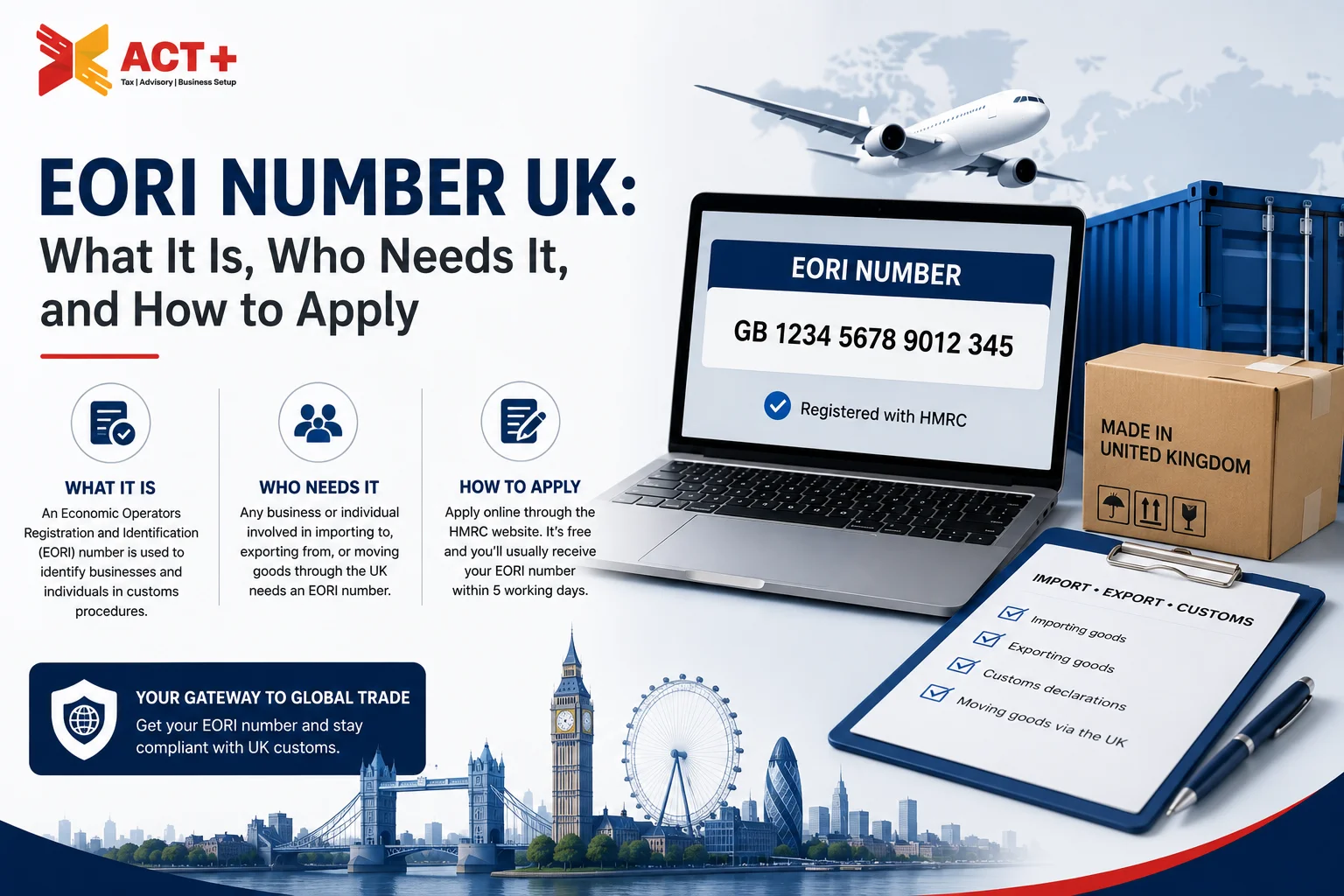
Businesses that import or export goods often come across the term “EORI number.” If your business trades internationally, understanding EORI registration is important. Without a valid EORI number, customs authorities may stop your goods at the border, causing delays and additional costs.
Whether you run a limited company, work as a sole trader, or manage an international business, an EORI number helps customs authorities identify your business when goods move across borders. This guide explains everything you need to know about EORI numbers in the UK, including who needs one, how to apply, and what happens if you trade without one.
What Is an EORI Number?
An EORI number (Economic Operators Registration and Identification number) is a unique customs identifier used by businesses and individuals who import or export goods. UK businesses usually need an EORI number to clear goods through customs and complete import or export declarations.
The UK introduced EORI numbers to simplify customs procedures and international trade. Businesses use their EORI number when completing customs declarations, paying import duties, and moving goods across borders. If your business imports goods into the UK or exports products to other countries, you will usually need an EORI number before your shipments can clear customs.
Why Is a UK EORI Number Important?
A UK EORI number plays a key role in international trade. Customs authorities use it to identify businesses during import and export procedures. An EORI number is important because it is often required for customs clearance. Without one, customs authorities may not process your shipment.
It is also necessary for many import and export activities. Businesses moving goods between the UK and other countries often need an EORI number to complete customs declarations correctly. Another important reason is that it helps identify businesses registered with HMRC. This makes customs processing faster and reduces administrative issues.
Who Needs an EORI Number?
Many businesses involved in international trade need an EORI number. Importers who bring goods into the UK generally require one before customs clearance can take place. Exporters sending goods overseas often need an EORI number to complete export declarations.
VAT-registered businesses trading internationally commonly require an EORI number because customs systems link business information to HMRC records. Businesses that regularly trade with customers, suppliers, or warehouses outside the UK should also consider obtaining an EORI number before shipping goods.
Using an EORI Number for UK Customs Clearance:
A UK business importing products from China must provide its EORI number when submitting customs declarations. Customs authorities use the number to identify the importer, process customs clearance, and calculate any import VAT or customs duty due before the goods enter the UK.
✓ Free consultation • Fast EORI registration support
How to Apply for a UK EORI Number?
Applying for a UK EORI number is usually a straightforward process. Most businesses can apply online through HMRC. You will need to provide information about your business, including your company details, VAT registration information if applicable, and your Unique Taxpayer Reference (UTR).
HMRC uses this information to verify your business before issuing the EORI number. After submitting the application, HMRC reviews the information and issues the EORI number electronically. Most businesses receive confirmation by email once the registration process is complete.
How Long Does It Take to Get a UK EORI Number?
Many UK businesses receive their EORI number within a few working days. In some cases, HMRC may issue the number within hours.
Applications that require additional checks can take longer. Delays may occur if business information does not match HMRC records. To avoid delays, always provide accurate business details when applying.
How Do I Get an EORI Number in the UK?
You can obtain an EORI number by applying directly through HMRC. Before starting the application, make sure your business information is up to date. Most businesses need a Government Gateway account before starting the EORI registration process. During the application, you may need to provide your business details, VAT registration number, Unique Taxpayer Reference (UTR), and company registration information. HMRC uses these details to verify your business and issue your Economic Operators Registration and Identification (EORI) number. In many cases, businesses receive their EORI number within a few working days. Having a valid EORI number allows you to complete customs declarations, clear goods through customs, and manage import and export activities more efficiently when trading internationally.
Do Sole Traders Need a UK EORI Number?
Yes, sole traders may need an EORI number if they import or export goods. Business structure does not determine whether you need an EORI number. The deciding factor is whether you trade internationally. A sole trader who imports products from overseas suppliers or exports goods to customers abroad may require an EORI number to complete customs declarations.
What Documents Are Needed for EORI Registration?
The exact requirements may vary depending on your business structure, but most applicants need basic business information. You may need your VAT registration number if your business is VAT registered. HMRC may also request your Unique Taxpayer Reference (UTR).
Businesses usually provide company registration details, trading address, contact information, and other identification details during the application process. Keeping these documents ready can make the registration process quicker and smoother.
What Is the Format of an EORI Number?
A UK EORI number usually starts with the letters GB, followed by a series of numbers that identify a business for customs purposes. For many VAT-registered businesses, the EORI number is based on the VAT registration number and may end with additional digits, such as GB123456789000. Businesses trading under certain Northern Ireland arrangements may receive an XI EORI number, which begins with the letters XI instead of GB. Customs authorities use this unique identification number when processing customs declarations, import procedures, export procedures, and customs clearance for goods moving across international borders.
Is the EORI Number the Same as a VAT Number?
No, an EORI number and a VAT number are different. A VAT number identifies businesses for VAT purposes, while an EORI number identifies businesses for customs and international trade activities. Although they serve different purposes, VAT registration information is often used during the EORI application process.
Is an XI Number the Same as an EORI Number?
No, an XI number is not the same as a standard UK EORI number. XI EORI numbers relate to certain Northern Ireland trading arrangements. Businesses trading under specific Northern Ireland rules may require an XI EORI number in addition to their GB EORI number. The type of EORI required depends on where goods move and the customs procedures involved.
What Happens If You Don’t Have an EORI Number?
Without an EORI number, customs authorities may not process your import or export declarations. This can prevent goods from moving across borders and may create significant delays within your supply chain. Businesses often incur additional costs when shipments are held up at customs due to missing required registration.
What Happens If You Trade Without an EORI Number?
Trading internationally without an EORI number can create several problems. Shipments may face delays while customs authorities request missing information. Goods can remain on hold until customs requirements are satisfied.
Customs declarations may fail because the required identification number is unavailable. Import and export activities can become difficult, leading to missed delivery deadlines, unhappy customers, and additional storage charges. Obtaining an EORI number before trading internationally helps avoid these issues.
✓ Free consultation • Fast EORI registration support
How Can Professional Help Make EORI Registration Easier?
Although EORI registration is generally straightforward, professional support can simplify the process. An accountant or business adviser can check whether your business requires an EORI number and identify the correct type of registration.
Professional guidance can also help verify VAT information, UTR details, and business records before submission. This reduces the risk of errors and helps businesses complete registration more efficiently.
What Are the Different Types of EORI Numbers?
The type of EORI number a business needs depends on where goods are moving and which customs rules apply. Most UK businesses use a GB EORI number for importing and exporting goods through Great Britain. However, businesses involved in certain Northern Ireland trade arrangements may also require an XI EORI number. Understanding the differences can help businesses comply with customs requirements and avoid delays when trading internationally.
| EORI Number Type | Prefix | Purpose | Who Needs It? |
|---|---|---|---|
| GB EORI Number | GB | Used for importing and exporting goods through England, Scotland, and Wales | Most UK businesses involved in international trade |
| XI EORI Number | XI | Used for specific customs procedures involving Northern Ireland | Businesses moving goods under certain Northern Ireland trading arrangements |
| Non-UK EORI Number | Varies by country | Used by overseas businesses trading with customs authorities in specific jurisdictions | Non-UK businesses importing or exporting goods internationally |
Before applying, businesses should review their trading activities to determine which EORI number is required for customs declarations, customs clearance, and cross-border trade.
Can You Have More Than One EORI Number?
In some situations, yes. A business may hold a GB EORI number and also require an XI EORI number for certain trading activities involving Northern Ireland. But most UK businesses only need one EORI number for their usual import and export activities. Always review your trading arrangements before applying.
Why Would a Non-EU Company Need an EORI Number for UK Trade?
Non-EU companies often need an EORI number when importing goods into the UK or exporting products from the UK. Customs authorities use the EORI number to identify the business during customs procedures.
Without a valid EORI number, international businesses may struggle to complete customs declarations or clear shipments through UK borders. This requirement applies regardless of whether the company has a physical presence in the UK.
Can HMRC provide an EORI number if I only have the company name?
Generally, HMRC cannot issue or locate an EORI number using only a company name. Additional information is usually required to verify the business. This may include the company registration number, VAT number, UTR, or other business identification details. Providing accurate information helps HMRC process requests more efficiently and reduces delays.
Need Help With EORI Registration or Customs Compliance?
If you need help applying for an EORI number, registering for VAT, or managing customs requirements, Xact+ Accountants can assist. Our team helps UK businesses complete EORI registration correctly and supports importers and exporters with their tax and compliance obligations.
Get in Touch Today

About the Author: Ahmad Raza