
Registering a company with Companies House is one of the first legal steps when starting a business in the UK. Without proper incorporation, a business cannot legally operate as a limited company or benefit from limited liability protection. Many new business owners also struggle with annual accounts, confirmation statements, corporation tax obligations, and Companies House filing deadlines after registration.
Missing filing deadlines or submitting incorrect information can lead to penalties, compliance issues, or even company strike-off action. That is why understanding how the Registrar of Companies works is important. Work is important for every company director and business owner.
Many people search for terms like “Companies House account, company name check Companies House, Companies House information, or registrar of companies when setting up a business in the UK. This guide explains what Companies House is, how company registration works, who needs to register, and the ongoing filing responsibilities businesses must follow after incorporation.
What Is Companies House?
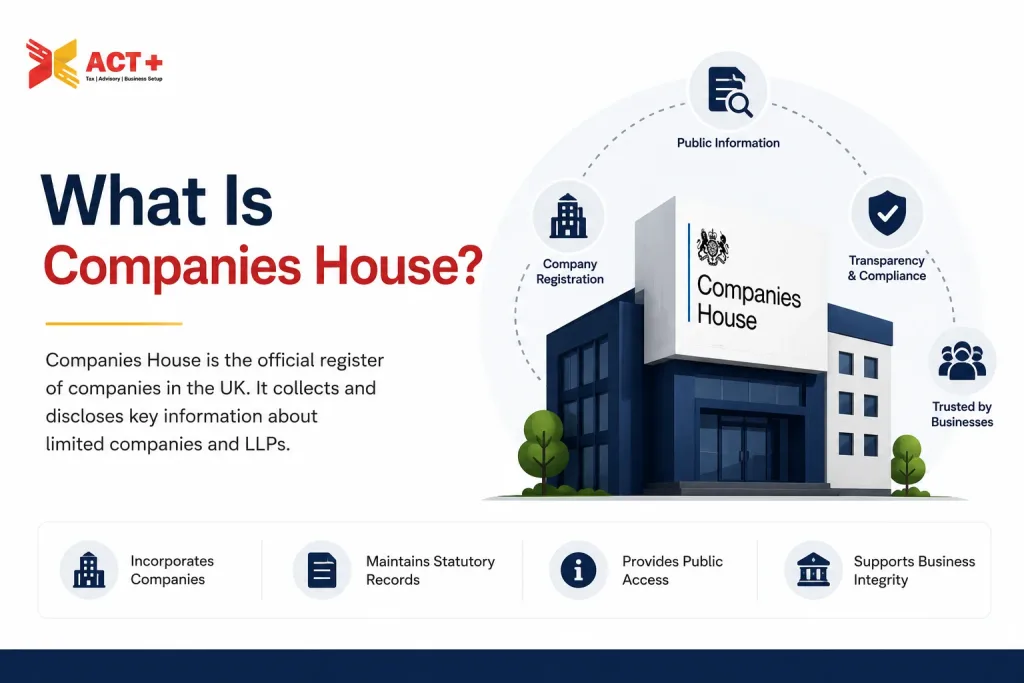
Companies House is the UK government body responsible for company incorporation and maintaining official business records. It acts as the registrar of companies for businesses operating across England, Scotland, Wales, and Northern Ireland.
The organisation maintains important public records, including
- Company name
- Registered office address
- Director details
- Shareholder information
- PSC register information
- Annual accounts
- Confirmation statements
- Filing history
- SIC business activity codes
Anyone can search the public register to verify company details and review business filing history. This system supports corporate compliance, transparency, and anti-fraud measures across the UK business sector. Most limited companies must follow filing deadlines set under the Companies Act 2006. Missing filing obligations can result in penalties, late filing fines, or company strike-off action. Many businesses also work with HM Revenue and Customs after incorporation because company registration and tax compliance are handled separately.
✓ Free consultation • Fast & hassle-free registration
What Does Companies House Do?
They handle many legal and administrative duties for UK businesses. The organisation’s main role is to maintain accurate business records and make important business information available to the public.
The organisation processes:
- Company incorporations
- Confirmation statements
- Annual accounts filings
- Director appointments and resignations
- Registered office changes
- Company strike-offs
- Dissolutions and restorations
It also checks whether businesses follow filing rules under UK company law. Businesses can submit documents online through their UK business registry account or by post using official forms.
Why Is Companies House Important?
It plays a major role in business transparency in the UK. It helps investors, customers, lenders, and suppliers verify company information before doing business.
The public register helps people check:
- Whether a company exists legally
- If annual accounts are overdue
- Who owns or controls the company
- Whether the business is active or dissolved
The system also supports anti-fraud measures and improves trust in the UK business environment. Without a registrar’s office, there would be less public accountability for registered companies operating in the UK.
How to Register a Company with Companies House?
Registering a company with Companies House is usually straightforward. Most businesses complete the process online. Before registering, you should prepare the required information and documents.
Step 1: Choose a Company Name
Your company name must be unique and available for registration. Many business owners use a company name check before applying.
The name cannot
- Match an existing company name
- Contain restricted words without approval
- Include offensive terms
- Mislead the public
A proper name search helps avoid rejection delays.
Step 2: Select Your Company Structure
Most businesses choose a private registered company structure. However, other structures also exist.
Common business types include:
- Private limited company (Ltd)
- Limited liability partnership (LLP)
- Public limited company (PLC)
- Community interest company (CIC)
The business structure affects taxation, liability, and filing requirements.
Step 3: Appoint Directors and Shareholders
A UK private company usually needs at least one director. Directors manage the company and handle legal responsibilities.
You must also decide:
- Who owns shares
- Share percentages
- Voting rights
Some companies appoint multiple directors and shareholders.
Step 4: Provide a Registered Office Address
Every company needs a registered office address in the UK. Official government letters are sent to this address. This address appears publicly on the Companies House register. Many businesses search for the UK incorporation office addresses for filing accounts because filing notices and reminders are linked to the registered office.
Step 5: Prepare Incorporation Documents
The incorporation process usually requires:
- Company name
- Registered office address
- Director information
- Shareholder details
- SIC code
- Memorandum of Association
- Articles of association
Step 6: Submit the Application
You can register online directly with the government company register or through an accountant or formation agent.
After approval, the registrar’s office issues the following:
- Certificate of incorporation
- Company number
- Official registration confirmation
The company has been legally existing since its incorporation date.
Who Needs to Register with Companies House?
No all but there a some organisations must register by law. That are listed below:
- Private limited companies
- Public limited companies
- Limited liability partnerships
- Community interest companies
- Charitable companies
- Overseas companies operating in the UK
Sole traders generally do not register with the UK corporate registry unless they form a limited firm. Many overseas businesses also register when establishing a UK branch or presence.
✓ Free consultation • Fast & hassle-free registration
What Services Does Companies House Provide?
It offers several important services for businesses and the public across the UK. One of its main functions is company incorporation, which allows business owners to legally register a private firm. It also provides company search tools that help people check company details, filing history, and business status online.
Businesses can use corporate filing authority to file annual accounts, submit confirmation statements, update director information, and change a registered office address. The service also handles company dissolution applications and company restoration processes when a dissolved company needs to become active again. Most businesses now manage their filings through an account. Online filing is usually quicker, easier, and more efficient than sending paper forms by post.
How to Search for a Company on Companies House
The Companies House online register allows anyone to search for UK companies.
You can search using:
- Company name
- Company number
- Director name
The public register displays important information such as the following:
- Incorporation date
- Filing history
- Registered office address
- Active or dissolved status
- Director appointments
- Accounts deadlines
This search tool helps customers and suppliers verify companies before working together.
What is Companies House in the UK?
Companies House in the UK acts as the official registrar for incorporated businesses. It operates under the Department for Business and Trade. The organisation supports corporate transparency and legal compliance across the UK business sector.
Most limited companies must deal with both:
- Companies House
- HM Revenue and Customs
Both organisations have different responsibilities. Companies House handles company records and filings. HMRC manages taxes and tax compliance.
Where is Companies House based?
Companies House has offices in different parts of the UK.
Main offices include:
- Cardiff
- Edinburgh
- Belfast
The main headquarters is based in Cardiff, Wales. Businesses across England, Scotland, Wales, and Northern Ireland use the same registration system.
Frequently Asked Questions
Is Companies House Mandatory for Company Registration?
- A company number
- Legal company status
- Certificate of incorporation
Do All Directors Have to Verify with Companies House?
These reforms aim to improve trust in the UK company register.
What is required to register a company in the UK in Companies House?
- Company name
- UK registered office address
- Director details
- Shareholder details
- Share structure
- SIC business activity code
- Articles of association
What are the filing requirements for a Limited Company?
Do I Need to Do a Tax Return for My Company?
- Prepare annual accounts
- Calculate taxable profits
- Submit a CT600 corporation tax return
- Pay corporation tax liabilities
Is HMRC the Same as Companies House?
Need Help Registering Your Company with Companies House?
Xact+ Accountants can help with company formation, annual accounts, confirmation statements, and HMRC registration.
Get in Touch Today
About the Author: Ahmad Raza