Income tax is a normal part of working and running a business in the UK. Whether you are an employee, a company director, a landlord, or self-employed, understanding UK income tax rules helps you stay compliant and avoid unexpected tax bills.
The UK tax system can seem complicated at first. Different income tax rates, income tax bands, personal allowance limits, and reporting requirements apply depending on how much you earn and where your income comes from. Some people pay tax automatically through PAYE, while others must complete a Self Assessment tax return each year.
This income tax guide explains what income tax is, how income tax works, who pays it, how HM Revenue & Customs (HMRC) collects it, and what counts as taxable income. You will also learn about personal allowance, UK tax thresholds, tax-free income, and practical ways to reduce your tax bill legally.
What Is Income Tax?
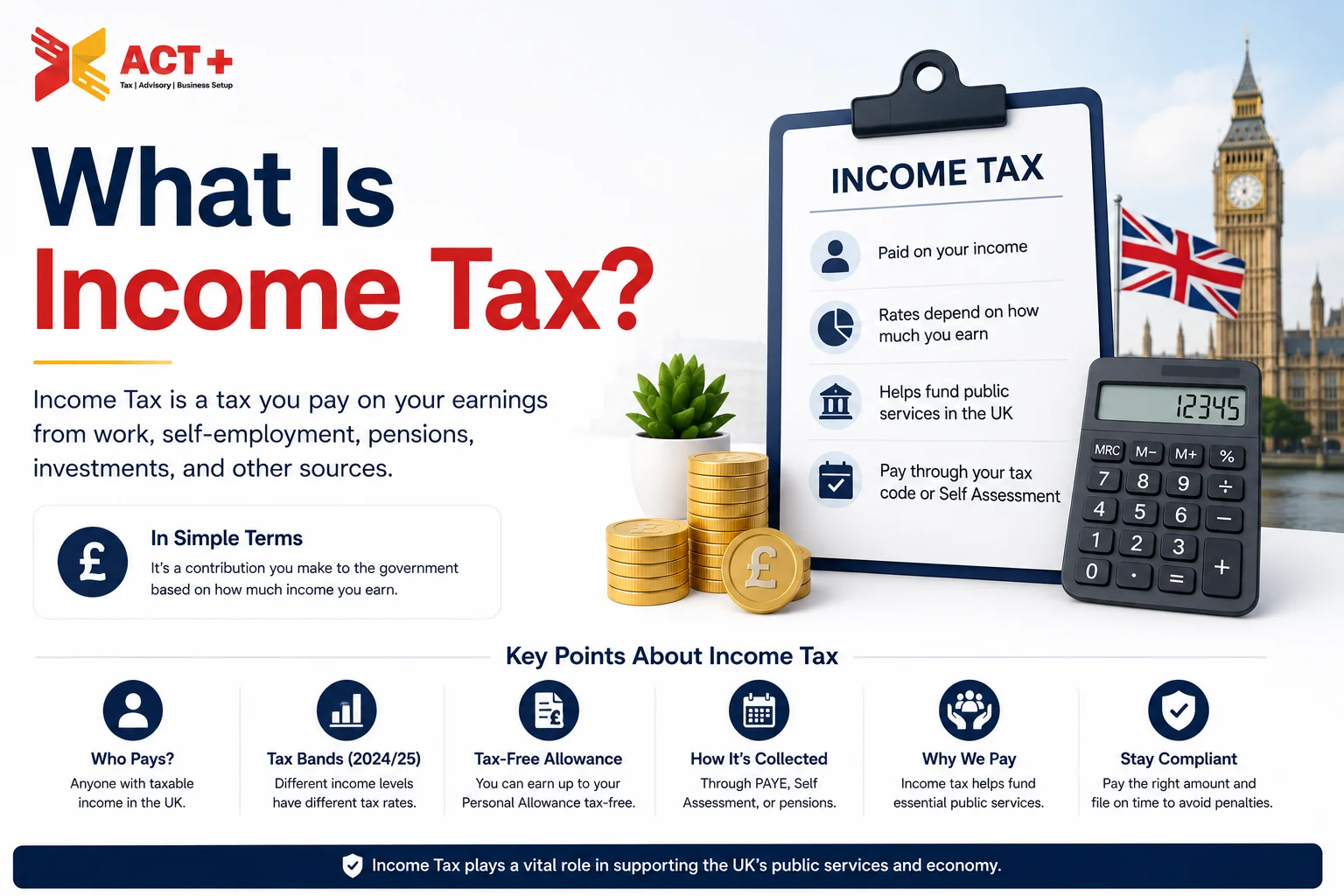
Income tax is a tax charged by HM Revenue & Customs (HMRC) on taxable income earned by individuals in the UK. The government collects income tax to fund public services such as the NHS, education, policing, transport, defence, and local government. Almost every working adult contributes once their income exceeds the available personal allowance.
Your tax liability depends on several factors, including:
- Your total taxable income
- Your tax code
- Your employment status
- Your tax reliefs
- Your residency status
- The tax year
Income tax applies to more than just employment income. Rental income, pension income, business profits, investment income, and certain state benefits may also be taxable.
How Does Income Tax Work?
Income tax works by applying different tax rates to different portions of your taxable income. The UK uses a progressive tax system. This means higher levels of income are taxed at higher rates, while lower income benefits from lower tax rates.
The process usually follows these steps:
- Calculate your total income.
- Deduct any tax-free allowances.
- Calculate your taxable income.
- Apply the relevant income tax bands.
- Pay tax through PAYE or Self Assessment.
Employees usually pay tax automatically through their employer’s payroll system. Self-employed individuals normally calculate and pay tax through Self Assessment.HMRC reviews tax records throughout the year and may issue refunds or request additional payments if necessary.
Who Pays Income Tax?
Income tax applies to many people who earn money from employment, business activities, property, pensions, or investments. Whether tax is due depends on total taxable income, available allowances, and how the income is received during the relevant tax year.
Common taxpayers include:
- Employees
- Company directors
- Self-employed individuals
- Sole traders
- Business partners
- Landlords
- Pensioners with taxable pensions
- Investors receiving taxable income
Employers deduct tax from employee salaries through the PAYE system before wages are paid. Self-employed people usually pay their own tax after submitting an annual Self Assessment tax return.
✓ Free consultation • Expert UK income tax support
Why Do People Pay Income Tax?
Income tax helps fund essential public services throughout the United Kingdom. The government uses income tax revenue to support the NHS, schools and universities, roads and transport, police services, defence, courts, welfare benefits, and local councils.
Without income tax, the government would struggle to provide these services at their current level. Paying the correct amount of tax also helps individuals remain compliant with HMRC, maintain accurate tax records, and avoid interest charges or financial penalties.
What Are the Income Tax Rates?
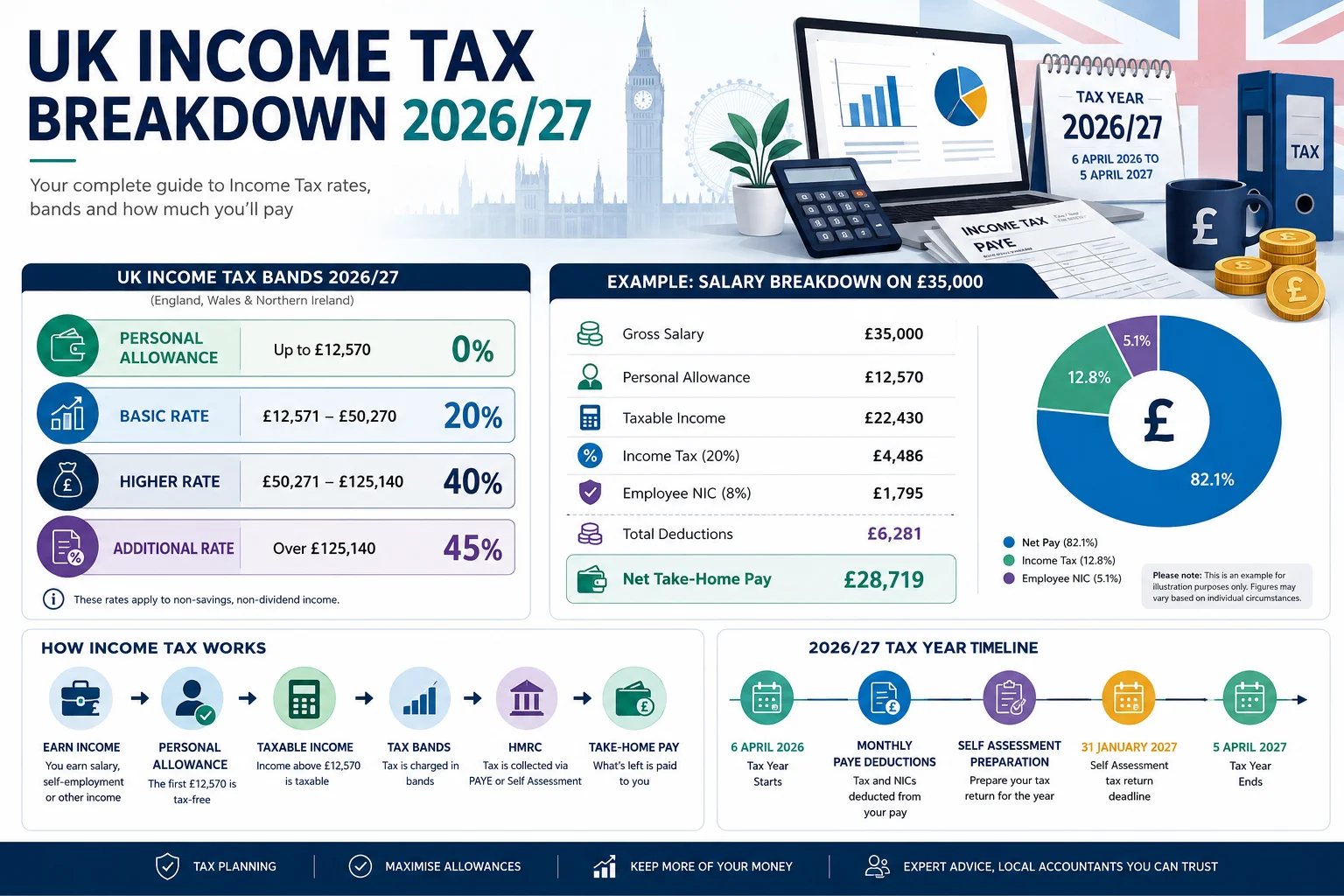
The UK income tax system uses different tax rates depending on how much taxable income you receive. Each portion of your income falls into a specific tax band rather than one rate applying to everything.
For most taxpayers in England, Wales, and Northern Ireland, the main rates are:
| Income Tax Rate | Percentage |
|---|---|
| Basic Rate | 20% |
| Higher Rate | 40% |
| Additional Rate | 45% |
Scotland operates its own income tax rates and bands for non-savings and non-dividend income. These rates apply only after deducting any available personal allowance. HMRC updates tax rates when the government announces changes during the budget.
What Are Income Tax Bands?
Income tax bands divide taxable income into different ranges, with each range taxed at its own rate. The UK does not tax all your income at one percentage. Instead, income moves through several tax bands.
For example:
- The first part may be tax-free.
- The next part may be taxed at the basic rate.
- Higher earnings move into the higher rate.
- The highest earnings may be subject to the additional rate.
This system ensures that only the income within each band attracts that specific rate. Moving into a higher tax band does not mean your entire income becomes taxable at that higher percentage. Understanding income tax bands helps you estimate tax liabilities more accurately and supports better financial planning.
What Is the Personal Allowance?
The personal allowance is the amount most individuals can earn before paying income tax. For many taxpayers, the personal allowance provides valuable tax-free income each tax year.
Your personal allowance may change if:
- Your income becomes very high.
- You claim marriage allowance.
- You receive certain taxable benefits.
- HMRC adjusts your tax code.
Most employees receive their personal allowance automatically through PAYE. Self-employed individuals claim it through their annual Self Assessment tax return. The personal allowance reduces your taxable income before income tax rates apply.
For example:
- Annual income: £40,000
- Personal allowance deducted
- Remaining income becomes taxable according to the relevant income tax bands
This allowance helps reduce the amount of income tax many people pay each year.
Do You Need to Fill in a Self-Assessment Tax Return for Income Tax?
Not everyone needs to file a Self-Assessment tax return. Most employees only pay UK income tax through PAYE, so they do not need to submit an annual tax return. You need to file a Self-Assessment tax return if HMRC requires you to report income that is not fully taxed through PAYE.
You must file a tax return if you have additional taxable income or HMRC asks you to do so. Submitting your return on time helps you avoid late tax filing penalties and interest charges. You can complete an online tax return through your HMRC account. Most taxpayers find this quicker than using paper forms.
Who Needs to Register for Self Assessment?
You may need to register for Self Assessment when you receive taxable income that HMRC does not collect through PAYE. Registration ensures the income is properly reported, the correct tax is calculated, and you meet filing responsibilities before the deadline.
Common examples include:
- Self-employed individuals
- Sole traders
- Business partners
- Company directors with additional untaxed income
- Landlords earning rental income
- People with significant investment income
- Individuals claiming certain tax reliefs
- Anyone asked by HMRC to file a return
- You should register before the relevant deadline to avoid unnecessary penalties.
Keeping accurate financial records throughout the year also makes completing your annual tax return much easier.
What Is Taxable Income?
Taxable income is the income HMRC uses to calculate how much income tax you owe. Your taxable income is not always the same as your total earnings. You may receive money from employment, self-employment, pensions, property rental, savings interest, or investments. Not every type of income is fully taxable. Some income may be covered by tax-free allowances or specific exemptions, depending on your circumstances.
HMRC first considers any available tax-free allowances and eligible deductions before calculating your tax bill. For most people, this includes the Personal Allowance, which allows a certain amount of income to be earned tax-free. Business expenses, pension contributions, and other approved deductions may also reduce taxable income. Understanding your taxable income helps you estimate your income tax payment more accurately. It also makes it easier to check your tax code, complete a Self Assessment tax return, and avoid paying too much or too little tax.
✓ Free consultation • Expert UK income tax support
What Types of Income Are Taxed?
Several types of income may be subject to UK income tax. The amount you pay depends on your total taxable income, available tax-free allowances, and the tax rate that applies to you. Here are the main types listed below:
| Type of Income | Description |
|---|---|
| 1Employment Income | Earnings from working for an employer, including salary, wages, bonuses, commissions, tips, and benefits-in-kind. |
| 2Self-Employment Income | Profits made from running your own business or working freelance, where you are responsible for your own taxes. |
| 3Pension Income | Payments received from the State Pension, occupational pensions, or personal pension schemes after retirement. |
| 4Rental Income | Money earned from renting out property or land to tenants. |
| 5Investment Income | Earnings from investments, such as dividends from shares, interest from savings accounts, and income from peer-to-peer lending platforms. |
| 6Capital Gains | Profit made when selling or disposing of assets like shares, property (excluding your main residence), or valuable possessions. |
| 7Miscellaneous Income | Other types of income, including royalties, copyrights, trust income, or income from settlements. |
| 8Foreign Income | Income earned from abroad by UK residents, including foreign employment, investments, or property. |
What Income Is Tax-Free?
Some types of income are exempt from income tax or protected by tax-free allowances. Common examples include the Personal Allowance, Personal Savings Allowance, Marriage Allowance benefits, ISA interest, certain state benefits, some compensation payments, lottery winnings, and certain inheritance payments.
How Much Income Tax Do You Pay in the UK?
The amount of income tax you pay depends on your taxable income, tax code, available allowances, and the applicable income tax bands. There is no single amount that everyone pays. HMRC calculates your tax after considering:
- Total taxable earnings
- Personal Allowance
- Tax reliefs
- Tax code
- Income tax bands
- Tax year rules
Employees usually see tax deducted automatically from each payslip. Self-employed taxpayers normally calculate their own liability after completing their Self Assessment tax return. Many people use an income tax calculator before submitting their return to estimate their final bill.
What Are the UK Tax Thresholds?
UK tax thresholds determine when income starts to attract different rates of income tax. Each threshold marks the point where another income tax rate begins.
These thresholds help determine:
- Whether you pay tax
- Which income tax band applies
- How much tax you owe
The thresholds differ between England, Wales, Northern Ireland, and Scotland. HMRC updates official guidance whenever tax rules change.
Do Income Tax Thresholds Change Each Tax Year?
Income tax thresholds can change at the start of a new tax year if the government introduces new tax legislation. The Chancellor may announce changes during the annual budget.
Changes may affect:
- Personal Allowance
- Income tax bands
- Tax rates
- Tax reliefs
- Allowances
Some thresholds remain frozen for several years, while others increase periodically. Checking the latest HMRC guidance each tax year helps ensure your tax calculations remain accurate.
How Much Can You Earn Before You Pay Income Tax?
Most individuals can earn up to their available personal allowance before paying income tax. If your annual income stays within your available allowance, you normally pay no income tax. Once your income exceeds that allowance, the excess becomes taxable according to the relevant income tax bands.
Different rules may apply if:
- Your income exceeds certain limits.
- Your allowance has been reduced.
- Your tax code changes.
- You receive additional taxable benefits.
What Is Marriage Allowance?
The marriage allowance allows eligible couples to transfer part of their unused personal allowance to reduce their household tax bill. The transfer is available only if certain income conditions are met.
Marriage Allowance may benefit couples where
- One partner earns below the Personal Allowance.
- The other partner pays the basic rate of income tax.
It does not apply to higher-rate or additional-rate taxpayers. Eligible couples can usually apply through HMRC online.
What Is the Personal Savings Allowance?
The Personal Savings Allowance allows many people to earn a certain amount of savings interest without paying income tax. The amount you can receive tax-free depends on whether you are a basic-rate, higher-rate, or additional-rate taxpayer.
Banks and building societies usually report savings interest directly to HMRC. When your interest exceeds your available allowance, you may need to pay additional tax. Understanding the Personal Savings Allowance can help you manage your savings and plan your finances more effectively.
How Do You Pay Income Tax?
Pay income tax through PAYE, self-assessment, or direct payments to HMRC, depending on how you earn your income. The payment method depends on your employment status and income source. Employees usually pay tax automatically through PAYE.
Employers deduct income tax and send it directly to HM Revenue & Customs (HMRC) before paying salaries. Self-employed individuals and sole traders usually calculate their own income tax payment after completing a Self Assessment tax return. Other taxpayers, such as landlords and company directors with additional untaxed income, may also need to pay tax through Self Assessment.
HMRC provides several payment options, including:
- Online banking
- Debit or corporate credit card
- Direct Debit
- Bank transfer
- CHAPS
- Bacs
Always pay before the deadline to avoid interest and penalties.
What Does HMRC Do for Income Tax?
HM Revenue & Customs (HMRC) administers and collects income tax across the United Kingdom. It manages most areas of the UK tax system and ensures individuals and businesses pay the correct amount of tax.
Its main responsibilities include:
- Collecting income tax
- Issuing tax codes
- Processing PAYE records
- Managing Self-Assessment
- Issuing tax refunds
- Collecting unpaid tax
- Applying tax reliefs
- Investigating tax avoidance and fraud
HMRC also provides online services that allow taxpayers to:
- View their tax records
- Check their tax code
- File an online tax return
- Pay income tax
- Claim eligible tax refunds
- Update personal details
Keeping your HMRC account up to date helps reduce errors and delays.
What Is the Tax Year?
The UK tax year runs from 6 April to 5 April of the following year. Unlike the calendar year, every tax year follows the same fixed start and end dates.
HMRC uses the tax year to calculate the following:
- Income Tax
- National Insurance contributions
- Tax reliefs
- Tax-free allowances
- Self Assessment filing and payment deadlines
Keeping financial records organised by tax year makes tax reporting much easier.
How Can You Reduce Your Income Tax Legally?
You can reduce your income tax legally by claiming available allowances, tax reliefs, and allowable expenses. Tax planning should always follow HMRC rules. Legal ways to reduce your tax bill include:
Claim Allowable Expenses
Self-employed individuals can deduct qualifying business costs before calculating taxable profits.
Common examples include:
- Office expenses
- Business travel
- Professional subscriptions
- Business insurance
- Marketing costs
- Accounting service
Claim Available Tax Reliefs
Several tax reliefs reduce taxable income.
Examples include:
- Pension contributions
- Gift Aid donations
- Trading loss relief
- Employment expense relief
Use Tax-Free Allowances
Many taxpayers forget to use available allowances.
These include:
- Personal Allowance
- Marriage Allowance
- Personal Savings Allowance
- Dividend Allowance (where applicable)
Keep Accurate Financial Records
Good records help you claim every legitimate deduction.
Maintain copies of:
- Invoices
- Receipts
- Bank statements
- Payroll records
- Mileage logs
Accurate records also make tax compliance much easier if HMRC requests evidence.
✓ Free consultation • Expert UK income tax support
What Is the Difference Between Income Tax and National Insurance?
Income tax funds general public services, while national insurance contributions mainly support the state pension and certain state benefits. Although both deductions often appear together on an employee’s payslip, they are separate charges with different rules and purposes.
| Income Tax | National Insurance |
|---|---|
| Based on taxable income | Mainly based on earnings from work |
| Funds general government spending | Helps fund the State Pension and certain benefits |
| Applies to several types of income | Mainly applies to employment and self-employment earnings |
| Uses Income Tax bands | Uses National Insurance thresholds and rates |
Employees usually pay both income tax and National Insurance through the PAYE system. Employers calculate and deduct the relevant amounts before paying wages. Self-employed individuals normally calculate their National Insurance contributions alongside their income tax when completing a Self Assessment tax return.
What Is the Difference Between Income Tax and Capital Gains Tax?
Income tax applies to money you earn during the tax year. This may include your salary, self-employed profits, rental income, pension income, savings interest, and other taxable earnings. HMRC calculates income tax after considering any tax-free allowances and deductions available to you.
Capital gains tax applies to profits made when you sell or dispose of certain assets for more than you originally paid. These assets may include investment properties, shares, business assets, and valuable possessions. Different tax rates, exemptions, and reporting rules apply. Some people may need to report both income tax and capital gains in the same tax year.
What Happens If You Do Not Pay Income Tax?
Failing to pay income tax can lead to penalties, interest, and enforcement action by HMRC. Ignoring tax obligations rarely makes the problem disappear.
HMRC may:
- Charge late payment interest
- Issue financial penalties
- Send payment reminders
- Recover unpaid tax through debt collection
- Collect tax directly from wages or bank accounts in certain circumstances
- Begin legal action in serious cases
If you cannot pay your tax bill, contact HMRC as soon as possible. They may agree to a payment arrangement depending on your circumstances.
What Are Common Income Tax Mistakes?
Simple mistakes can result in incorrect tax bills, unnecessary penalties, or delayed tax refunds. Understanding the most common errors can help taxpayers remain compliant with HMRC and avoid paying more tax than necessary.
Using the Wrong Tax Code
An incorrect tax code may result in paying too much or too little tax. Check your payslips regularly and report errors to HMRC.
Missing Self-Assessment Deadlines
Late self-assessment submissions often lead to automatic penalties. Submit your online tax return before the deadline.
Forgetting Taxable Income
Some taxpayers forget to report the following:
- Rental income
- Side business profits
- Overseas income
- Investment income
Always declare taxable income correctly.
Missing Allowable Expenses
Many self-employed individuals pay more tax than necessary because they fail to claim allowable business expenses. Keep detailed records throughout the year.
Poor Record Keeping
Missing invoices and receipts make it difficult to complete an accurate tax return. Store financial records securely for the period required by HMRC.
Frequently Asked Questions
What is the current personal allowance for income tax in the UK?
What are the main income tax rates in the UK?
- Basic Rate — 20% on income over the personal allowance up to £50,270
- Higher Rate — 40% on income between £50,271 and £125,140
- Additional Rate — 45% on income above £125,140
Do I need to file a tax return every year?
What types of income are subject to income tax?
Can I claim tax relief or allowances?
When is income tax due for payment?

About the Author: Ahmad Raza